
Lieferung heute & morgen

Qualitätsgarantie

Willkommens-Angebote freischalten: KOSTENLOSE Lieferung | Bis zu 80 % RABATT | Kostenlose 30-Tage-JoyPlus-Testphase
App herunterladen
A bookshelf with a reading stand combines storage with a practical surface for books, a tablet, documents or a laptop. It can be useful in a home office, bedroom, living room or children’s room. However, models vary considerably in weight capacity, height adjustment and mobility.
If you focus only on appearance or a long list of features, it’s easy to overlook important details. Here are three common buying pitfalls:
An adjustable reading stand should suit the position in which you’ll mainly be sitting or lying down. Check whether the surface only moves up and down, or whether it can also be tilted and rotated.
The multifunctional Joybuy model has a top surface that adjusts between 27,6 and 35,4 inches, or around 70,1 to 89,9 cm. It can be rotated through 360° and folded through 180°. This means it can be used as a rotating reading stand, writing surface or bedside table. Its suitability will still depend on the height of your mattress and seating, as well as your height.
Look for separate weight limits for the top surface and the complete frame. The bookshelf mentioned above has a total weight capacity of 20 kg, with a maximum of 10 kg for the top surface. These limits should not be exceeded. It’s also sensible to store heavier books as low down as possible.
A freestanding model may have different weight limits. The TFCFL Rolling Book Stand is listed with a panel capacity of 10 kg and a base capacity of 50 kg. These figures aren’t directly comparable with those of a compact bookcase, but they show why it’s important to choose a model that suits the way you plan to use it.
Material details should be clearly stated for engineered wood products. According to the product description, the multifunctional bookshelf is made from E1 MDF and carbon steel. E1 is an emissions class for wood-based panels; you should also check the supplier’s guidance on assembly and care.
A bookshelf with castors should have locking brakes. The model with three shelves, two drawers and a side newspaper rack has four swivel castors with brakes. Before using it, check all connections, adjustment knobs and castors. Place the bookshelf on a level surface and lock the brakes before loading the top surface.
The selection below groups different designs by typical use. It focuses on verifiable product features rather than broad claims about quality.
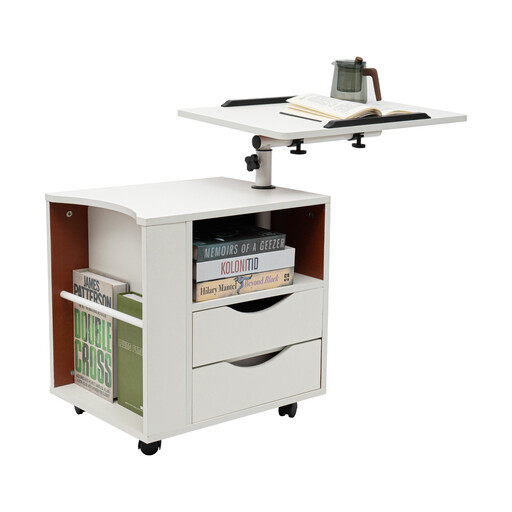
Why this product suits you: Three shelves, two drawers and a side newspaper rack combine storage with a height-adjustable reading and work surface. The castors make it easy to move between the living room, bedroom and home office.
The height range, maximum surface capacity of 10 kg and total weight capacity of 20 kg are clearly stated. Four castors with brakes address a common concern with mobile furniture.
Height adjustment from around 70,1 to 89,9 cm, a rotating and folding surface, two drawers and a side newspaper rack.
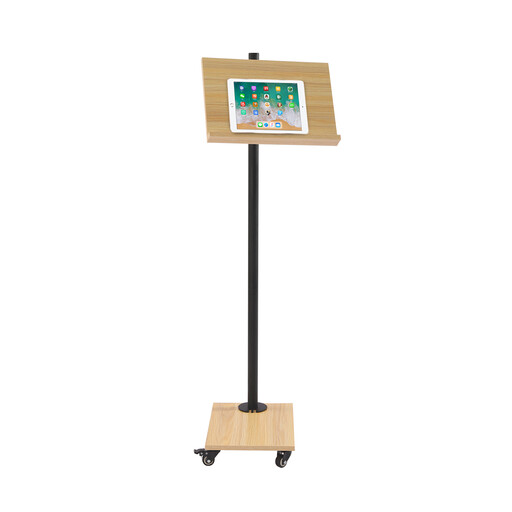
Why this product suits you: This freestanding reading stand is suitable for large textbooks, presentation materials, recipes or tablets. Its metal and wood construction is designed for stationary use with frequent moves from place to place.
The product description gives separate weight limits for the panel and base. The panel swivels through 180°, so you can adjust the viewing angle rather than use a fixed surface.
Panel capacity of up to 10 kg, an adjustable-height design, a surface that swivels through 180° and castors for moving it between a study, kitchen or classroom.
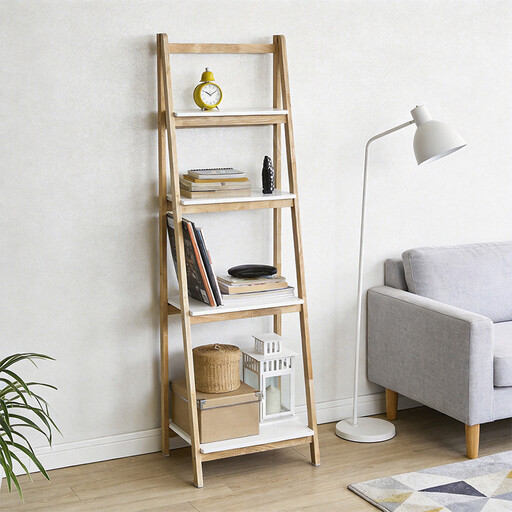
Why this product suits you: This folding bookcase is for anyone who wants flexible storage for books, folders, CDs or towels, and a space-saving option when the extra storage isn’t needed.
Its dimensions of around 42 × 140 × 34 cm and weight capacity of up to 15 kg per shelf are stated. This makes it easier to assess how much space it will take up before you buy.
Four shelves, a folding design, a rubberwood frame and white MDF shelves; assembly accessories and instructions are included.
We’ve put together a complete, regularly updated list of products that meet these strict selection criteria and fully comply with the safety regulations in force in the EU.
Not everyone needs a complete bookcase. For a small home office or studying, a book and tablet stand may be all you need. A folding laptop stand is easier to carry and takes up less space. Check that it suits your device, and look at its maximum weight capacity, non-slip pads and available tilt range.
Simple acrylic or wooden stands work well for cookbooks and magazines. A book storage unit with drawers is a good choice if you want to keep stationery, sticky notes or charging cables close at hand. If you regularly move between rooms, choose a mobile bookcase with wide castors and brakes. For storing a large number of books long term, a rotating bookcase without an integrated reading surface may be a better fit.
Stability depends on the frame, base, castor quality and load. Use the bookshelf on a level surface, store heavier books as low down as possible and engage all the locking brakes. Avoid putting extra sideways pressure on a movable surface while you’re reading.
Yes, if its height range suits your mattress and sitting position. Also check that the castors lock securely and that the surface is large enough for your book or tablet. An angled surface may make reading easier, but it doesn’t replace a comfortable sitting or lying position.
Remove dust with a dry or slightly damp cloth, and don’t leave moisture standing on MDF or wood surfaces. Check the screws, joints, castor brakes and adjustment knobs regularly. Stick to the stated weight limits to avoid putting unnecessary strain on the materials and mechanisms.