
Lieferung heute & morgen

Qualitätsgarantie

Willkommens-Angebote freischalten: KOSTENLOSE Lieferung | Bis zu 80 % RABATT | Kostenlose 30-Tage-JoyPlus-Testphase
App herunterladen
Buckwheat noodles combine the flavours of Asian cuisine with versatile uses in soups, wok dishes and cold noodle salads. However, if you want to buy buckwheat noodles, you should not rely solely on terms such as “healthy”, “light” or “wholegrain”. The actual buckwheat content, ingredients list, allergen labelling and suitable pack size are what really matter.
Many Asian buckwheat noodles are made mainly from wheat flour. Depending on the product, the buckwheat content may be 2%, 10%, 15% or at least 30%. A darker colour or nutty aroma is therefore not reliable proof of a high buckwheat content.
Check the quantitative ingredients declaration on the packaging. This shows how much buckwheat flour the product actually contains. Products with a lower proportion may have a more elastic, wheat-dominated texture, while varieties with a higher proportion may differ more noticeably from the flavour and texture of classic wheat noodles.
Buckwheat noodles are often marketed as low-fat noodles. The products’ nutritional tables do indeed often show around 0 to 2.6 g of fat per 100 g. At the same time, dry noodles provide approximately 339 to 362 kcal per 100 g, depending on the recipe, and consist mainly of carbohydrates.
The figures generally refer to the uncooked product. Oil, peanut sauce, coconut milk, stock or seasoning sachets can alter the nutritional value of the finished meal. With instant or ready meals, you should also take the sauce’s salt content into account.
Buckwheat itself is not a cereal grain. However, many Japanese soba noodles and Chinese buckwheat noodles also contain wheat flour or wheat gluten. This means they are gluten-containing noodles.
If you have coeliac disease, a diagnosed allergy or follow a strictly gluten-free diet, the product name alone is not sufficient. Look for the allergens “wheat” or “gluten”, and also check warnings about possible traces. The product information on the sales page and the packaging should be compared before consumption.
Ingredients are generally listed in descending order by quantity. Examples from the selection include:
The term “mixed grain” may indicate additional cereals such as rye. This is relevant to the flavour and texture, but also when checking for allergens.
Compare at least energy, fat, carbohydrates, protein and salt. A low fat content alone does not automatically make a product the right choice. If fibre is important to you, its value must be explicitly stated in the nutritional table.
For example, Jin Sha He lists 5 g of fibre per 100 g. Other products advertise a high fibre content without providing a specific figure in the available data sheet. In this case, the marketing claim should not be treated as equivalent to a measurable comparative figure. Wholegrain pasta made from durum wheat semolina can also be an alternative, but it is not buckwheat noodles.
Cooking times in the selection range from approximately 2–4 minutes to 5–7 minutes. Thin noodles or products intended for cold dishes often need to be rinsed under cold water after cooking and drained thoroughly.
When choosing noodles for a particular dish:
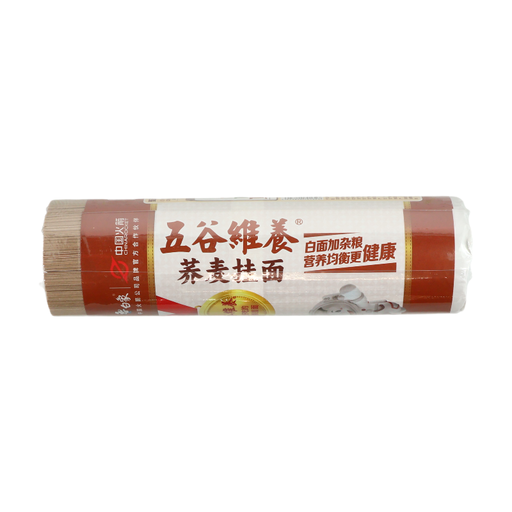
Why this product fits the profile: The 1-kg pack is ideal for households that regularly prepare noodle soups, wok dishes or cold noodle salads.
The declared buckwheat content of 2% makes it clear that this is a wheat-based noodle with added buckwheat.
1 kg contents; according to the product information, 1.8 g of fat and 360 kcal per 100 g.
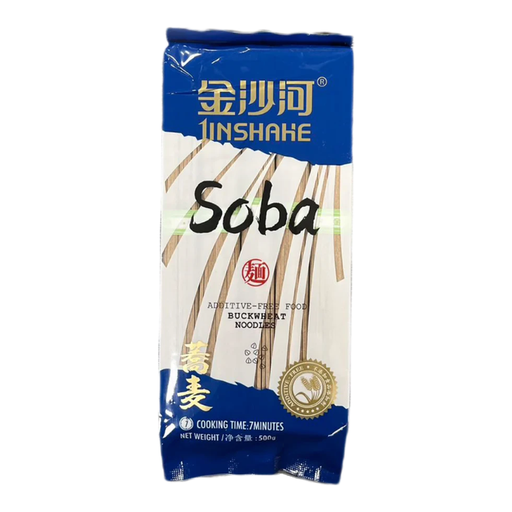
Why this product fits the profile: Its recipe contains at least 30% buckwheat, making it appealing to shoppers who want a more pronounced buckwheat character.
The buckwheat content is clearly stated as at least 30%, rather than being inferred solely from the colour or product name.
500-g pack; according to the product information, 5 g of fibre and 1.8 g of fat per 100 g.
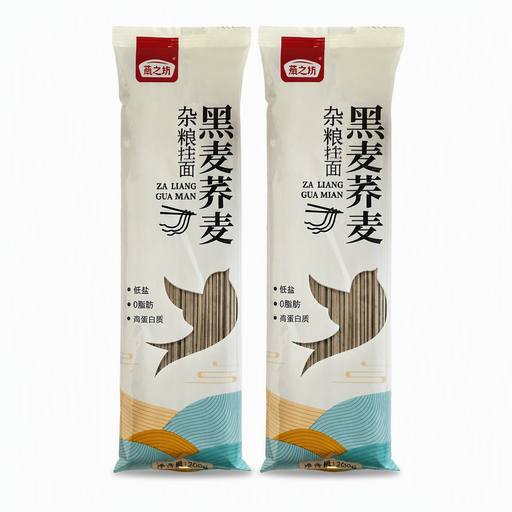
Why this product fits the profile: Two 200-g pouches make portioning easier and are suitable for different dishes throughout the week.
The ingredients explicitly list 35% rye flour and 27.6% buckwheat flour; rye is also identified as a gluten-containing allergen.
400 g total quantity; according to the product information, 0 g of fat and 13.4 g of protein per 100 g.
We have put together a complete, regularly updated list of products that fully meet these strict selection criteria and the safety regulations applicable in the EU.
Always cook buckwheat noodles according to the instructions on the relevant packaging. Cooking times vary depending on the thickness and recipe. For wok dishes, the noodles can be drained while still slightly al dente, then briefly combined with vegetables and sauce. For cold noodle salads, rinsing the noodles with cold water is recommended to stop the cooking process and leave the surface less sticky.
For soups, the noodles should either be cooked separately or added to the stock shortly before serving. This makes it easier to control how much the starch and salt affect the stock.
Not necessarily. Many products contain wheat flour or wheat gluten and are therefore gluten-containing noodles. The specific ingredients and allergen labelling are what matter. If a gluten-free diet is medically necessary, only a product explicitly labelled as suitable should be used.
The best-before date is printed on the packaging. Unopened dry noodles should be stored in a cool, dry place away from direct sunlight. Once opened, a well-sealed storage container is recommended. The relevant manufacturer’s information applies to the specific product.
Noodles that retain their shape and have a cooking time of around 3 to 7 minutes are suitable, provided they can be rinsed and drained thoroughly after cooking. Products with seasoning sachets, such as Korean cold noodles, come with a pre-prepared sauce. If you have allergies, check any additional ingredients such as soya, sesame or mustard.