For spontaneous close-ups of buds while camping, when you don’t want to change lenses, a weather-resistant compact camera with a dedicated close-up mode is the simpler option. If you want to magnify small details more deliberately, choose the camera body and a compatible macro lens together; a standard zoom lens included in a camera kit is not automatically an equivalent alternative. For focus bracketing, keep both the camera and the branch as still as possible while shooting.
Which camera option is right for you?
Photographers focused on bud details
If you want to capture individual bud structures at a larger scale, check the magnification ratio of the specific lens rather than relying on the camera name alone. Canon gives the separately sold RF 35mm F1.8 MACRO IS STM a ratio of 1:2; Nikon specifies a maximum ratio of 1:1 for the NIKKOR Z MC 50 mm 1:2,8.
Camping photographers in the rain
If you want to get close quickly in changeable weather without changing lenses in the rain, check the protection rating for the specific model. OM Digital Solutions and Ricoh Imaging list protective features for the TG-7 and WG-90 models.
Photographers travelling light
If you want to photograph buds as part of a landscape too, weigh up the extra kit needed for a mirrorless camera with interchangeable lenses against the magnification you want. Canon offers the EOS-R50 kit with the RF-S 18-45mm; the separately sold RF 35mm MACRO is not included in the kit.
What should you look for when buying a camera for photographing buds?
Weather-resistant compact camera
A good fit if: you want to get close to accessible buds while camping without changing lenses.
What to consider: A minimum focusing distance of 1 cm is not the same as a magnification ratio of 1:1. In addition, dkamera.de’s TG-7 review notes a loss of detail, particularly at higher ISO settings.
Mirrorless camera with a macro lens
A good fit if: you want to magnify a particular bud detail and choose a lens to suit your camera body and composition.
What to consider: A separate macro lens means carrying extra equipment, so check the mount and what’s included in the kit before buying.
| What you want to do |
What to check before buying |
Who is this important for? |
| Magnify bud details |
Check the maximum magnification ratio and minimum focusing distance of the specific lens. For interchangeable lenses, check the mount too. Canon gives the RF 35mm a ratio of 1:2, while Nikon gives the Z MC 50 mm a ratio of 1:1. |
If you want to show the fine structure of an individual bud as large as possible, magnification is your priority. Around 36% of consumers focus on this. |
| Photograph in changeable weather |
Check the protection rating for the complete camera. OM Digital Solutions lists the TG-7 as waterproof to 15 m and dustproof to IP6X; Ricoh Imaging lists the WG-90 as waterproof to 14 m. |
If rain or dirt could be an issue while camping, you’ll want to know the details for the specific model before taking it with you. Around 29% of consumers prioritise weather protection. |
| Get close while carrying less |
Compare what’s included and how the lens works: according to Canon, the EOS-R50 kit includes the RF-S 18-45mm, not the separate RF 35mm MACRO; the TG-7 has a built-in zoom lens. |
If you want to carry less equipment on a camping trip, it’s important to know how many pieces your chosen setup includes. Around 21% of consumers prioritise travelling light. |
| Capture multiple planes of focus |
Check whether the specific model offers Focus Bracketing or in-camera stacking, and whether the branch will stay still during the sequence. Nikon explains how to combine images focused at different distances; dkamera.de lists both features for the TG-7. |
If you want to capture several planes of focus in a bud that stays as still as possible, the shooting sequence matters just as much as the camera feature. Around 14% of consumers make this a priority. |
Common buying misconceptions
-
“Macro” doesn’t always mean the same magnification
A minimum focusing distance of 1 cm and a magnification ratio of 1:1 describe different things. Macro lenses can also have different maximum magnification ratios.
Compare the magnification ratio and minimum focusing distance for the specific model you’re considering, rather than relying on a macro mode or product name alone.
-
The macro lens advertised separately is included in the camera kit
The Canon EOS-R50 kit includes the RF-S 18-45mm; the RF 35mm F1.8 MACRO IS STM is a separate lens with different features.
Before buying, check what’s included, the lens mount and the magnification ratio of the kit actually on offer.
You may need to buy an additional compatible lens to get the magnification you want.
-
A model’s weather protection applies to every camera kit
Protection ratings for a compact camera don’t apply to a mirrorless camera or every combination of body and lens. Canon doesn’t list dust or splash protection for the RF-S 18-45mm.
Check the protection rating for the complete camera-and-lens combination you plan to use.
A guide to suitable brands and model ranges
OM SYSTEM
The Tough TG-7 is a compact camera for spontaneous close-ups while camping, without the need to change lenses.
- OM Digital Solutions lists close-ups from as near as 1 cm, along with water and dust protection for the TG-7.
- dkamera.de’s review lists Focus Bracketing and Focus Stacking for this model.
- dkamera.de notes a loss of detail with the TG-7, particularly at higher ISO settings. This assessment doesn’t apply to other cameras from the brand as a whole.
PENTAX
The WG-90 is a weather-resistant compact camera for close-ups without an interchangeable lens.
- Ricoh Imaging lists a Digital Microscope mode from 1 cm, a six-LED macro light and waterproofing to 14 m for the WG-90.
- These manufacturer specifications don’t prove that its image quality is better than that of other cameras.
Canon
The EOS R system is worth considering if you want to combine travel photography with close-ups of buds, using a carefully chosen RF lens.
- Canon gives the separately sold RF 35mm F1.8 MACRO IS STM a maximum magnification ratio of 1:2.
- The EOS-R50 kit includes an RF-S 18-45mm; according to Canon, its magnification ratio depends on the focal length and focusing method. The RF 35mm specifications don’t apply to this kit lens.
Nikon
The Z system is worth considering if you want to choose a compatible interchangeable lens for specific magnification.
- Nikon gives the Z-mount NIKKOR Z MC 50 mm 1:2,8 lens a maximum magnification ratio of 1:1.
- This feature applies to the lens named above, not automatically to every Nikon camera or Z50II kit.
Joybuy camera selection
The models below are described as travel, vlogging or action cameras. Before buying one for photographing buds, check how close it can focus and what sort of composition it allows.
 No image available
KOMERY G7 5K digital camera, white
For travel photography with a zoom option; check the minimum focusing distance before using it for close-ups of buds.
Listed in the product title: 80 MP UHD and 18X zoom.
View at Joybuy
 No image available
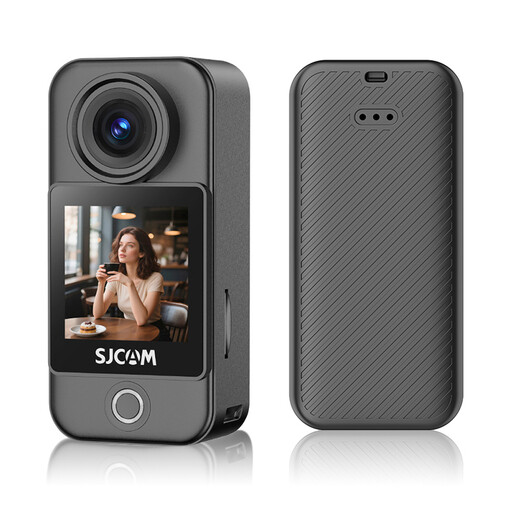
SJCAM C400 Pocket Action Camera 4K
For taking on the go when you want stills as well as outdoor videos; check the minimum focusing distance for photographing buds.
The description lists 16 MP photos, a 154° wide-angle lens, 6-axis stabilisation and a weight of 54 g. The waterproof case is intended for the specified underwater use.
View at Joybuy
 No image available
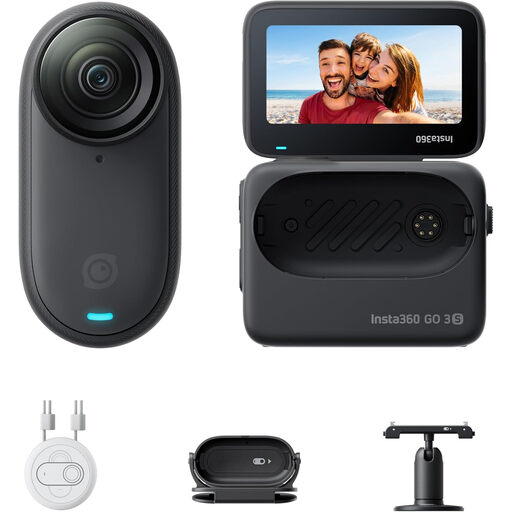
Insta360 GO 3S 128GB, black
For travelling light and capturing POV footage on the go; before buying, check the close-focusing capabilities for photographing buds.
The description lists 4K POV video and a weight of 39 g. The camera body is described as IPX8 waterproof, while the Action Pod is IPX4 splashproof. If you have a pacemaker, don’t wear the camera on your chest or use the magnetic pendant.
View at Joybuy
 No image available
KOMERY G7-A 4K digital camera, pink
For travel photography with a zoom option; check the minimum focusing distance before using it for close-ups of buds.
Listed in the product title: 80 MP UHD and 18X zoom. The safety notice describes the camera as not waterproof and warns against water, rain and high humidity.
View at Joybuy
Frequently asked questions about photographing buds while camping
Is the EOS-R50 kit lens good enough for the tiniest bud details?
Not necessarily. The Canon EOS-R50 kit includes the RF-S 18-45mm; Canon lists different maximum magnification ratios depending on the focal length and whether you focus manually or automatically. The separately sold RF 35mm MACRO achieves 1:2, according to Canon. So check your preferred composition and exactly what’s included in the kit.
How can you take a focus-bracketed series of a branch?
Keep the camera as steady as possible and wait for a calm moment when the branch isn’t moving. Focus bracketing combines images taken at different focus points; if the subject moves between shots, combining them can be difficult. Check whether your camera only takes separate images or can combine them in-camera too.
What extra costs and rights should I consider when buying a camera?
With a mirrorless camera, you may need a suitable macro lens in addition to the kit; check which accessories are actually included too. In Germany, the statutory warranty from the seller is separate from any voluntary manufacturer’s guarantee. Online purchases generally come with a right to cancel, usually within 14 days; check the exceptions and the exact date from which the period starts in each case.
Can I leave the path or camp in a protected area in Germany to photograph a bud?
There’s no one answer for every protected area; check the rules for the specific location. For example, the Hainich National Park administration requires visitors to stay on the paths and prohibits camping there. These rules don’t automatically apply to other protected areas or campsites.


