
Lieferung heute & morgen

Qualitätsgarantie

Willkommens-Angebote freischalten: KOSTENLOSE Lieferung | Bis zu 80 % RABATT | Kostenlose 30-Tage-JoyPlus-Testphase
App herunterladen
A buggy should be easy to push, safe and simple to store for everyday use. At the same time, models can vary considerably in terms of suitable age range, weight capacity, lie-flat position and features. A low price alone therefore says little about whether a buggy is right for your living situation and your child’s age.
A folding pushchair may take up very little room in the boot while still being heavy to carry. For stairs, train journeys or frequent loading and unloading, you should always check both details: weight when ready for use and dimensions when folded.
The type of folding mechanism is also relevant. One-handed or automatic folding saves time, but the pushchair should only be carried once it has clicked securely into place. Also check whether the folded buggy can stand upright on its own.
Not every pushchair for babies is automatically suitable for newborns. For use from birth, the individual model must have a suitable, flat lie-flat position or a carrycot designed for this purpose, as stated in the product information. With a traditional seat buggy, you should check whether the backrest and footrest can be adjusted sufficiently.
A buggy with a lie-flat function can be practical for babies and toddlers. However, the manufacturer’s specifications for age, weight and use remain decisive. With a pushchair suitable from birth, your child must also not be left unattended in the pushchair.
A sun canopy, shopping basket or a padded pushchair with safety harness can make everyday use more convenient when used correctly. However, a sunshade alone does not replace a safe seating position or a properly fastened harness. Heavy bags should not be hung from the handlebar, as this can affect the risk of tipping.
A 5-point safety harness secures the shoulders, pelvis and crotch area separately. The harness should be adjustable to your child’s size and used on every journey. With a sibling or twin buggy, it is important that each seat has its own restraint system.
Before buying, also check:
The EN 1888 standard describes safety-related requirements for pushchairs and buggies. A stated standard is a useful point of reference, but it does not replace following the instructions for use.
A buggy up to 22 kg may be suitable for use until around the age of four, depending on your child’s growth. However, this is not a blanket recommendation for every child. Always check the stated maximum weight and distinguish between child weight and the permitted load for the shopping basket.
With a sibling pushchair or twin buggy, you should check the weight capacity of each seat individually. For the double-seat model featured here, the product information states a capacity of 15 kg per seat. The rear seat is specified as suitable from birth, while the front seat is suitable from six months.
For urban journeys, manoeuvrable swivel wheels are often sufficient. On cobblestones, concrete paths or uneven pavements, suspension, tyre material and lockable front wheels are more important. A compact buggy with small wheels is easy to store, but may be less comfortable to push on uneven surfaces.
Also look out for:
The following models are arranged according to specific usage scenarios. Information on weight, capacity and features is based on the respective product information.
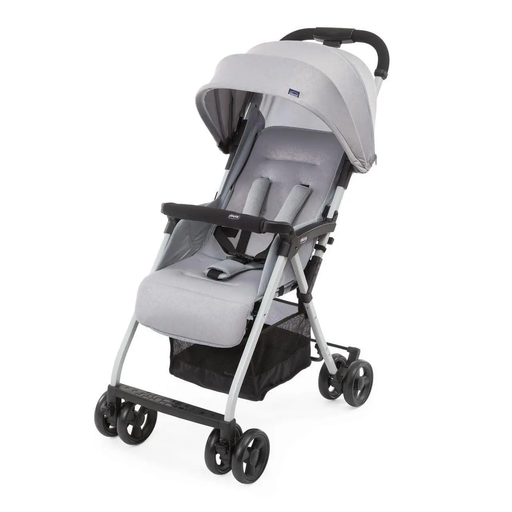
Why this product suits this profile: Weighing 4.2 kg and featuring one-handed folding, this travel buggy is designed for frequent carrying and compact storage. The lie-flat position and stated capacity of up to 15 kg make it suitable for babies and toddlers in accordance with the manufacturer’s specifications.
The stated product weight and folding function make it easier to distinguish between a small folded size and genuine portability.
4.2 kg net weight, backrest adjustable to a flat position and sun canopy with a stated UV50+ rating.
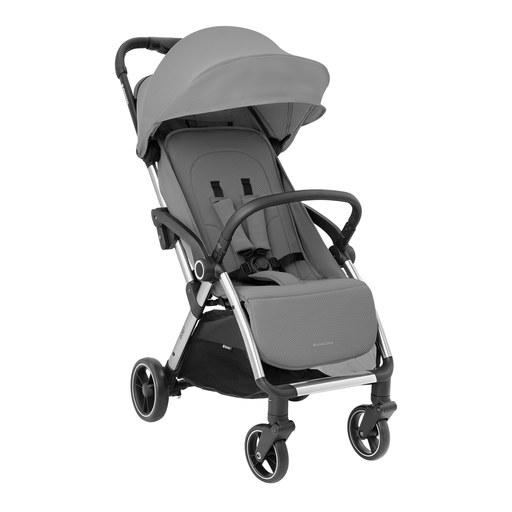
Why this product suits this profile: The Eden combines a weight of 7.8 kg with automatic folding, suspension and a backrest that can be adjusted to four positions. According to the product information, it is suitable from birth up to 22 kg.
The details on folded dimensions, weight limit and lie-flat position make it easier to compare the buggy with your boot, living space and intended period of use.
5-point harness, 360-degree swivel wheels with suspension, rain cover and stated testing in accordance with EN 1888-2:2018+A1:2022.

Why this product suits this profile: This pushchair is designed for families with siblings of different ages or twins. The product description lists more than 20 configuration options and use for one or two children.
Rather than focusing only on a small folded size, the seat configuration, total weight of 12.9 kg and folded dimensions are all taken into account transparently.
Up to 2 × 22 kg child weight according to the product information, two safety harnesses and storage compartments with stated capacities of 10 kg and 13 kg.
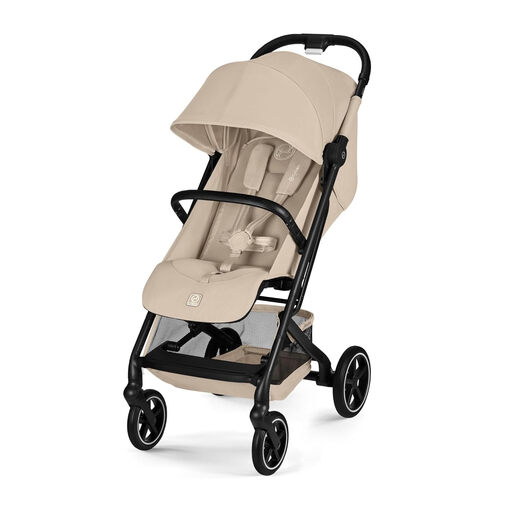
Why this product suits this profile: According to the product information, this compact city buggy is suitable from birth up to 22 kg and can be folded to stand upright on its own. This makes it a good fit for families with limited storage space or who frequently travel by car and public transport.
The flat backrest, stated maximum weight and folded dimensions of 27 × 48,5 × 64,5 cm provide specific points to check instead of general promises about comfort.
8.5 kg net weight, 5-point harness, sprung wheels and shopping basket with a stated capacity of up to 5 kg.
We have put together a complete, regularly updated list of products that fully meet these strict selection criteria and the safety regulations applicable in the EU.
That depends on the specific model. A pushchair for babies should be approved by the manufacturer for use from birth and have a suitable lie-flat position. For buggies without this specification, use with newborns should not be assumed. Also check the instructions for use and ensure that the backrest and harness system are adjusted correctly.
Many models are designed for a child weight of up to 15 or 22 kg. This often corresponds to use until around the age of four, but depends on your child’s height, weight and seating comfort. The permitted load must not be exceeded.
In addition to the purchase price, you may incur costs for a rain cover, adapters, replacement wheels or an additional cover. If the buggy is used frequently, you should therefore check whether accessories are included and how the covers, wheels and folding mechanism should be maintained. Regularly removing sand and dirt can help keep the wheels and folding mechanism moving freely.