
Lieferung heute & morgen

Qualitätsgarantie

Willkommens-Angebote freischalten: KOSTENLOSE Lieferung | Bis zu 80 % RABATT | Kostenlose 30-Tage-JoyPlus-Testphase
App herunterladen
Building block sets are available in a wide range of formats in the UK: from versatile boxes of bricks and themed LEGO building sets to architecture kits and highly detailed modelling sets. However, product images do not always show how challenging a build really is, or how easy a model will be to play with and store afterwards.
A high number of building bricks may sound convincing at first. However, what really matters is how many specialist pieces, figures and functional elements are included. A box containing lots of standard bricks is ideal for free-form construction, while an architecture model with a similar number of pieces may mainly be designed for step-by-step building and display.
Building blocks contain small parts. The manufacturer’s age recommendation is therefore an important safety and difficulty indicator. The sets mentioned here are not suitable for children under 3 years of age. Some WANGE models are recommended for children aged 6 and over only under the full supervision of an adult. According to the product information, LEGO Classic 10696 is suitable for children aged 4 and over, while LEGO Friends 42652 is intended for children aged 8 and over.
Before buying, you should check whether the finished model will fit on a shelf, desk or in a display cabinet. The size of the packaging also provides an indication of the set’s overall scope, but does not necessarily correspond to the dimensions of the finished model. For versatile building block sets, organised storage is also helpful, so that colours and shapes can be found quickly.
For younger children, simple building block sets for children with larger basic elements, clear building ideas and manageable models are a good choice. LEGO Classic 10696 contains 484 elements, a storage box and bricks in 35 colours. This supports both predefined models and free-form building.
From around the age of 6, themed creative building sets with more detail may be suitable. For older children and adults, architecture kits, military model kits and building blocks for adults generally involve more intricate construction. A model with 1,298 pieces will naturally require more time and a suitable building area than a box containing 150 pieces.
The number of pieces should always be considered alongside what is included. Look out for:
LEGO Classic 11045 Creative Colourful Bricks contains 820 pieces and building ideas for 14 models, as well as digital instructions for three additional larger models. LEGO Classic 11039 Creative Food Friends contains 150 pieces and focuses on easily recognisable food motifs to build and redesign.
According to the manufacturer’s information, the products mentioned are made from ABS plastic. LEGO also refers to BPA-free new materials and safety information relating to harmful substances, depending on the product. Such information does not replace checking the specific product page and the warnings listed there.
For everyday use, it is important to store building bricks in a dry place, check regularly for damaged pieces and keep small elements away from children under 3 years of age. With more complex sets, the recommended age should not be ignored in favour of an apparently more attractive number of pieces.
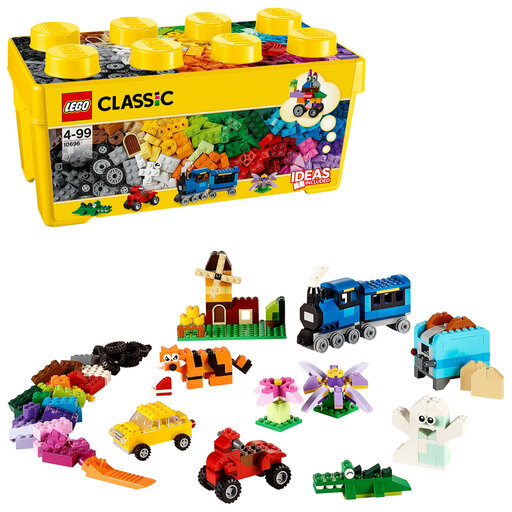
Why this product suits this profile: The box contains 484 elements in 35 colours, plus wheels, windows and practical plastic storage, making it a great introduction to free-form building from the age of 4.
The number of pieces is complemented by different colours and building elements, rather than consisting solely of identical standard bricks.
Storage box, baseplate, wheels, windows and combinable LEGO building bricks.
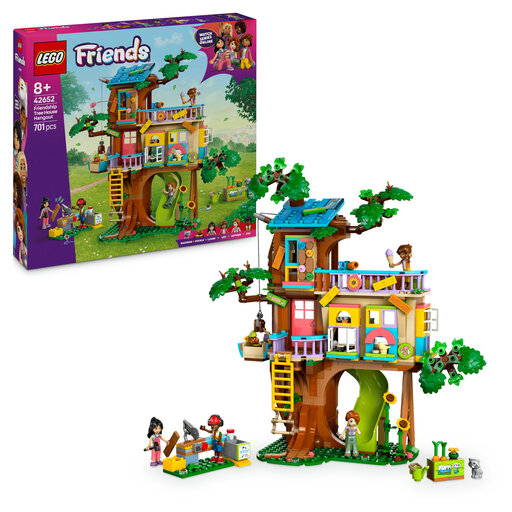
Why this product suits this profile: The set combines 701 building bricks with four figures, two animals and a detailed play area for children aged 8 and over.
It is not limited to being a display piece: the kitchen, sleeping area, slide and accessories encourage imaginative role play.
Four figures, a dog and a raccoon, plus model dimensions of approximately 31 × 28 × 15 cm.
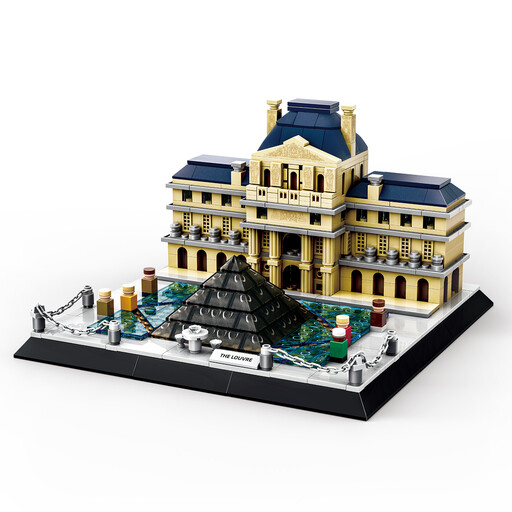
Why this product suits this profile: This architecture kit is aimed at hobby builders, collectors and families who want to build an 803-piece model and then put it on display.
The product information provides clear guidance before purchase by specifying the number of pieces, ABS material and packaging dimensions of 40 × 25 × 8,7 cm.
Architectural design, 803 ABS elements and the option to use it as decoration or a collector’s model.
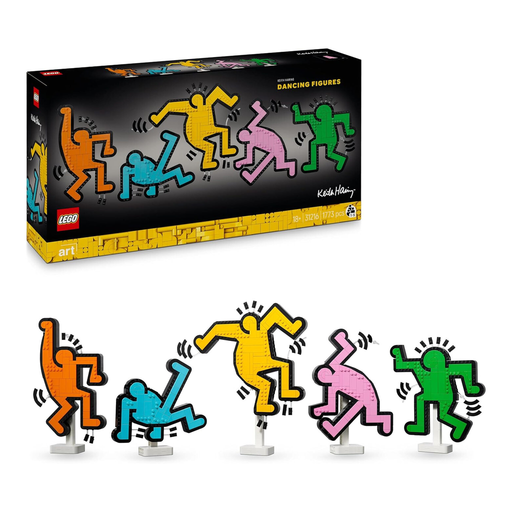
Why this product suits this profile: Designed for fans aged 18 and over, this 1,773-piece set works as wall decoration or as a standalone display model.
Its intended use is clear before purchase: the focus is on a challenging build and presentation, not play for very young children.
Five separate models, two display options and stated dimensions of 33 × 87 × 4 cm.
We have put together a complete, regularly updated list of products that fully meet these strict selection criteria and the safety regulations applicable in the EU.
For children aged 4 and over, versatile boxes such as LEGO Classic 10696 or LEGO Classic 10698 are worth considering. They contain a variety of colours, basic elements and building ideas. Parents should check the specific age recommendation and the warning about small parts before buying.
For smaller quantities, a sealable sorting box is sufficient. For larger LEGO building sets or modelling sets, several compartments for colours, shapes and specialist pieces are practical. The original instructions should be stored somewhere dry and separately. Display models are best protected from frequent rearranging on a low-dust shelf or in a display cabinet.
Yes, provided the age, difficulty level and intended use are a good match. An architecture model such as the WANGE Louvre is more suitable for hobby builders and collectors. For shared imaginative play, LEGO Friends sets with figures and accessories are a better choice. For adults interested in decoration, building blocks for adults such as LEGO ART can make a fitting gift idea.