
Lieferung heute & morgen

Qualitätsgarantie

Willkommens-Angebote freischalten: KOSTENLOSE Lieferung | Bis zu 80 % RABATT | Kostenlose 30-Tage-JoyPlus-Testphase
App herunterladen
Building blocks for children come in many forms: classic wooden blocks, magnetic tiles, marble run kits and detailed architecture sets. Choosing one may seem straightforward at first, but product images and marketing claims don’t always show whether a set will really suit family life. Age recommendation, piece size, material, storage and the level of difficulty you’re looking for all matter.
A set with several hundred pieces can offer plenty of variety, but it often takes time and patience to sort everything. For young children, larger pieces that are easy to grip are often more suitable than miniature blocks. Older children and adults, on the other hand, may enjoy a detailed kit with lots of small components.
So check:
Magnetic tiles connect quickly and are ideal for first attempts at building geometric shapes. However, they contain small, strong magnets. Damaged or open pieces must be removed immediately. Swallowing magnets can cause serious injuries and requires urgent medical attention.
When choosing magnetic STEM toys, parents should check the age recommendation, how well the casings are made and any guidance on regular checks. A certificate or standards reference in the product description is no substitute for adult supervision.
A flower kit with 3.6 mm mini bricks or a military model kit with lots of small parts is not the same as building blocks for children aged 3 and over. Depending on the design, these sets are intended for older children, teenagers or adults. One product in the range, for example, has different age recommendations in its product information. Always follow the specific safety information and packaging for the item you choose.
The age guidance is a minimum recommendation, not a blanket endorsement for every child. Also consider their fine motor skills, patience and ability to follow instructions. Sets containing small parts that could be swallowed are unsuitable for children under three. Even older children may benefit from adult supervision if the set contains strong magnets, LED components or very small pieces.
Building blocks are often made from ABS plastic or wood. For plastic pieces, look for smooth edges, securely sealed magnet casings and clear information about the material. Wooden building blocks should be free from sharp edges and sturdily made. With magnetic blocks, check that the magnets are firmly enclosed and that damaged pieces are easy to spot.
The number of pieces should suit the space you have and how you plan to use the set. A 48- or 76-piece set is easier to store than a large architecture kit with more than 1,000 pieces. A bag, box or sorting system helps prevent pieces going missing and makes it easier to build again next time. For display models, the finished dimensions and stability are also important.
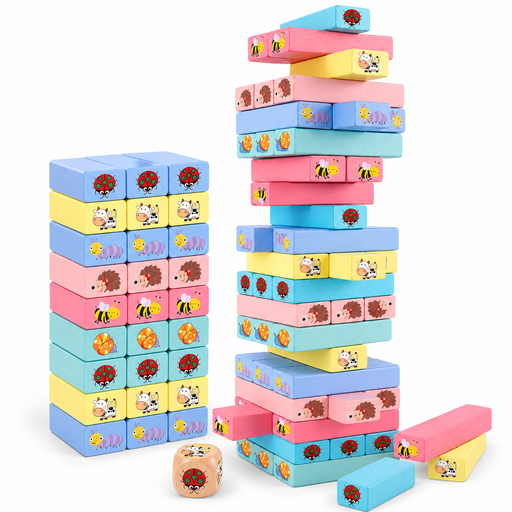
Why this product suits this profile: This wooden game includes 51 pieces, animal designs and a die. It’s listed as suitable for children aged 3 and over, and offers stacking, sorting and balancing games at home or on the go.
The piece count is clearly stated, and the game doesn’t need batteries or complicated assembly. Direct supervision is still important because of the small parts.
51 wooden blocks, a die and several ways to play; the product description says it’s intended for children aged 3 and over.

Why this product suits this profile: The 76 transparent pieces are designed for building things such as buildings, animals and vehicles. The enclosed magnets and stated edge length of 3.75 cm make it easier to assess the set against practical criteria.
The product information lists the material, piece count, dimensions and magnet warning. Check the casings and connections for cracks or loose parts before each use.
76 pieces, a transparent design and enclosed magnets; the supplier says they’re compatible with other standard magnetic tiles.
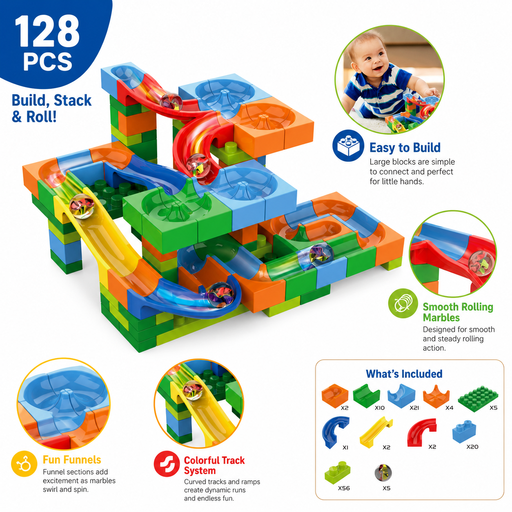
Why this product suits this profile: This marble run kit combines building with rolling action. It’s a good choice for family activities and for children who want to put their creations to the test once they’ve built them.
Its purpose is clear: to build a track for rolling balls. Before buying, parents should check the age recommendation and ball size on the product page.
128 pieces and a combination of building and play; designed for creative activities and building together.
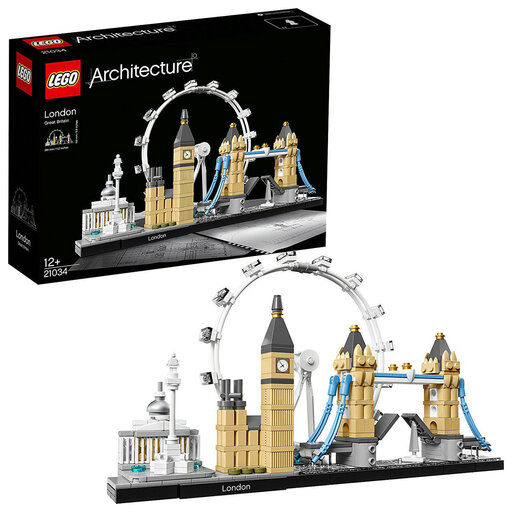
Why this product suits this profile: According to the product information, this architecture kit is intended for people aged 12 and over. It contains 468 pieces to build a London skyline featuring several famous landmarks.
The scale, piece count, finished dimensions and age recommendation are all listed, making it easier to work out how much space you’ll need before buying.
468 pieces, building instructions and a finished model measuring approximately 15 × 28 × 8 cm.
We’ve put together a complete, regularly updated list of products that meet these strict selection criteria and fully comply with the safety regulations in force in the EU.
Choose sets that the manufacturer explicitly states are suitable for children aged 3 and over, and whose pieces can’t easily be swallowed. Magnetic blocks come with additional safety warnings. Young children should be supervised while playing, and damaged pieces should be removed from the toy box.
Sorting boxes with separate compartments help keep different shapes and colours organised. A container with a lid stops small pieces from getting under furniture. Before putting everything away, it’s worth checking for cracks, missing components and loose magnets.
Lifespan depends on the material, how the pieces connect and how they’re handled. Wooden blocks should be stored somewhere dry, while plastic pieces can usually be cleaned with a slightly damp cloth. Don’t soak magnetic sets in water. Regular checks and age-appropriate use help reduce the risk of pieces becoming damaged.