
Lieferung heute & morgen

Qualitätsgarantie

Willkommens-Angebote freischalten: KOSTENLOSE Lieferung | Bis zu 80 % RABATT | Kostenlose 30-Tage-JoyPlus-Testphase
App herunterladen
Building blocks are among the toys that can keep children interested for a long time. However, sets vary considerably in their recommended age, piece size, materials and how they’re played with. A colourful picture alone won’t tell you whether a set is right for a toddler, a pre-schooler or the toys your child already has.
A 150-piece set may look impressive at first glance. However, lots of small pieces may not be suitable for a child under three. What matters is whether the blocks are easy to grip and can be used to build age-appropriate models. A smaller set with simple shapes may be a better introduction than a large collection of complicated pieces.
Magnetic building blocks can make construction easier, but they often contain small, powerful magnets. Swallowing magnets can cause serious injuries. That’s why it’s important to follow the age recommendation and read all the warnings. Any damaged pieces with visible or loose magnets should be removed from the playroom.
Terms such as “educational”, “STEM toy” or “motor skills toy” are broad descriptions. These specific details are more useful:
Large, easy-to-grip pieces are usually more practical for toddlers. According to the product details, the LEGO DUPLO Classic 10913 Brick Box is recommended for children aged 1.5 and over and contains 65 pieces. The LEGO DUPLO Classic 10914 Deluxe Brick Box has 85 pieces and also includes figures and accessories for imaginative play.
For children aged 3 and over, smaller shapes and more complex connections may be suitable. Always follow the age recommendation carefully for magnetic sets, as several products carry specific warnings about small parts and powerful magnets.
ABS plastic is used in many magnetic building blocks. Look for smooth edges, sealed casings and clear information about the materials. For wooden toys, details about the wood’s origin and how it’s made can also help you choose. For example, the hauck Sort N Build is described as being made from FSC-certified wood and includes eight shape blocks.
Whatever the material, check the pieces regularly for cracks, sharp edges, loose components or splinters. Check the product page for manufacturer information about certifications such as CPC or ASTM, or compliance with European requirements. Certification doesn’t replace choosing a set that’s right for your child’s age or supervising them while they play.
A good set should suit the space you have and the way your child likes to play. A 28-piece set makes a manageable introduction, while sets with 60, 81 or 117 pieces offer more possibilities for larger constructions. A storage bag or box helps prevent individual pieces from going missing and makes tidying up easier.
Compatibility is also important with magnetic building blocks. According to the product details, sets with the same block size can be combined. Before buying, compare dimensions such as 5.5 cm or 7.5 cm rather than choosing on design alone.
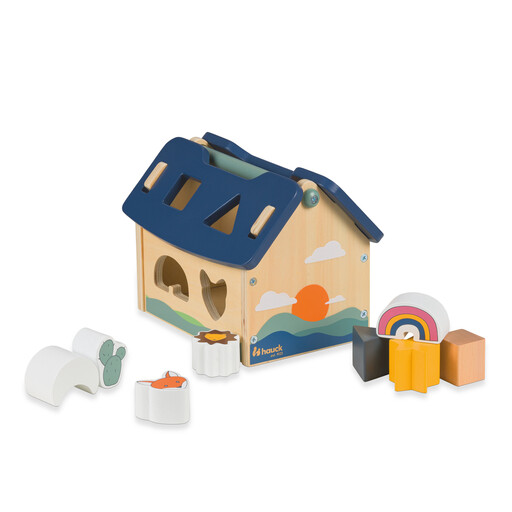
Why it suits this profile: Designed for children aged 12 months and over, this shape sorter offers a simple introduction with eight wooden blocks, a house and a carry hole.
The number of pieces is manageable, and each shape goes into its matching hole. This makes for a more controlled introduction, rather than an overwhelming collection of small parts.
FSC-certified wood according to the product description; the blocks can be stored inside the house.
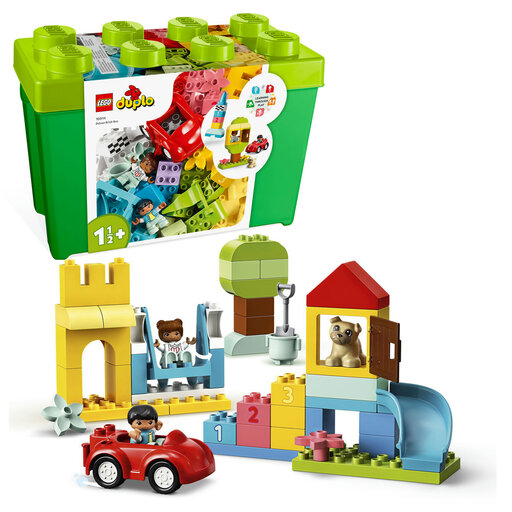
Why it suits this profile: The large blocks are designed for little hands and combine open-ended building with figures, a vehicle, number bricks and a storage box.
The product description specifies the number of pieces, the recommended age of 1.5 and over, and exactly what’s included. That makes it easier to judge the set’s true size.
85 pieces; large blocks and accessories for building and imaginative play; storage box.
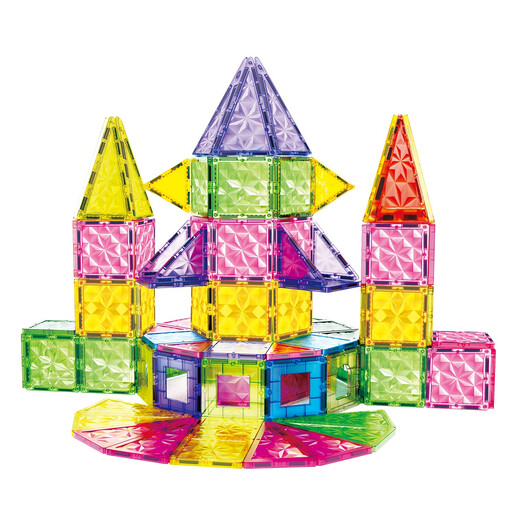
Why it suits this profile: According to the product details, this set is for children aged 3 and over. Its 117 pieces can be used to build larger 3D creations such as houses, animals and castles.
The 7.5 cm size, number of pieces and warnings about small parts and magnets are all clearly stated. This makes it easier to check the details before you buy.
117 pieces; magnetic connections; storage solution; made from ABS plastic according to the product details.

Why it suits this profile: This 28-piece set has 5.5 cm blocks, making it easier to store. According to the product details, it’s suitable for children aged 3 and over.
The smaller number of pieces means less to tidy away. The product details also include warnings about small parts and magnets, and state that adult supervision is needed.
28 pieces; 5.5 cm size; storage bag; designed for 2D patterns and 3D constructions.
We’ve put together a complete, regularly updated list of products that meet these strict selection criteria and the safety requirements in force in the EU.
It depends on the size of the pieces and the manufacturer’s recommendation. Sets with larger pieces are available for toddlers from around 12 or 18 months. The product details for most of the magnetic building blocks and sets with small pieces mentioned here recommend them for children aged 3 and over. Don’t choose a set below its recommended age.
Open-ended construction sets can be enjoyed for longer if they include a variety of shapes, figures or ways to expand the set. Large blocks and simple sorting activities are a good fit for younger children. Pre-schoolers are more likely to enjoy a variety of shapes, magnetic connections or themed construction sets. A storage box helps keep all the pieces together.
They can make a good gift for children who have reached the recommended age. Before buying, check the warnings about magnets and small parts. It’s also a good idea to check the pieces regularly for cracks or loose magnets and to supervise younger children closely while they play.