
Lieferung heute & morgen

Qualitätsgarantie

Willkommens-Angebote freischalten: KOSTENLOSE Lieferung | Bis zu 80 % RABATT | Kostenlose 30-Tage-JoyPlus-Testphase
App herunterladen
Building blocks for children are among those toys that can stay interesting for a long time: a model is built, changed and taken apart again. At the same time, the choice can be overwhelming. Between magnetic building blocks, classic interlocking bricks and detailed architecture sets, there are significant differences in age recommendations, piece size, building principles and safety requirements.
If you only look at the number of pieces or an eye-catching box, you might end up buying a set that doesn’t suit the child’s age, patience or available space. The following criteria will help you assess marketing claims objectively.
A set with several hundred pieces can offer many construction possibilities, but it may also consist of lots of small, similar elements. For younger children, large, easy-to-grip pieces are often more practical. With an architecture set containing many small parts, it’s more about patience and the ability to follow building instructions step by step.
So don’t just check the number of pieces, but also:
Magnetic building blocks for children can be joined without the usual clicking together. This makes them easier to start with, but it doesn’t mean they’re suitable for every age. Small parts and strong magnets can be dangerous if swallowed. If the set gets damaged, it must be taken out of play immediately, especially if a magnet is visible or loose.
The age rating on the packaging is therefore only part of the check. You should also consider warning labels, the size of the elements and the recommended supervision.
LEGO-compatible bricks or other interlocking blocks can’t always be combined without restrictions. Differences in stud size, height, clutch power and special shapes can mean connections aren’t stable. The same applies to magnetic sets: claims of “compatibility” often refer to a specific element size, for example 3.75 cm or 7.5 cm.
For children under three, sets with small parts and magnets are unsuitable. Even if individual product descriptions contain conflicting age recommendations, the stricter safety warning should apply. For sets recommended for ages three or six, consider whether the child can already handle small parts safely.
With detailed historical model building blocks, the recommended age limit is often higher. The COBI model of the Messerschmitt ME 262A-1a, for example, is recommended for children aged nine and over and contains 390 pieces. Such models are better suited to older children, teenagers or adult hobby builders.
ABS plastic is used in many construction sets. What’s meaningful are specific details about rounded edges, clean workmanship and securely enclosed magnets. Manufacturer claims about standards should be clearly stated:
Such information doesn’t replace checking before purchase and during use. Packaging, small parts and unused pieces should be kept out of reach of children under three.
Construction toys can engage different skills through gripping, connecting, planning and rebuilding. However, that doesn’t automatically mean guaranteed educational value. With a STEAM toy, what matters most are the actual play possibilities: can geometric shapes be built? Are there templates? Can the child develop their own solutions?
For playing together, both open-ended creative sets and themed models work well. A building set for girls and boys shouldn’t be chosen based on gender stereotypes, but on interests, age and difficulty level.

Why this product fits the profile: The set contains 76 transparent magnetic elements with a stated edge length of 3.75 cm and is recommended for children aged three and over. It’s suitable for first 2D and 3D constructions without batteries.
The specific piece count and element size make it easier to assess the scope. The magnetic connection means there’s no fiddly interlocking system.
76 pieces, storage bag according to the product description and no batteries required.
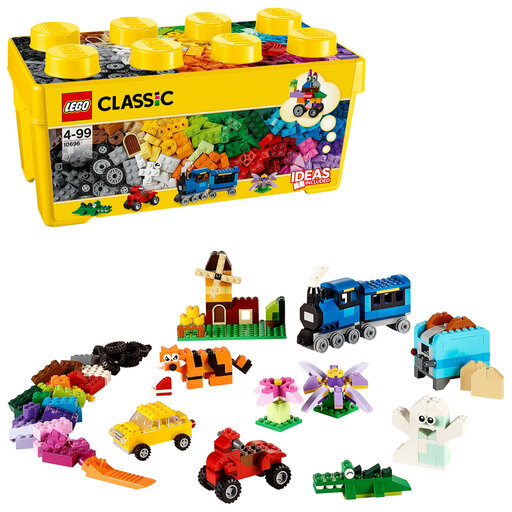
Why this product fits the profile: The box is recommended for children aged four and over and contains 484 elements in 35 colours, plus windows, eyes, wheels and base plates. This makes it suitable for free building and as an addition to an existing collection.
The selection of pieces is described in detail. A storage box helps keep things tidy and reduces the risk of individual parts being left loose in the playroom.
484 elements, 35 colours, several special pieces and storage box.
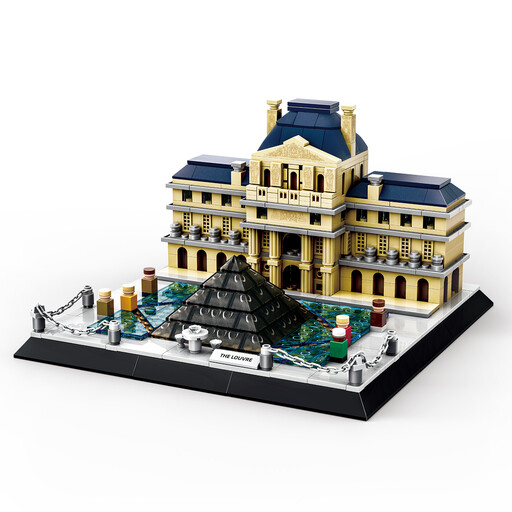
Why this product fits the profile: According to the product information, this architecture set is aimed at children aged six and over with supervision, as well as adult model builders. 803 ABS pieces form a specific museum model for building together and then displaying.
The age recommendation and the note about small parts are clearly stated. This makes the set more suitable for planned parent-child time than for unsupervised play.
803 pieces, themed architecture model and gift box with stated dimensions of 40 × 25 × 8.7 cm.
We’ve put together a complete, regularly updated list of products that fully meet these strict selection criteria and the safety regulations in force in the EU.
That depends on the piece size and the connection system. Sets with small parts or magnets are generally not intended for children under three. With complex model building sets, the recommendation may be six or nine years. What matters are the individual manufacturer’s instructions and the child’s ability to handle small parts safely.
The lifespan depends on the material, the connections and how they’re stored. Building blocks should be kept dry and tidy, and regularly checked for cracks, warping and loose parts. With magnetic building blocks, extra care is needed: as soon as a magnet is visible or no longer securely enclosed, that piece must not be used any more.
Both systems have different uses. Magnetic building blocks allow quick construction of flat surfaces and 3D shapes. Classic interlocking bricks usually offer more possibilities for detailed models, figures and permanent connections. The right choice depends on age, fine motor skills, the desired theme and whether the child prefers to build freely or follow instructions.