
Lieferung heute & morgen

Qualitätsgarantie

Willkommens-Angebote freischalten: KOSTENLOSE Lieferung | Bis zu 80 % RABATT | Kostenlose 30-Tage-JoyPlus-Testphase
App herunterladen
Building blocks for children are among the most versatile play ideas for families. Depending on age, piece size and theme, they are ideal for stacking, free construction, rebuilding or collaborative model-making. However, a large number of pieces does not automatically mean a suitable play set. What really matters are safety information, difficulty level, storage, and whether your child prefers to build freely or follow instructions.
A set with several hundred pieces can be versatile, but it often requires sorting, patience and plenty of space. For toddlers, large, easy-to-grip elements are usually more suitable than lots of small blocks. For older children, on the other hand, a higher piece count can make sense if they enjoy working on a model over a longer period.
Building blocks from 18 months are very different from building blocks from 4 years or building blocks from 5 years. Small parts pose a choking hazard and are not suitable for children under three. The age recommendation on the packaging and the manufacturer’s safety instructions should therefore be your main guide before buying.
Loose blocks quickly scatter around the playroom. A storage box or a stackable container makes tidying up much easier. It is also worth checking whether a set can be combined with blocks you already own. LEGO Classic bricks and LEGO DUPLO bricks, for example, belong to different size systems and are designed for different age groups.
For children from 12 months, large blocks with simple shapes and few elements are easier to manage. The YEEHOO set in our selection contains 22 pieces and, according to the product details, is intended for children from 12 months. For sets aimed at ages 4 or 5 and above, smaller components, wheels, windows and special elements may be included. These models should be kept out of reach of younger siblings.
Look out for:
The sets mentioned are mostly made from ABS plastic. What matters are precise connections, rounded edges and a clear manufacturer or EU responsible person reference. Before each play session, check blocks for cracks, sharp edges or loose parts. Damaged elements should not stay in the toy box.
For LEGO Classic 11045, the product details mention ABS plastic, BPA-free new materials and a low-pollutant surface. Such manufacturer statements are not a blanket quality guarantee for every single element, but they do provide concrete information about the product’s construction.
For free building, colourful basic bricks, wheels, windows and eyes are ideal. An educational construction toy can serve as a starting point for sorting, counting and spatial thinking; however, specific learning outcomes cannot be guaranteed across the board.
If you want to build a finished object and then display it, an architecture building set or military building set offers a different use compared to classic toys. Such models usually contain many small elements and are aimed more at older children, teenagers or adults. For joint parent-child building, you should also consider the time available.
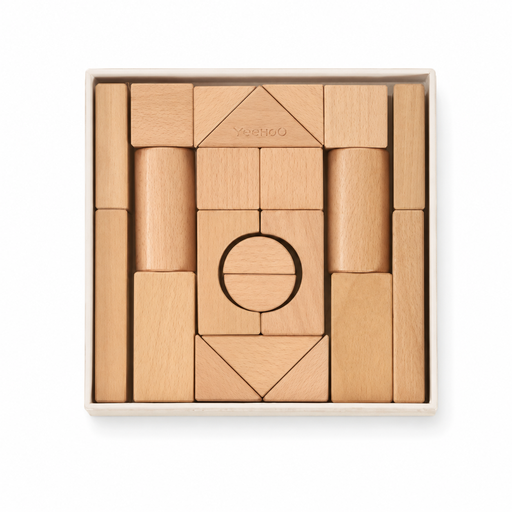
Why this product fits the profile: This compact 22-piece set is, according to the product details, intended for children from 12 months and is ideal for first stacking and slotting attempts as well as shared storytelling.
The manageable number of pieces prevents beginners from starting with an unwieldy collection. The age recommendation should still be followed.
22 pieces, age rating from 12 months and a woodland theme for free stacking and role play.
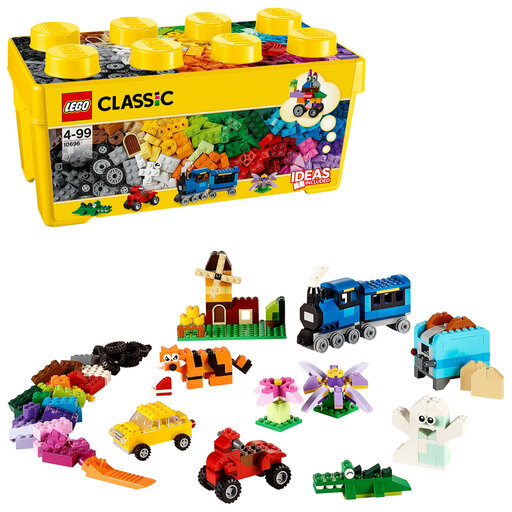
Why this product fits the profile: According to the product description, the box contains 484 elements in 35 colours, plus wheels, windows, eyes and a green baseplate. It is recommended for children aged 4 and above.
The included plastic storage box addresses the common storage issue. The selection of pieces supports both guided and free building.
484 elements, storage box and compatibility with other LEGO bricks according to the product details.
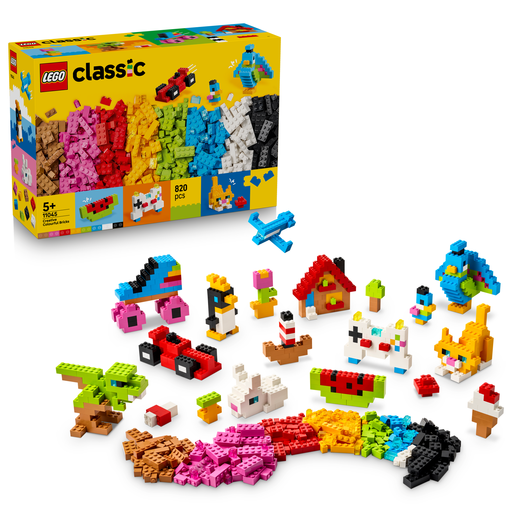
Why this product fits the profile: According to the product details, this set contains 820 pieces and instructions for several models. It is aimed at children aged 5 and above and offers room for their own creations.
The age limit and specific piece count make the set’s challenge level clearer than a general marketing claim about creativity.
820 colourful elements, 14 printed model ideas and additional digital building instructions according to the product description.
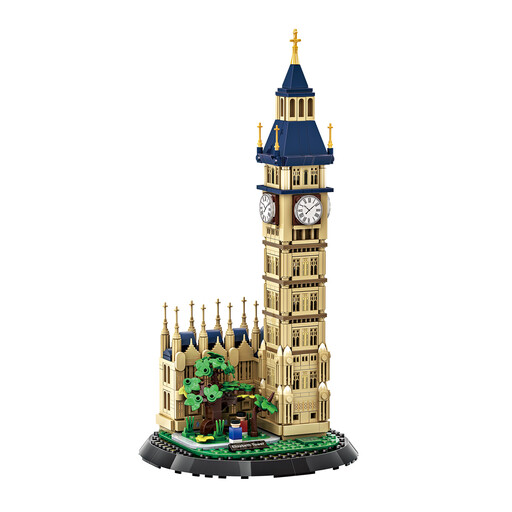
Why this product fits the profile: This architecture building set with 783 pieces is, according to the product details, suitable for older children under supervision as well as hobby builders, and can serve as a decorative model once assembled.
The piece count, packaging dimensions and recommended supervision make it clear that this is not a toddler set but a more challenging model-building project.
783 ABS elements, architecture theme and intended use as a display model according to the product details.
We have put together a complete, regularly updated list of products that fully meet these strict selection criteria and the safety regulations in force in the EU.
For this age, large blocks with few, easy-to-grip elements are ideal. The set should be explicitly approved for the respective age group. Small parts, wheels or accessories that pose a choking hazard should be kept out of reach of toddlers.
The lifespan depends on the material, connections, usage and storage. Blocks should be kept dry, protected from excessive heat and regularly checked for damage. If you notice visible cracks or deformation, the affected piece should be removed.
For first experiences, a small set is enough. From preschool age onwards, a collection with several colours, wheels, windows and baseplates can offer more construction possibilities. A high piece count is worthwhile especially when there is enough space for sorting and the child wants to build for longer periods.