
Lieferung heute & morgen

Qualitätsgarantie

Willkommens-Angebote freischalten: KOSTENLOSE Lieferung | Bis zu 80 % RABATT | Kostenlose 30-Tage-JoyPlus-Testphase
App herunterladen
Building blocks for children are among those toys that can stay interesting for a long time. However, not every set suits every age or living environment. Small parts, connections that are difficult to separate, and a lack of storage options often mean that a seemingly suitable gift hardly gets used.
This buying guide shows what parents, grandparents and other relatives should look for when purchasing. The focus is on safety, age recommendation, material, play concept and everyday practicality.
A set with lots of features is not automatically suitable for a one-year-old child. What matters most includes the size of the pieces, the finger strength required and any small parts. Building blocks for toddlers from 12 months should be easy to grip and contain no swallowable elements.
Magnetic building blocks require particular caution: strong magnets and small balls can pose significant risks if swallowed. A product with an age recommendation of 3 years and above should therefore not be given to younger children – not even under supposedly "brief" supervision.
Labels like "Montessori toy", "educational" or "creative construction toy" alone say little about suitability. What is more meaningful are verifiable details:
Classic building blocks need a flat play surface. Soft building blocks and climbing elements, on the other hand, take up significantly more room. Before buying, you should clarify whether the set will be used in a child's bedroom, living room or a childcare setting. Storage after playtime is also part of everyday practicality.
For learning toys from 1 year, large, chunky pieces with simple shapes make sense. A posting or sorting game can help with matching shapes and colours. With wooden blocks, parents should look for a smooth finish and regularly check the toy for splinters, cracks or loose parts.
From around 18 months, larger stacking systems become suitable. LEGO DUPLO building blocks, for example, are designed for small children's hands. The specific age recommendation of each set remains decisive.
For wooden toys, material details such as FSC-certified wood are a verifiable indication of the wood's origin. For plastic or foam products, information on material, cleaning and safety standards should be available.
The standards EN71-1, EN71-2 and EN71-3 relate to different areas of European toy safety, including mechanical properties, flammability and the migration of certain elements. A standard reference does not replace checking the specific product, but it does provide a better basis for selection.
Open-ended systems like wooden blocks allow free stacking, balancing and constructing. Stacking systems, on the other hand, support connecting and taking apart. Sorting games combine building with recognising shapes and colours.
For active children, large soft building blocks can be interesting. Depending on the design, they are suitable for crawling, climbing or creating simple obstacles. Important here are a non-slip surface, stable connections and enough free space.
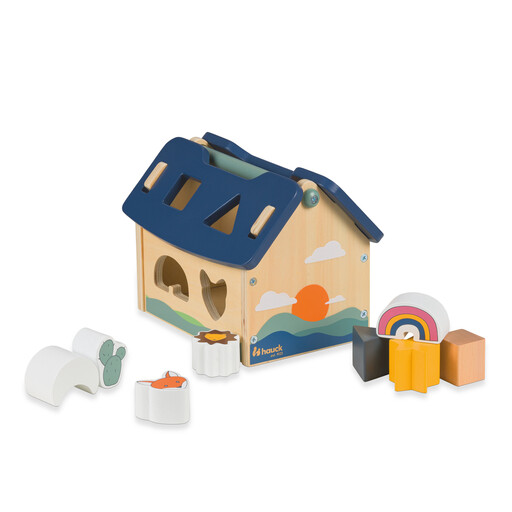
Why this product fits the profile: This wooden toy is designed for children from 12 months and combines shape sorting with storing the pieces inside the house. This keeps the scope manageable and the introduction simple.
The eight building pieces are not scattered loosely around the child's room but can be stored in the wooden house. The product description also mentions a warning about small parts and recommends adult supervision.
FSC-certified wood according to product details, carrying handle and removable roof for storage.
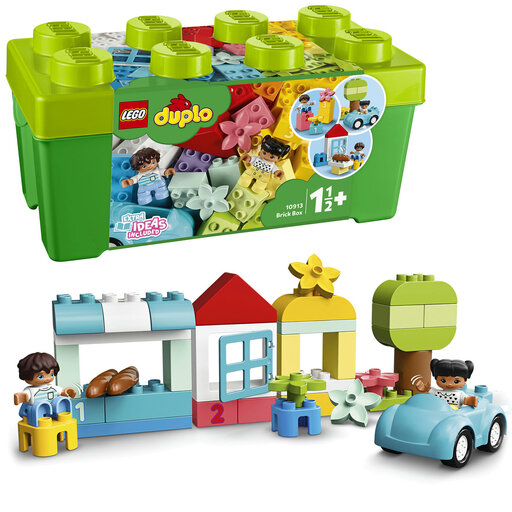
Why this product fits the profile: The box contains 65 pieces, including two figures, number bricks, wheels, a roof and flowers. It is suitable for children from 18 months and offers both free building and early role-play.
The large box also serves as storage. The age-appropriate, chunky bricks reduce the difficulty of connecting them; however, the specific age recommendation of 18 months and above should still be followed.
65 pieces, number bricks 1 to 3 and a sealable plastic box with lid.
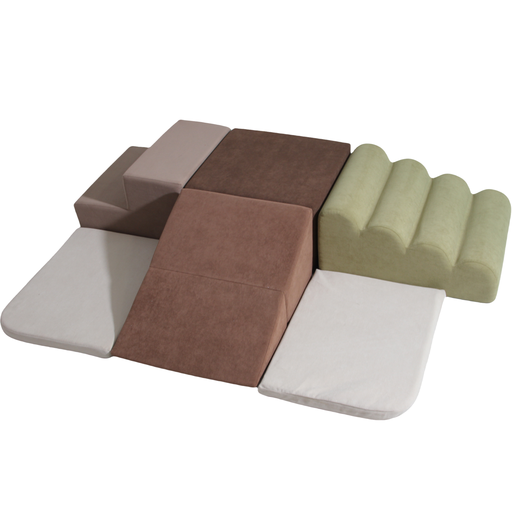
Why this product fits the profile: This six-piece soft building block set is designed for active indoor play. It can be used for building, crawling and climbing, making it suitable for families with enough space.
Non-slip bases, hook-and-loop fastenings and concealed zips are included according to the product details. The covers can be removed and machine washed.
EN71-1, EN71-2 and EN71-3 according to the product description; washable covers and compact delivery in vacuum packaging.
We have put together a complete, regularly updated list of products that fully meet these strict selection criteria and the safety regulations in force in the EU.
Before the first play session, all pieces should be checked for damage. For wooden building blocks, a dry or slightly damp cloth is usually sufficient, unless the manufacturer's instructions state otherwise. Magnetic building blocks should be cleaned dry according to the product information.
A labelled box or the included bag makes sorting easier. Damaged pieces, loose magnets, sharp edges and splintered wood should be removed from play immediately. For sets with an age limit of 3 years and above, direct supervision is particularly important.
For children from 1 year, large, easy-to-grip wooden blocks, sorting games and simple stacking toys are suitable. The specific age recommendation, piece size and manufacturer's warnings should be checked before purchase. Small components and strong magnets are not suitable for this age group.
There is no fixed minimum number. For first experiences, sets with a few shapes are sufficient. Larger boxes with 60 or more pieces offer more combination possibilities but also require more storage space. What matters is that the child can grip the pieces independently and connect them together.
Magnetic building blocks are generally intended for older children. The XINQIYUAN set mentioned is recommended for use from 3 years; at the same time, the product description warns about swallowable small parts and strong magnets. Regular checks for damage and adult supervision are essential.