
Lieferung heute & morgen

Qualitätsgarantie

Willkommens-Angebote freischalten: KOSTENLOSE Lieferung | Bis zu 80 % RABATT | Kostenlose 30-Tage-JoyPlus-Testphase
App herunterladen
Building blocks for children and adults cater to very different needs: toddlers stack simple shapes, families build scenes together, and adults seek detailed architecture models for decoration or as collector's items. However, the product images alone don't tell you whether a set matches the age, available space, and desired level of difficulty.
A set with several hundred or over a thousand pieces requires time, sorting space, and a fair amount of patience. For a toddler from 12 months old, a few easy-to-grip elements are far more sensible than a complex architecture construction kit with small parts. Conversely, a small set can quickly prove too unchallenging for an adult model-building enthusiast.
Labels like educational building blocks or construction toys describe the intended use, but don't automatically guarantee suitability for every age. What really matters are the manufacturer's specifications, the size of the pieces, and the safety warnings. According to the product details for WANGE models, sets with small particles are not suitable for children under three years old; for children aged six and above, assembly is recommended only under full adult supervision.
Architecture models made from building blocks can serve as display pieces once assembled. However, they often contain many small parts and are typically intended for older children or adults. If you're looking for a model for the living room, office, or a collection, you should distinguish between the building phase, play use, and subsequent display.
For children from 12 months old, larger elements with simple slotting, stacking, or combining options are suitable. The YEEHOO set includes 22 pieces and is specified for children from 12 months old. It supports free stacking and helps with recognising shapes, quantities, and spatial relationships.
For architecture construction sets with ABS parts and several hundred individual pieces, the stated minimum age must be observed. Small components can be swallowed. Before each use, pieces should be checked for cracks, breakages, or loose parts. Packaging should be kept away from children.
For wooden building blocks for children, you should check the material specifications, surfaces, and the size of the elements. According to the product description, the 5Five set is made from pine wood and contains 50 colourful building blocks. The product dimensions are 15.5 × 14.5 × 15.5 cm.
Many architecture models in this selection are made from ABS plastic. What matters here are not marketing terms, but the specific piece count, packaging dimensions, weight, and intended use. A tight interlocking connection can be important for a standing model; moving features such as a rotating Ferris wheel or an opening bridge should be considered as concrete product characteristics.
A city model construction set with 783 to 1,695 pieces is a very different project from a 22-piece set. Before buying, it's worth considering:
LEGO-compatible building blocks should only be chosen if the seller explicitly states compatibility. A similar shape or clamping technique is not sufficient proof of a trouble-free connection with blocks from other brands.
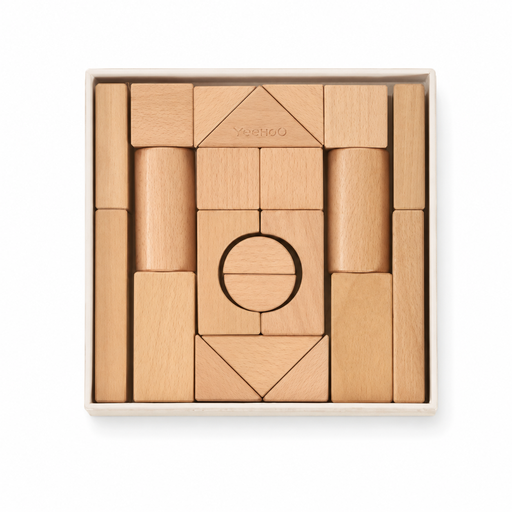
Why this product fits the profile: The 22-piece set offers a manageable introduction for children from 12 months old and can be used without extensive assembly.
The piece count and age recommendation are clearly stated. This reduces the risk of choosing an overly complex set with many small parts for a toddler.
22 pieces, a forest theme, and opportunities for stacking and combining; adult supervision is recommended.
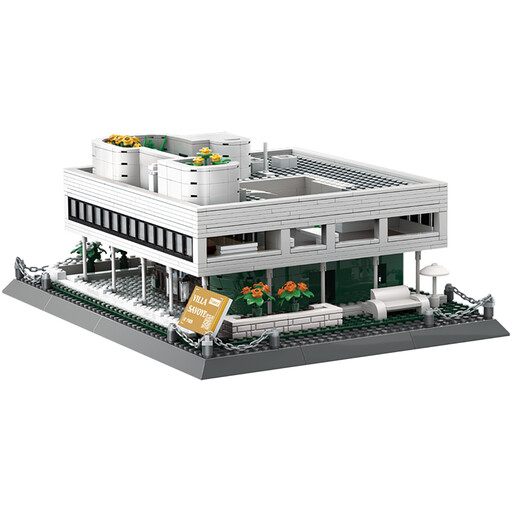
Why this product fits the profile: This ABS model recreates the Villa Savoye with 1,226 pieces and is aimed at older children from six years old, as well as adult architecture and model-building enthusiasts.
The piece count, ABS material, packaging size of 50 × 35 × 8 cm, and the age warning are all provided, making it easier to plan for space and time.
A modernist-style architecture model; according to the product details, it features interlocking ABS parts and is suitable for display in living or working spaces.
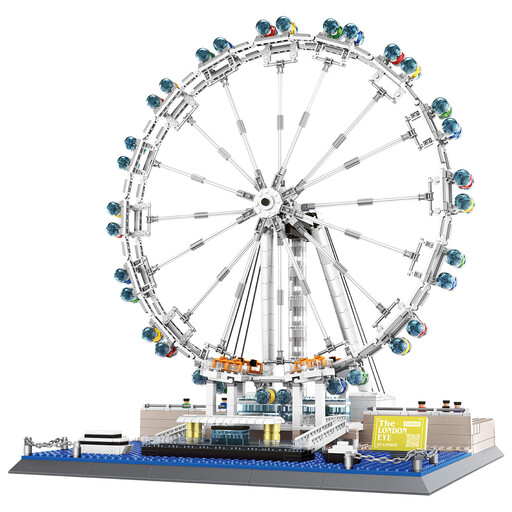
Why this product fits the profile: This model is aimed at those looking for an extensive building project featuring a specific London landmark with a moving function.
The product description states 1,528 pieces, ABS material, a packaging size of 50 × 40 × 11.6 cm, and a rotating Ferris wheel. This makes the intended use much clearer than with a vaguely described creative set.
A specific London Eye theme, a moving design element, and a substantial piece count for collaborative building or display in the office.

Why this product fits the profile: The open-ended play principle is ideal for families who want to stack, sort, and develop their own constructions without a fixed model.
The material, piece count, and product dimensions are clearly stated. This helps buyers better assess whether the set is suitable for free building and the intended storage.
50 colourful pine wood building blocks, suitable for open-ended play situations and as a gift for children, provided age suitability is checked before purchase.
We have compiled a complete, regularly updated list of products that fully meet these strict selection criteria and the safety regulations in force in the EU.
This depends on the piece size, construction method, and manufacturer's recommendation. According to the product information, the YEEHOO set is intended from 12 months old. The WANGE architecture models mentioned contain small parts and are recommended for children aged six and above under supervision. These models are not suitable for children under three years old.
The lifespan depends on the material, connections, storage, and handling. Wooden building blocks should be stored in a dry, clean place. ABS models should be protected from impacts, heat, and strong pressure after assembly. Damaged, deformed, or missing pieces should not be used further.
For younger children, manageable sets with larger pieces and a free stacking principle are a natural choice. Children aged six and above, hobby builders, and adults might prefer an architecture model construction set, for example featuring the Eiffel Tower, London Eye, Buckingham Palace, or the Villa Savoye. What remains important are the piece count, age recommendation, available assembly space, and whether the finished model is intended for play or decorative display.