
Lieferung heute & morgen

Qualitätsgarantie

Willkommens-Angebote freischalten: KOSTENLOSE Lieferung | Bis zu 80 % RABATT | Kostenlose 30-Tage-JoyPlus-Testphase
App herunterladen
Building sets for children and adults differ significantly in age recommendation, number of pieces, building objective and safety requirements. A brightly coloured set isn't automatically suitable for every child, and a high piece count doesn't necessarily mean the right level of challenge. Parents, families, LEGO fans and adult hobby builders should therefore check a few details before making a purchase.
Small parts are not suitable for children under three years old. With magnetic building blocks, there is an additional warning: swallowed magnets can cause serious injury. Products containing magnets should therefore be checked regularly for cracks, loose parts and damaged magnet chambers.
Even within the age group of three years and above, there are differences. A simple magnetic starter set may be suitable for getting started, while an architecture kit with several hundred pieces demands considerably more patience and fine motor skills.
A high number of parts can lead to a detailed model, but it isn't automatically more versatile. What matters is whether the set allows for free construction, multiple models or just one fixed build.
A 3-in-1 building set like the LEGO Creator Retro Camera, for example, contains 261 pieces and can be built as a camera, camcorder or television. A LEGO Classic Set with 484 elements, on the other hand, is designed for free building and includes wheels, windows, eyes and base plates, among other things.
Before buying, you should check whether the finished model will fit on a shelf, desk or in a display cabinet. For family sets, a storage box or bag is also practical. Loose small parts make it harder to pick up again and can pose a safety risk in households with younger siblings.
Pay attention to the manufacturer's age recommendation and the warning notices on the product page. Building sets for ages 3+ often contain smaller elements and magnets. Direct adult supervision is particularly advisable during the first use.
For building sets for ages 8+, moving functions, multiple build variations or more challenging instructions are often included. Building sets for adults are frequently designed as decorative models, collector's kits or extensive themed worlds. They may also contain small parts and are not automatically suitable for children.
For products with declared conformity to EN 71, this is a relevant European toy safety standard. The specific age rating and the manufacturer's own instructions remain decisive nonetheless.
ABS plastic is used in many construction toys. Check whether information on material, rounded edges and workmanship is provided. With magnetic building blocks, the magnets should be securely enclosed within the part. Damaged pieces should no longer be used for play.
Magnetic building blocks connect without a stacking system and enable quick 2D and 3D constructions. Classic interlocking bricks, on the other hand, often offer greater detail accuracy for models such as vehicles, buildings or plants.
For free creativity, building blocks for children and open-ended LEGO sets are ideal. If you're looking for a decorative model, pay attention to the finished dimensions. The LEGO Botanicals Chrysanthemum is approximately 26 cm tall including pot and stand, and comprises 278 pieces. The LEGO Harry Potter Hogwarts Castle and Grounds is considerably more extensive with 2,660 pieces and a model size of roughly 21 × 35 × 25 cm, requiring a permanent display space.

Why this product suits the profile: The set offers a manageable introduction to magnetic building and includes various geometric shapes for houses, animals and simple 3D structures.
The piece count remains manageable for beginners. The product details also mention rounded edges and enclosed magnets; the warning notices must still be observed.
55 pieces, no batteries required, magnetic connection and ABS plastic.
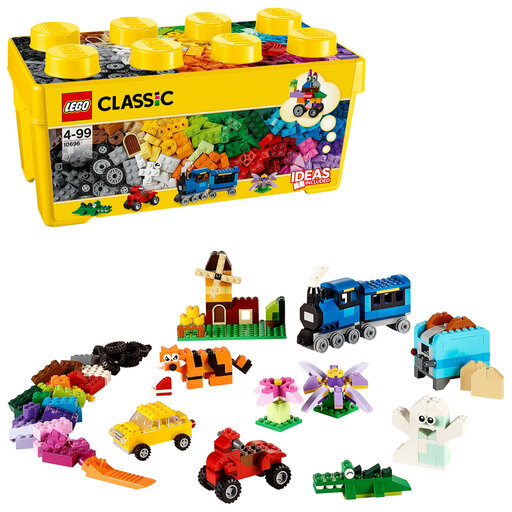
Why this product suits the profile: The box is aimed at children aged four and above, and at families looking for a versatile construction toy with a storage solution.
Instead of prescribing just one fixed model, the box contains different colours, wheels, windows, eyes and base plates for free construction.
484 elements, 35 colours, building ideas and a plastic storage box.
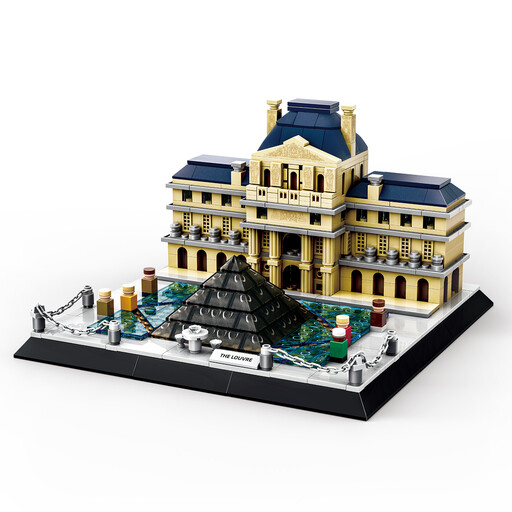
Why this product suits the profile: The architecture building kit appeals to adults, teenagers and families looking for a detailed display model with a cultural connection.
The product data lists 803 pieces, ABS material and a packaging size of 40 × 25 × 8.7 cm. This makes it easier to assess the scale before buying.
Architecture theme, 803 building pieces and a model for decoration or collection.
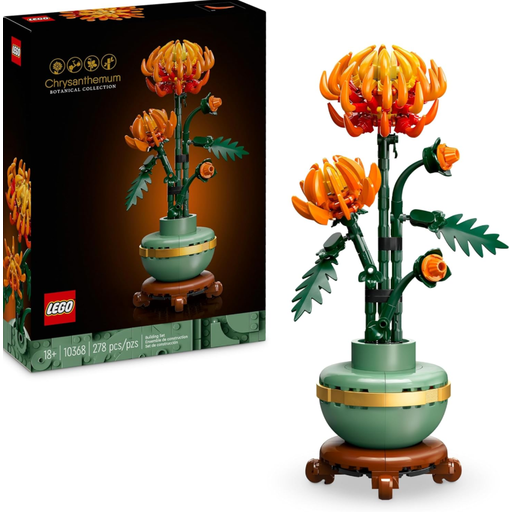
Why this product suits the profile: The set combines creative building with a decorative display and is aimed at fans aged 18 and over according to the product information.
The product description lists the piece count, finished dimensions and digital building instructions. This makes the build scale and eventual display space clear in advance.
278 pieces, movable leaves and petals, plus pot and wood-effect stand.
We have put together a complete, regularly updated list of products that fully meet these strict selection criteria and the safety regulations in force in the EU.
Sets with a clear age rating of three years and above and well-sealed magnets (if magnetic building blocks are involved) are suitable. Adults should supervise the first play sessions and immediately discard any damaged parts. Sets with small parts and magnets are not suitable for children under three years old.
The lifespan depends on the material, connection system, storage and usage. ABS parts can be assembled and disassembled repeatedly with careful handling. Stored in a dry place, protected from direct sunlight and kept separate from small parts of other sets, the pieces remain easier to find. Magnetic sets should be checked regularly for loose magnets and cracks.
Yes, decorative LEGO Botanicals, architecture kits, military models and collector's sets in particular can work as gift ideas for children and adults. What matters is the recipient's interest, the piece count, the available display space and the age rating. Forced sales promises are less helpful here than concrete product data.