
Lieferung heute & morgen

Qualitätsgarantie

Willkommens-Angebote freischalten: KOSTENLOSE Lieferung | Bis zu 80 % RABATT | Kostenlose 30-Tage-JoyPlus-Testphase
App herunterladen
Purchasing a new hob is a pivotal step in any kitchen renovation or new build. A built-in ceramic hob is a popular choice, prized for its sleek aesthetics and easy cleaning. However, the market is saturated with options, and a few common pitfalls can lead to a costly wrong decision. This guide will help you understand the essential criteria and make an informed choice that perfectly matches your requirements.
Before diving into technical specifications, it's crucial to know the typical mistakes made during the selection process. Avoiding them not only saves money but also significant post-purchase hassle.
To steer clear of these traps, you should focus on three objective core parameters. These define the functionality, safety, and compatibility of your new hob.
A crucial feature is whether the hob is standalone. A standalone ceramic hob has its own controls and can be installed independently of an oven anywhere in the countertop. This offers maximum flexibility in kitchen design. In contrast, paired hobs are controlled via a matching built-in oven and are restricted in their placement.
Before buying, always measure the existing countertop cutout (width and depth) and meticulously compare these measurements with the cutout dimensions in the manufacturer's technical data. A standard size for family kitchens is often a 60cm hob, but more compact or wider models are also available.
The total power output, specified in watts (W), determines how quickly the hob heats up. For most households, a total output between 6000 and 7500 W for a 4-zone hob is a good benchmark. Models with lower power will take correspondingly longer to heat pots and pans.
The number and type of cooking zones should match your cooking habits:
Modern electric hobs offer a range of features that significantly enhance safety and ease of use:
Here are some product recommendations tailored to specific user profiles, taking the above criteria into account.

Why This Fits Their Persona: Ideal for small kitchens, apartments, or office kitchenettes where space is limited but full functionality is needed for daily meal preparation. Its compact 29cm width makes it a perfect built-in electric hob for narrow countertops.
This model bypasses the safety pitfall by integrating a child lock, a residual heat indicator, and overheat protection despite its compact size. The clear cutout dimensions (26 × 49 cm) also prevent costly installation errors.
Efficient use of space with 3000W total power and 9 power levels for precise temperature control. The plug-in design simplifies installation.
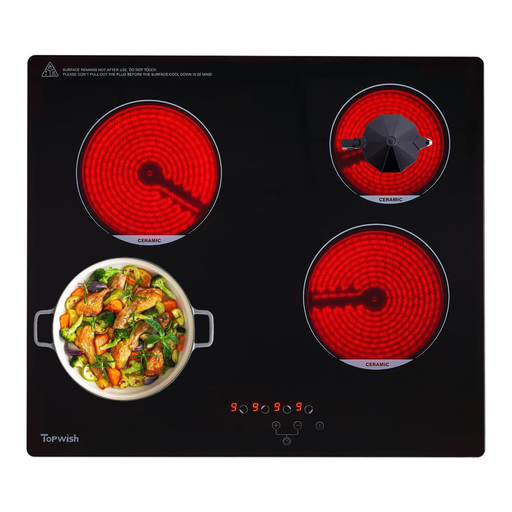
Why This Fits Their Persona: The standard solution for most family kitchens. With a 60cm width and 4 zones, including two flexible dual-ring zones, it offers ample capacity and flexibility for daily cooking and more elaborate meals.
Directly addresses the issue of inadequate safety with a reliable child lock, a timer, and a clear residual heat indicator. The responsive touch control panel avoids the frustration of imprecise operation.
High flexibility thanks to dual-ring cooking zones that adapt to different pot sizes. The 6600W total power ensures rapid heating.
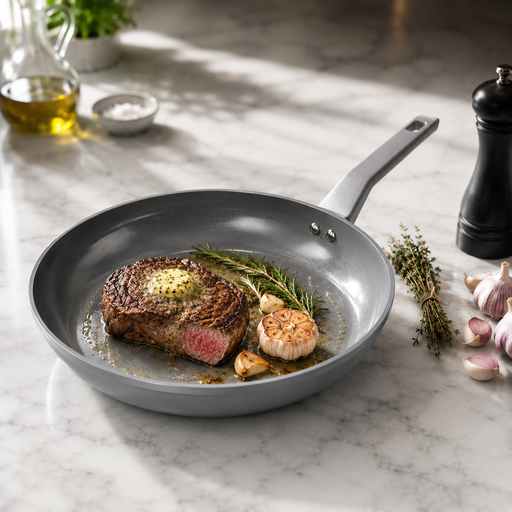
Why This Fits Their Persona: An ideal companion for any new ceramic hob. The multi-layer construction with a heat-conductive aluminium core ensures fast, even heat distribution, making optimal use of a modern hob's precise temperature control.
Prevents a common follow-up problem: damaging the new hob with unsuitable cookware. The smooth, dual-layer stainless steel base is optimised for ceramic glass, preventing scratches and ensuring perfect contact with the cooking zone.
According to the manufacturer, the ceramic coating is 100% free of PFAS, PFOA, and PTFE. It allows for healthy cooking with little to no oil and is easy to clean.
We've compiled a complete, up-to-date list of products that fully meet these strict selection criteria and safety regulations.
1. Can I install a ceramic hob myself? For models with a standard plug (plug-in), installation into a suitable cutout is generally possible. However, for hobs that require a hardwired connection to a dedicated cooker outlet (especially high-power, 4-zone models), the installation must be carried out by a qualified electrician for safety and insurance reasons.
2. What cookware is suitable for a ceramic hob? The ideal cookware has a thick, perfectly flat, and smooth base to ensure optimal heat transfer and prevent scratches. Suitable materials include stainless steel, enamelled cast iron, and special cookware designed for ceramic hobs. Pots made of aluminium or copper are often less suitable unless they have a ferromagnetic base. Warped or dirty pot bases should be avoided.
3. How do I avoid scratching my new hob? Never drag pots and pans across the glass surface; always lift them. Remove sugary or salty spills immediately with a damp cloth, as they can burn into the surface when heated and cause damage. For stubborn, burnt-on residues, use a special glass scraper and appropriate cleaning agents for ceramic glass. Avoid abrasive sponges and harsh chemicals.