For baking together
If you’re making a lemon loaf cake from a recipe for a baking get-together, check which heating function it specifies and make sure your cake tin fits inside. Dr. Oetker recommends a 25 × 11 cm tin for its recipe.


Choose an oven with the heating function your recipe calls for, and make sure your cake tin fits with enough room to spare. For Dr. Oetker’s lemon loaf cake, the recipe specifies around 150 °C with fan assistance or 170 °C with conventional top and bottom heat, using a 25 × 11 cm tin. A built-in oven is an option if you have a suitable housing; if not, a freestanding oven may work, provided your tin and the required clearance fit inside.
If you’re making a lemon loaf cake from a recipe for a baking get-together, check which heating function it specifies and make sure your cake tin fits inside. Dr. Oetker recommends a 25 × 11 cm tin for its recipe.
If you don’t have space for a built-in oven, a freestanding model could be an option. As well as checking its stated capacity, check the internal dimensions and shelf area to make sure your tin will fit.
If you use your oven often, energy consumption and cleaning features may also influence your choice, alongside the heating functions. The Verbraucherzentrale highlights energy consumption as an important factor when buying an oven for frequent use.
| Priority | What to check when buying | Who it matters to most |
|---|---|---|
| The right heating function for your recipe | Check whether the oven has fan-assisted or conventional top and bottom heat, and whether you can set the recipe’s temperature. | If you want to follow a specific recipe when baking together, the heating function and temperature settings are key. Around 36% of consumers put baking to the recipe first. |
| Space for your tin and portions | Compare the internal dimensions, shelf area and shelf height with your tin. Dr. Oetker recommends a 25 × 11 cm tin for the example recipe. | If you’re baking for several people, make sure the tin actually fits on the shelf; the capacity in litres alone won’t tell you. Around 29% of consumers focus particularly on the tin and space for their baking session. |
| Fitting the oven into your kitchen | For a built-in oven, check the appliance and housing dimensions; for a countertop model, check the external dimensions, interior and placement instructions. | If you don’t have a suitable housing or have limited space, the type of oven will directly affect your choice. Around 21% of consumers put finding a suitable place for their oven first. |
| Energy use and cleaning | For ovens that require an energy label, compare the kWh per standard cycle; small ovens may be exempt. Check the cleaning method and care instructions for the specific model. | If you bake or cook often, energy use and cleaning effort may matter more to you than they would for a one-off afternoon of baking. Around 14% of consumers prioritise these ongoing running considerations. |
The stated oven capacity doesn’t tell you whether your tin will fit on the shelf. Dr. Oetker’s example recipe uses a 25 × 11 cm tin.
Compare your tin’s dimensions with the interior, shelf area and shelf height of the specific oven.
The appliance dimensions alone don’t tell you whether it meets the installation requirements for that model.
Check the housing against the specifications and installation instructions for the specific oven. If you don’t have a suitable housing, you could consider a freestanding option.
If the oven doesn’t fit, returning it or adapting your kitchen could mean extra work.
The recipe specifies the heating function and temperature. An energy label shows standardised energy consumption, not how well an oven bakes a lemon cake.
First check the heating function, space for your tin and controls. Then consider extra programmes and cleaning features if you’ll use them for other things too.
Built-in ovens such as the HBA272BB3 are designed for kitchens with suitable housing and for people who need a choice of heating functions.
The BBIM12300X built-in oven is available with a 72 l capacity and a choice of heating functions.
The freestanding countertop ovens TO 2068 and TO 2073 may suit kitchens without space for a built-in oven.
The TS6PB51ZAB built-in oven combines a choice of heating functions with automatic programmes and pyrolytic cleaning.
This selection includes built-in ovens and a compact mini oven. For each model, compare the available heating function and usable interior space with your recipe and cake tin. Built-in models must also fit the housing.
 No image available
Worth considering for recipes that call for fan-assisted or conventional top and bottom heat. Match the heating function to the recipe and check that the housing dimensions suit your kitchen.
71 l capacity, pyrolytic self-cleaning and AutoPilot 10 programmes, according to the product name.
 No image available
An option if you’re looking for a built-in oven with a fan function. Before buying, check that the appliance fits the housing and your tin fits inside.
The product name lists a 70 l capacity, 3 kW, a grill, a pizza function and AquaClean steam cleaning.
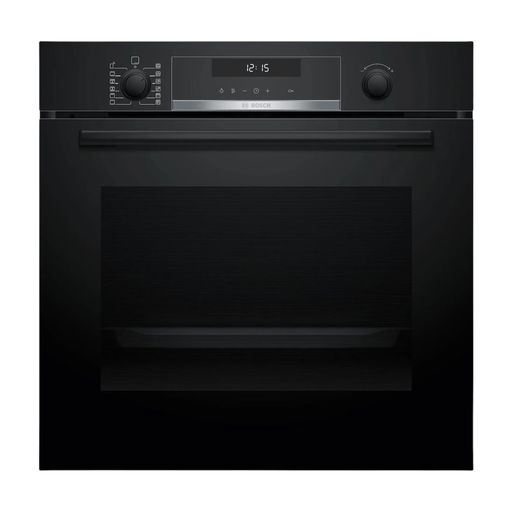 No image available
The listed heating functions may suit a recipe that calls for fan-assisted or conventional top and bottom heat. Also check the housing and make sure there’s room for your cake tin.
The product name lists Home Connect and AirFry.
 No image available
A built-in option for recipes that call for fan-assisted or conventional top and bottom heat. Check that the housing fits and that there’s room for your tin inside this particular model.
The product name lists AirFry and 3D fan-assisted cooking.
 No image available
This could be a freestanding option if you don’t have space for a built-in oven. Check the internal dimensions against your loaf tin rather than relying on the capacity alone.
The product name lists a timer, a crumb tray and a temperature range of 100 to 250 °C.
For Dr. Oetker’s lemon loaf cake, made in a 25 × 11 cm tin, the recipe specifies around 150 °C with fan assistance or 170 °C with conventional top and bottom heat, with a baking time of about 60 minutes. For a different recipe, follow its instructions and your oven’s manual.
The Dr. Oetker recipe used here says to preheat the oven. Once baked, leave the cake in the tin for about ten minutes, then turn it out and ice it straight away. Follow the instructions for any other recipe.
For an oven with an EU energy label, compare the stated kWh per standard cycle for conventional heating and fan-assisted cooking. The European Commission lists energy consumption per cycle as a measure; small ovens may be exempt from the labelling requirements. You can’t reliably work out the cost of baking a cake from this alone, without knowing the actual energy used for your recipe and your electricity tariff.
For a consumer purchase in Germany, your statutory rights are against the seller. Any additional guarantee is voluntary and comes with its own terms and conditions. The Verbraucherzentrale explains that if a product is faulty, the first remedies to consider are repair or replacement.
No. Electrical appliances must be collected separately for recycling. The Umweltbundesamt lists local recycling centres and take-back options at retailers. Check with the seller to find out what conditions apply to taking back an old appliance when delivering a new one.