
Lieferung heute & morgen

Qualitätsgarantie

Willkommens-Angebote freischalten: KOSTENLOSE Lieferung | Bis zu 80 % RABATT | Kostenlose 30-Tage-JoyPlus-Testphase
App herunterladen
A new kitchen, or replacing individual kitchen appliances, rarely starts with questions about design. First and foremost, you need to consider installation dimensions, the power connection, energy consumption and ease of use. If you focus only on a stylish glass front or a long list of features, you may encounter unpleasant surprises during installation.
A built-in appliance must fit more than just the available width. You also need to take account of the installation height, installation depth, ventilation clearances and door movement. For example, an XXL built-in dishwasher may require a different installation height from a standard model. According to the product specifications, the Siemens SX95EX22CE requires an installation height of 865 to 925 mm, a width of 600 to 608 mm and a depth of 550 mm.
For ovens and hobs, the cut-out dimensions of the worktop or kitchen cabinet are also relevant. An appliance with an external width of 60 cm will not automatically have the same cut-out dimensions as another model.
Terms such as quick programme, boost, smart control or self-cleaning sound appealing. However, you should check specific details before making a purchase:
A pyrolytic oven can make cleaning easier, but it requires high temperatures and a suitable power connection. Hydrolytic cleaning, on the other hand, uses water and steam; residue often needs to be removed manually afterwards.
Many induction hobs and high-performance ceramic hobs are hardwired and require a suitable circuit. Models rated at around 6,000 to 7,400 watts should be installed in Germany by a qualified electrician. A supplied cable also does not automatically mean that a plug is included. According to the product description, the 7,200-watt TOPWISH induction hob uses a wire connection without a plug.
For a 60 cm built-in hob, external dimensions of approximately 590 × 520 mm and a worktop cut-out of around 560 × 490 mm are common. However, specifications vary depending on the model. For example, the Bosch PIE61RBB5E is listed with 592 × 522 × 51 mm appliance dimensions and a cut-out of 560 × 490 to 500 mm.
Before placing your order, you should therefore compare the following values from the data sheet with your kitchen:
An induction hob generates heat in a suitable pan base. This means you need magnetic cookware. A simple magnet test on the base of the pan will show whether an existing pan is basically suitable. Aluminium, copper and ceramic cookware only work on a conventional induction hob if the base contains a magnetic layer.
A ceramic hob uses heating elements beneath the glass ceramic surface and is therefore compatible with a wider range of cookware. However, the surface remains hot for longer after switching off. A residual heat indicator is therefore an important safety feature.
When choosing energy-efficient built-in appliances, you should pay attention to the EU energy label, consumption per cycle and how often the appliance will be used. According to the product specifications, a dishwasher with energy efficiency class A is not automatically cheaper in every situation if short or intensive programmes are used most of the time. The Siemens SX95EX22CE is specified as using 54 kWh per 100 Eco cycles, 9 litres of water per Eco cycle and producing a noise level of 42 dB(A).
For ovens, consumption figures for conventional and fan-assisted operation allow for a more objective comparison. The Haier H6 ID23T3HTB, for example, lists 0,98 kWh in conventional operation and 0,72 kWh in fan-assisted operation. The key consideration is which operating mode you regularly use at home.
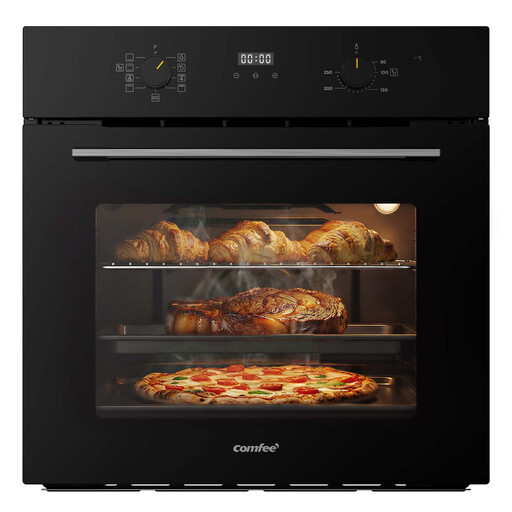
Why this product suits this profile: This multifunction oven offers ten operating modes, an LED display with timer and energy efficiency class A for everyday baking and cooking tasks.
The product data clearly states the external dimensions, capacity, power rating and cleaning function. This makes it easy to check the oven against an existing 60 cm installation space before buying.
70-litre oven capacity, ten functions, AquaClean steam cleaning and a timer with LED display.
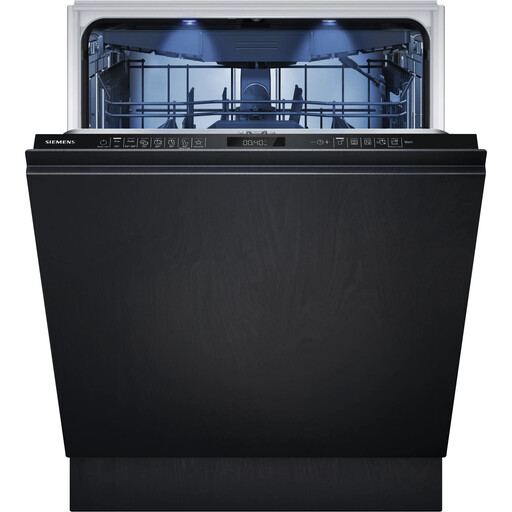
Why this product suits this profile: This fully integrated 60 cm XXL dishwasher combines space for 14 place settings with flexible baskets, app control and several drying options.
The installation height and depth are specified. Noise level, water consumption, energy class and programmes are also listed separately.
Energy efficiency class A, 9 litres of water per Eco cycle, 42 dB(A), aquaStop and varioHinge.
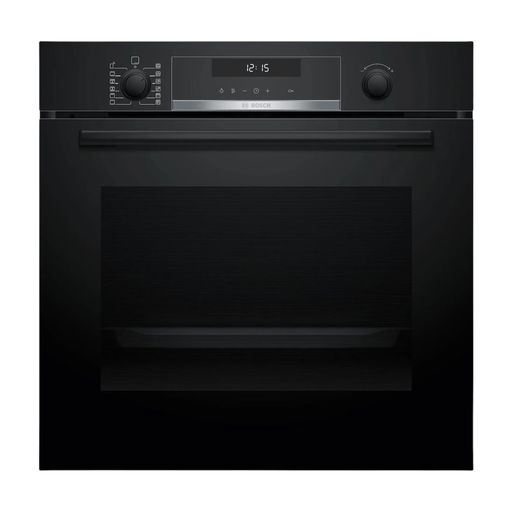
Why this product suits this profile: Designed for frequent baking and larger households, this oven offers 71 litres, nine heating methods, Air Fry, automatic programmes and Home Connect.
Pyrolysis is specified as a dedicated cleaning method. Before buying, you should check the 16 A connection and the required safety clearances.
Energy efficiency class A+, 0,69 kWh in fan-assisted operation, 30 automatic programmes and a SoftOpen/SoftClose door.
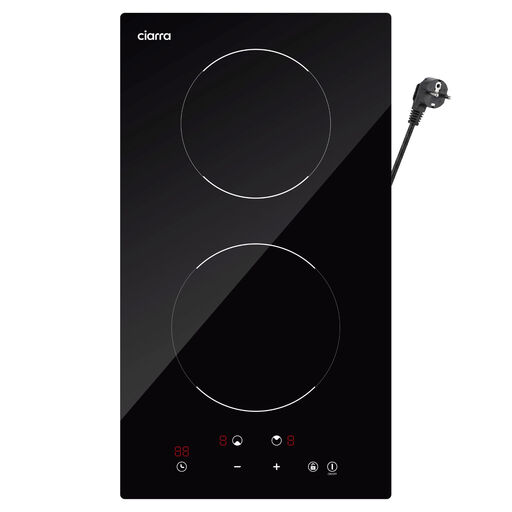
Why this product suits this profile: This 29 cm hob is ideal for small kitchens, kitchenettes or households that only need two cooking zones.
The compact design is specified with a cut-out dimension of 270 × 490 mm. This makes it easy to plan the hob specifically for smaller worktops.
Two zones, nine power levels, 3,000 watts, timer up to 99 minutes, child lock and residual heat indicator.
We have put together a complete, regularly updated list of products that fully meet these strict selection criteria and the safety regulations applicable in the EU.
Many appliances are designed around a width of 60 cm. This is often the case for built-in ovens, built-in dishwashers and built-in hobs. However, the actual external and installation dimensions may differ. You should therefore always use the manufacturer’s specifications for the specific model.
Their lifespan depends, among other things, on frequency of use, care, water hardness, ventilation and professional installation. Dishwasher filters should be cleaned regularly, glass ceramic surfaces should be cared for gently and seals should be checked. Without information about how the appliance is used and maintained, it is not possible to give a reliable general lifespan.
Running costs depend on consumption per cycle, the electricity tariff and how often the appliance is used. For a rough calculation, multiply the stated consumption by the number of uses and the unit price of your electricity tariff. Eco programmes often reduce consumption, but they may take longer. The key factor is therefore the combination of consumption, programme selection and your actual usage habits.