Tart bakers using delicate fillings
If you’re making a tart for a working day, follow the recipe and your oven’s instructions when baking. If the filling is perishable, planning how to keep it chilled until it’s eaten is just as important.


For a single custard tart, the first things to check are whether the tin will fit in the oven and whether the recipe calls for one of the available heating modes. You don’t automatically need an oven that can bake on several levels. If you regularly bake with several tins or trays, a built-in oven with multi-level fan cooking could be worth considering. A freestanding mini oven may be an alternative if you don’t have a built-in recess. If your filling is perishable, you’ll need to plan how to keep it chilled until it’s eaten, separately from your oven choice. The German Federal Institute for Risk Assessment recommends keeping such foods chilled when you’re out and about, too.
If you’re making a tart for a working day, follow the recipe and your oven’s instructions when baking. If the filling is perishable, planning how to keep it chilled until it’s eaten is just as important.
If you want to bake with several tins or trays in one session, check which levels the specific model supports and what accessories are included.
With a freestanding oven, the size of your tin, the usable oven space and the room you have available on your worktop all need to be compatible.
A better fit if: you have a suitable built-in recess and regularly bake with several tins or trays as well as making tarts. Bosch specifies 3D hot air for up to three levels on the HBA571BB4.
Things to consider: check the recess and appliance dimensions, as well as the accessories. A claim about baking on several levels does not prove that every tart will turn out better.
A better fit if: you don’t have a built-in recess or usually bake one tart at a time. Rommelsbacher lists a capacity of 42 litres and baking tins up to 31.5 cm in diameter for the BG 1805/E.
Things to consider: check the external dimensions, placement requirements and whether your tin will fit in your kitchen. The capacity in litres alone won’t tell you if a particular tin will fit inside.
Start by comparing the heating mode and whether your tin will fit. Then consider how much you want to bake, the space available and the features you’ll actually use.
| Priority | What to check when buying | Who is this important to? |
|---|---|---|
| Suitable heating mode | Compare the heating modes listed in the model description with the recipe and the oven’s baking chart in the instructions. | If I’m following a particular recipe, I want to be able to select its recommended heating mode on the oven I buy. That’s why around 25% of consumers prioritise a heating mode that suits the pastry base and filling. |
| Keeping the tart chilled | Plan for a fridge and chilled transport until the tart is eaten separately from your oven purchase. The German Federal Institute for Risk Assessment recommends storing perishable foods at 2 °C to no higher than 7 °C and keeping them chilled when you’re out and about, too. | For lunch portions with a perishable filling, I need to plan for baking and chilling afterwards. Around 25% of consumers prioritise keeping their prepared tart chilled. |
| Batch size and space for tins | Check the external dimensions of your tin, the usable shelf area, the levels supported and the accessories included with the specific model. | If I’m preparing several portions in one baking session, I need enough room for the tins or trays I plan to use. This is the main consideration for around 20% of consumers. |
| Space for installation or placement | Compare the recess or worktop space available with the appliance dimensions and the placement requirements in the instructions. | The available recess or worktop space in my kitchen determines which type of oven will fit. Around 15% of consumers prioritise finding an oven that suits their kitchen layout. |
| Energy use and extra features | For ovens with energy labels, compare kWh per standard cycle for conventional heating and fan cooking only when the measurements are based on comparable conditions. Check cleaning functions separately, according to the method you want. | If I use the oven often, I want to weigh up energy use and extra features that are genuinely useful. Around 15% of consumers put running costs and features first. |
A claim about baking on several levels describes a feature of the model, not the results of a comparative baking test with your tart. The Bosch HBA571BB4 is listed with a wire rack and a universal tray as accessories.
For a single tin, first check the recipe, heating mode and whether the tin will fit. If you want to use several tins or trays, also compare the instructions and the items included.
You may need extra accessories to bake with several tins or trays. Check what you already have and what comes with the oven before buying.
If your filling is perishable, the baking result alone isn’t enough. The German Federal Institute for Risk Assessment recommends keeping such foods chilled when you’re out and about, too.
Plan how to keep finished portions chilled separately from your oven purchase.
Capacity doesn’t tell you whether your tin will fit. The EU energy label for ovens within its scope also shows energy use per standard cycle and operating mode.
Check the dimensions of your tin and the appliance, and compare kWh figures only for comparable operating modes and measurement conditions.
Built-in ovens; the HBA571BB4 is a specific model with conventional top and bottom heat and manufacturer-specified 3D hot air.
Built-in ovens with a range of features, including models with conventional top and bottom heat and hot air.
Built-in ovens; for the BBI4S8PM1SK, the manufacturer lists Active Multiflow and Gentle Steam.
Freestanding mini ovens; the BG 1805/E is a 42-litre model with various conventional top and bottom heat and fan settings.
Compact freestanding ovens; the TO 2068 has a listed capacity of 20 litres and fan cooking.
The ovens below include built-in models as well as compact fan ovens and air fryer ovens. Before buying, pay particular attention to whether your tart tin will fit and which heating mode your recipe requires.
 No image available
A possible choice if you’re looking for a built-in oven with hot air and conventional top and bottom heat; Bosch specifies 3D hot air on up to three levels for this model.
71 l capacity; pyrolytic self-cleaning and 10 AutoPilot programmes according to the product name. Check the recess dimensions and accessories before buying.
 No image available
An option to consider if you’re looking for a built-in oven with the fan-assisted convection named in the product title. Check that the heating mode suits your recipe.
60 cm and 70 l according to the product name. Check that it will fit the recess and that your tin will fit inside before installation.
 No image available
This could be worth considering if you’re looking for a built-in oven with the capacity stated in the product name. Check the recess and the dimensions of your tart tin.
78 l and 9 cooking functions according to the product name. Check that the specific heating mode suits your recipe before buying.
 No image available
If you’re considering an air fryer oven, check that its stated heating modes include the one your recipe requires.
6,5 l according to the product name. Capacity alone won’t tell you whether your tart tin will fit, so measure it first.
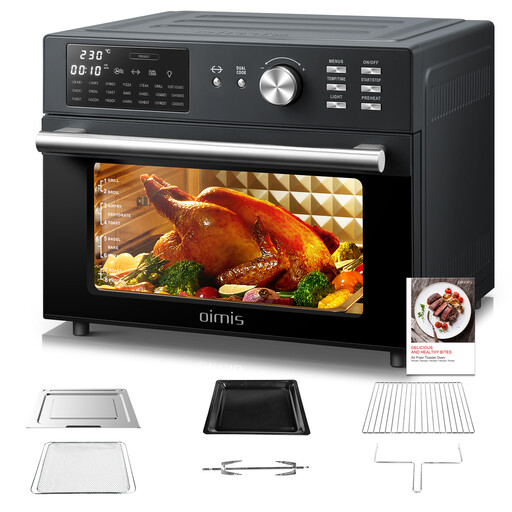 No image available
Could be worth considering if you’re looking for an oven that specifically lists a baking function. Check that the stated heating technology suits your recipe.
30 l and 21 pre-set functions according to the product name. Before buying, check whether your tin will fit and which heating mode you need.
No. The right heating mode depends on the specific recipe and the oven’s baking chart. For example, a recipe for blind-baking a shortcrust pastry case specifies 160 °C fan cooking; this isn’t a general rule for every tart or filling. AEG describes fan cooking, hot air and conventional top and bottom heat as different operating modes.
If the filling is perishable, you shouldn’t assume this is a safe option. The German Federal Institute for Risk Assessment recommends storing such foods at 2 °C to no higher than 7 °C and keeping them chilled when you’re out and about, too. So plan for a fridge and chilled transport separately from your oven purchase.
Compare the appliance and recess dimensions for the exact model, and follow its installation and user instructions. If it has a cleaning function, check whether it’s specifically described as pyrolytic or hydrolytic cleaning; these are different methods.
Household ovens covered by EU labelling rules must carry an energy label; the European Commission lists small ovens among the products outside the scope of those rules. So don’t assume the label for a covered built-in oven applies to a mini oven as well. The German Environment Agency explains that labels give the oven capacity and energy use per standard cycle and operating mode.
No. In Germany, your statutory rights apply against the seller; a guarantee is an additional voluntary promise subject to its own terms. The consumer advice centre recommends checking who the seller is and what any guarantee on offer covers when you buy.