What should you look for when buying?
For lemon cake, first check that your tin, including its height, fits in the usable oven space. Then you can compare the heating functions and oven styles that suit you.
| Priority |
What to check before buying |
Who it matters most to |
| A suitable tin size |
Compare the tin’s diameter or length and height with the usable internal dimensions and the clearance from the heating elements. |
If I’m baking for several people, I want the tin and cake to fit safely in the oven. Around 36% of consumers are likely to prioritise tin size. |
| The right heating function |
Check the heating functions available on the specific model, and follow the temperature and baking time for your chosen recipe and heating function. |
If I want to follow the recipe, I need the heating function it specifies. Around 29% of consumers are likely to prioritise following the recipe. |
| Space for a built-in or freestanding oven |
For a built-in oven, compare the niche and appliance dimensions; for a mini oven, check its external dimensions and set-up instructions. |
If there’s no suitable space for a built-in oven, I need an option that fits the space available. Around 21% of consumers are likely to prioritise space and oven style. |
| Cleaning and energy comparisons |
Check the cleaning function on the specific model; for ovens with an energy label, compare consumption per standard cycle and heating function. |
If I bake often, I want to be able to assess cleaning and energy information for long-term use. Around 14% of consumers are likely to prioritise these factors. |
Suitable ovens at Joybuy
These models include built-in ovens and freestanding mini ovens to suit different space and recipe requirements. Before choosing, check that your tin will fit, that the heating function suits your recipe and that the oven’s dimensions work for your intended space.
 No image available
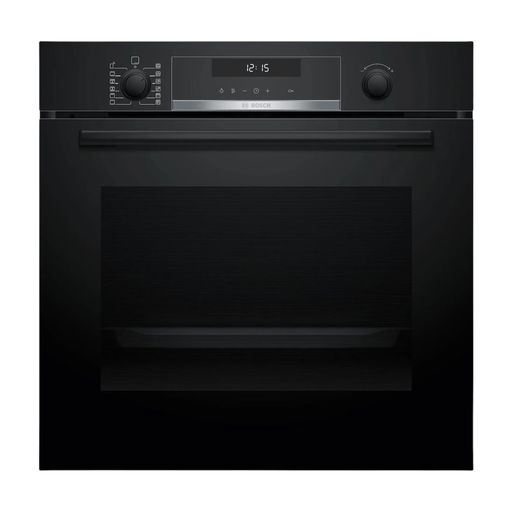
Bosch Series 6 HBG578EB7 built-in oven
This model may suit you if you have a suitable space for a built-in oven.
Specifications include a 71 l capacity, 9 heating methods, 30–275 °C, 3D fan-assisted cooking and pyrolytic cleaning.
Joybuy
 No image available
Comfee built-in oven, 70 l, 3 kW
This built-in oven is an option if its dimensions suit your existing kitchen.
Specifications include a 70 l capacity and 10 functions. Features include fan-assisted cooking, a grill, a pizza function and AquaClean steam cleaning.
Joybuy
 No image available
WOLTU BF12sz mini oven, 32 l
This freestanding mini oven may suit you if your tin fits and you have enough space for it.
Specifications include a 32 l capacity, 1,600 W, a temperature range of 100–250 °C and a 60-minute timer. If your recipe needs around 60 minutes in the oven, bear the timer limit in mind.
Joybuy
 No image available
Haier H6 ID23T3HTB built-in oven, 78 l
This built-in oven is designed to be permanently integrated into your kitchen. Make sure its dimensions suit the niche.
Specifications include a 78 l capacity, 9 cooking functions and a hydrolytic cleaning system. The niche dimensions are listed as 590 × 560 × 560 mm.
Joybuy
 No image available
WOLTU mini convection oven, 28 l
This freestanding model may suit you if a single tin fits inside the oven.
Specifications include a 28 l capacity, top heat, bottom heat and a combined heating function. The timer is limited to 60 minutes.
Joybuy
Frequently asked questions
What temperature and baking time should I use for lemon cake?
It depends on the recipe and heating function. For its lemon loaf cake in a 25 × 11 cm tin, Dr. Oetker recommends about 170 °C with conventional top and bottom heat or 150 °C with fan-assisted cooking, and a baking time of around 60 minutes. For its lemon cake in a 26 cm springform tin, the temperature is about 180 °C or 160 °C respectively, with a baking time of around 45 minutes. Both recipes call for the cake to be baked in the lower third of the oven.
How much space should I leave between a mini oven and my kitchen units?
Follow the set-up and safety instructions for the specific model. Rommelsbacher warns that the back of the BG 1805/E gets particularly hot and highlights the safety clearances specified in its instructions. A general clearance recommendation won’t necessarily apply to every model.
How can I compare energy use and cleaning options if I bake frequently?
For an oven with an energy label, the EU energy label shows consumption per standard cycle for conventional heating and, where available, fan-assisted cooking. This doesn’t tell you directly how much energy your recipe will use. Check the cleaning function on the specific model, too: Beko lists SteamShine for the BBIM12300X, while Bosch lists a hydrolytic cleaning system for the HBA514BS3.
Does every mini oven in Germany need the same EU energy label as a built-in oven?
No. The European Commission explicitly excludes small and portable ovens from the scope of energy labelling for household ovens. So, if a mini oven doesn’t have an oven energy label, that alone doesn’t indicate a breach of the rules or tell you how much energy it uses.
Can I return an old oven for free when I buy a new one?
Under the conditions set out by stiftung ear, retailers required to offer take-back must accept an old appliance of the same type and with essentially the same function, free of charge on a one-for-one basis when you buy a new one. Check with the retailer whether they’re required to offer take-back and how returns are arranged with your order.


