What should you look for when buying?
| Priority |
What to check before buying |
Who is it particularly relevant to? |
| Large batches for the week |
Compare usable tray dimensions, the trays included and whether multi-level fan-assisted cooking is specifically listed. |
If I regularly bake biscuits for several lunchboxes, I want to know which trays can be used at the same time. Around 36% of consumers focus on tray capacity. |
| Small batches and limited space |
Check the internal dimensions and tray size, as well as the available space and the model-specific safety clearances. |
If I only bake a small batch and have limited space, finding a suitable freestanding option matters to me. Around 29% of consumers prioritise small batches and the space available. |
| Fitting into your kitchen |
For built-in models, compare the appliance, housing and connection dimensions; for freestanding appliances, check the instructions and where you plan to put it. |
If I want to replace or add an oven, it needs to fit in the space I have for it. Around 21% of consumers pay particular attention to fit and kitchen layout. |
| Running and cleaning |
For ovens covered by the label, compare kWh per standard cycle and heating method; also consider the accessories and cleaning method. |
If I bake frequently, I want to take running costs and cleaning effort into account. Around 14% of consumers prioritise running and cleaning. |
The Verbraucherzentrale recommends checking an appliance’s actual electricity consumption. The EU energy label for household ovens covered by the rules relates to standard cycles and specified heating methods, not the exact consumption of an oat biscuit recipe. According to the European Commission, small and portable ovens are not covered by these oven labelling rules.
Suitable ovens at Joybuy
This selection includes freestanding cookers and mini ovens, as well as built-in ovens. Before you buy, compare usable tray space, accessories and the dimensions required for placement or installation.
 No image available
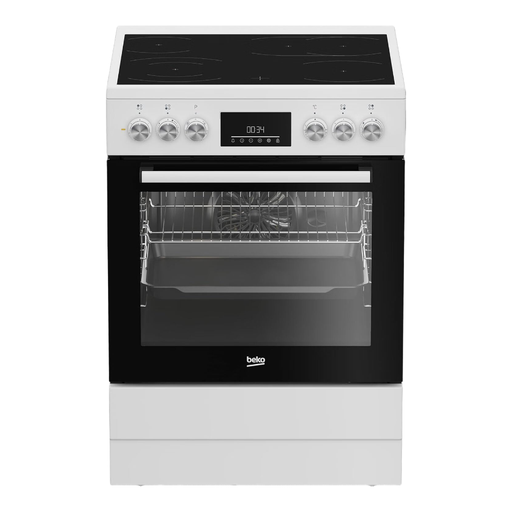
Beko FBM67320WS freestanding cooker, 60 cm, 72 l
This model could be a good option if you want to combine an oven and hob in one freestanding cooker.
72 l capacity and fan-assisted cooking. Eight heating functions, two baking trays and SteamShine cleaning are listed. Energy class A.
View at Joybuy
 No image available
Woltu BF12sz mini oven, 32 l
A freestanding mini oven for smaller batches, provided the tray and your chosen spot are suitable.
32 l capacity, 1,600 W, timer and temperature range of 100 to 250 °C. Accessories listed include a baking tray and wire rack.
View at Joybuy
 No image available
Woltu mini oven with fan-assisted cooking, 28 l
A compact freestanding option if its smaller baking area is large enough for your batches.
28 l capacity, three heating methods and temperature range of 100 to 230 °C. Listed accessories: baking tray, wire rack and crumb tray.
View at Joybuy
 No image available
Bosch HBA571BB4 Series 2 built-in oven, 71 l
For larger batches, the listed multi-level hot air cooking may be useful when planning, provided the oven fits the housing and you have enough suitable trays.
Bosch lists 3D hot air cooking on up to three levels and a 71 l capacity. It comes with one wire rack and one universal pan; you may need another suitable biscuit tray. Pyrolytic cleaning.
View at Joybuy
 No image available
Bosch HBG578ES3 Series 6 built-in oven
A built-in oven to consider when planning for larger batches, provided the housing and the trays you need are compatible.
Specifications include a 71 l capacity, 3D hot air cooking on up to three levels, pyrolytic cleaning and an AirFry function. One baking tray and a separate Air-Fry tray are listed; the latter isn’t specified as an additional biscuit tray.
View at Joybuy
Frequently asked questions
Which heating method should I use for my oat biscuit recipe?
Start by following the heating method and temperature in your recipe, along with the instructions for your oven. If you want to use several trays at once, check whether the specific model lists this as suitable for your chosen heating method; a “fan-assisted” setting alone doesn’t guarantee a particular baking result.
Can I use a mini oven inside a cupboard?
Only if the instructions for that specific appliance allow it. Severin explicitly prohibits installing the TO 2065 in a cupboard and requires clearances at the sides, at the back and above. Always follow the instructions for the particular model.
Why might a small or portable oven not have an EU oven energy label?
According to the European Commission, small and portable ovens are outside the scope of the relevant energy labelling rules for household ovens. For ovens covered by the rules, the label includes details such as consumption per standard cycle and heating method, not the measured consumption of your biscuit recipe.
What should I check about accessories and returning an old appliance?
Before buying, check which compatible trays are actually included and whether you can buy additional ones. In Germany, the legal obligation to take back old appliances depends, among other things, on the type and size of retailer, the type of appliance and how it is returned. Under certain conditions, § 17 ElektroG requires retailers to take back an old appliance free of charge when you buy a new one of the same appliance type with essentially the same functions; check how this will be handled before delivery.
Can I use biscuits with visible mould in a lunchbox?
No. The German Federal Institute for Risk Assessment highlights the health risks from mould and possible mycotoxins in food. This does not establish a general shelf life for homemade oat biscuits.


