Households eating at different times
If you make a pan of soup but won’t serve every portion at the same time, consider whether to keep it hot or chill a later portion and reheat it.


If you regularly use other pans alongside your soup, a built-in hob with enough independently usable cooking zones is likely to suit you better. For a single pan or as an extra cooking spot, a portable hob may be enough. The key things to consider are power control suited to your pan, the space available and the right connection. A keep-warm function alone does not prove that the soup reaches at least 60 °C throughout: the German Federal Institute for Risk Assessment (BfR) recommends this temperature in every part of the food. If there’s a longer gap between meals, you could also chill the soup and reheat it later; according to the BfR, the risk of microbial contamination increases the longer food is stored.
If you make a pan of soup but won’t serve every portion at the same time, consider whether to keep it hot or chill a later portion and reheat it.
If you want the soup to simmer gently while you prepare other dishes, independently usable cooking zones matter more than a simple keep-warm label.
If you need a single or extra cooking spot, compare your pan size and available worktop space, and check the connection type for both portable and built-in models.
A good choice if: You regularly use other pans alongside your soup, and the cut-out and connection are suitable for the specific model.
Bear in mind: You’ll need to plan for the installation space and a suitable connection; a keep-warm function does not confirm the temperature of the food.
A good choice if: You’re heating just one pan of soup, need an extra cooking spot or don’t have a suitable space for a built-in hob.
Bear in mind: There’s only one cooking zone; check the space available, socket, pan diameter and, for large, full pans, the maximum load capacity.
| Priority | What to check when buying | Who it matters most to |
|---|---|---|
| Serving soup later | Check how you can monitor the temperature of the food itself. The BfR recommends keeping food at a minimum of 60 °C throughout when holding it hot. | If I’m serving portions at different times, I want to know whether I can keep the soup safely hot or chill a later portion and reheat it. This is the main priority for around 33% of consumers. |
| Simmering gently | Check the power control and a suitable pan on the specific model; a temperature setting does not prove the temperature of the soup. | If I want to keep the soup simmering gently after bringing it to the boil, I need to know whether I can turn the power down appropriately for my pan. Around 27% of consumers prioritise this. |
| Using other pans | Compare the number and layout of independently usable zones with the diameters of your pans. | If I’m cooking other dishes at the same time, I need space for several pans. Around 20% of consumers prioritise cooking several dishes at once. |
| Space and connection | For built-in appliances, check the cut-out and connection requirements; for portable models, consider the space available, socket and cookware. | If the cut-out, available space or connection in my kitchen limits my options, I need a model that fits. Around 20% of consumers focus mainly on these requirements. |
The setting or label on the hob is not what determines the soup’s temperature; it needs to reach the right temperature throughout.
If you’re serving meals at different times, plan how you’ll check the actual temperature of the food or chill and reheat a later portion.
The appliance width, required cut-out and connection type are all different specifications. Installation dimensions vary, for example, between the 90 cm Siemens EX975LXC1E and the 60 cm Bosch PIF64RBB5E.
Before buying, compare the installation requirements for the exact model with your kitchen and check the connection requirements.
The CASO S-Line 2100 and Rommelsbacher CT 2020/IN each have one cooking zone. You can’t heat two pans on them at the same time.
Before choosing, think about whether you regularly need to heat another pan alongside the soup.
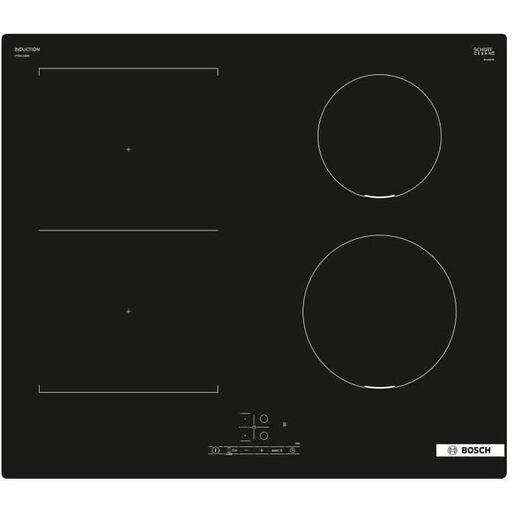
Built-in hobs; the EX975LXC1E is a 90 cm model with several cooking zones and flexible pan placement.
Built-in hobs; the PIF64RBB5E is a 60 cm model with four zones and TouchSelect.
Built-in hobs; the ID6441XB can connect two cooking zones when needed.
Portable single-zone hobs; the S-Line 2100 is designed for one pan or as an extra cooking spot.
Portable single-zone hobs; the CT 2020/IN has one cooking spot for a pan of soup.
This selection includes built-in hobs with several cooking zones and portable induction hobs for one or more pans used at the same time.
 No image available
This built-in hob has four cooking zones, making it suitable for cooking several dishes at once.
It is listed with TouchSelect, 17 power levels and a digital timer with automatic shut-off. Requires induction-compatible cookware with a magnetic base; a hob setting does not prove that the soup reaches at least 60 °C throughout.
 No image available
The four cooking zones are handy if you’re planning to cook soup alongside other dishes.
The product name lists 6.900 W, four cooking zones and a timer; the description specifies automatic shut-off. Requires induction-compatible cookware with a magnetic base. The appliance setting does not confirm the temperature throughout the soup.
 No image available
This portable single-zone hob is described as suitable for heating one pan at a time.
It is listed with nine heat settings and a timer of up to eight hours. Requires magnetic, induction-compatible cookware; the timer or appliance setting does not confirm the temperature of the soup.
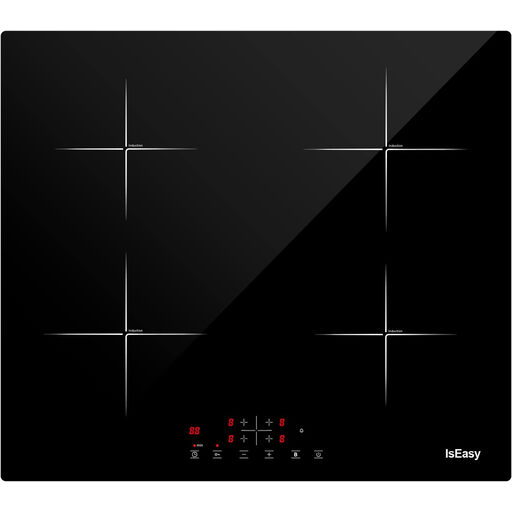 No image available
It is listed with four independent cooking zones for cooking with several pans at once.
The product specifications list 6.800 W, nine power levels and a 1–99-minute timer with automatic shut-off. Requires ferromagnetic, induction-compatible cookware. A hob setting does not prove that the soup reaches at least 60 °C throughout.
 No image available
The two cooking zones are described as suitable for heating soup and another dish at the same time.
The product name lists five temperature settings. Requires magnetic, induction-compatible cookware; the keep-warm feature or temperature setting does not prove that the soup reaches at least 60 °C throughout.
No. The function’s name alone doesn’t prove the temperature of the food. The German Federal Institute for Risk Assessment recommends keeping heated food at a minimum of 60 °C throughout.
Chilling a later portion and reheating it is one option. The BfR highlights the importance of good hygiene and suitable cooling when batch cooking; the risk of microbial contamination increases the longer food is stored.
Only if it’s suitable for induction and its base size is compatible with the hob. The German Federal Office for Radiation Protection explains that suitable cookware is needed for induction heating; also check the size specifications from the relevant manufacturer.
There’s no one-size-fits-all answer, as it depends on the connection. Where work on the electrical installation falls within the scope of section 13 of the Low Voltage Connection Ordinance, it may generally only be carried out by the network operator or a registered installation company. Siemens explicitly specifies that the EX975LXC1E must be connected without a plug by a qualified electrician; for portable hobs, follow the relevant manufacturer’s instructions.
This information does not provide a general assurance that it is safe. The German Federal Office for Radiation Protection warns that electric and magnetic fields can affect electronic implants; the individual risk of interference must be assessed by a doctor.