For a regular supply, larger packs of sultanas, prunes or dates are worth considering. The key is whether you’ll use them up and can portion them easily. Dried fruit can provide a source of carbohydrates after a workout. If you also want your meal to include protein, plan a separate source and check the ingredients and nutritional information for each dried fruit product.
Who is a bulk pack suitable for?
Households that use dried fruit regularly
If dried fruit often goes into your cereal, yoghurt or snack rotation, you can spread a larger pack across several occasions. Before buying, consider whether you can reseal it securely after opening and use it up.
People who plan a fruit snack after exercise
Dried fruit can be included as a source of carbohydrates after a workout. If you’re putting together a meal and want to include protein too, choose the other foods separately.
Shoppers who check ingredients carefully
Ingredients and labelling can vary between dried fruit products. If you need to watch your intake of added sugar or sulphites, check the details on the specific pack rather than relying on the name of the fruit alone.
What should you look for when choosing?
First, decide how much you’re likely to use and whether you want to prepare portions to take with you. Then compare the ingredients and nutritional information for the products you’re considering.
| Criteria |
What to check before buying |
Who should pay particular attention |
| Pack size and storage |
Check the net weight, how easy it is to portion, and the storage instructions after opening. |
If I use dried fruit regularly, I want to be able to finish the pack without having to prepare new portions all the time. For around 42% of shoppers, having a regular supply is the top priority. |
| Post-workout snack |
Compare the carbohydrate and sugar content per 100 g, and decide how much you want to eat. |
After a workout, I want a small portion of fruit close to hand rather than eating straight from a large bag. Around 25% of shoppers prioritise this type of snack. |
| Ingredients and labelling |
Read the ingredients list and allergen information; check for added sugar and sulphites if needed. |
If I need to avoid certain ingredients, I want to know what the product contains besides fruit before eating it. For around 25% of shoppers, checking this is their top priority. |
| Protein in your meal |
Check the protein content per 100 g and plan other foods separately. |
If my snack is part of a meal, I don’t want to rely on dried fruit alone for protein. Around 8% of shoppers put this combination first. |
Which common mistakes can you avoid?
-
Assuming “no added sugar” means “sugar-free”
Dried fruit still contains the fruit’s natural sugars, even when no sugar has been added. The German Federal Centre for Nutrition notes that removing water concentrates the sugar and energy content.
Compare the sugar content per 100 g and portion out your snack before eating.
-
Overlooking other ingredients
Dried fruit doesn’t always contain fruit alone. For example, REWE lists sodium metabisulphite in the ingredients for Seeberger mango strips. EDEKA’s cranberry product lists sugar and sunflower oil as well as cranberries.
Read the ingredients list and allergen information on the current pack, especially if you need to avoid sulphites or other ingredients.
-
Relying on dried fruit as your only source of protein
A fruity snack and a meal that is intended to include protein serve different purposes. The protein content of dried fruit alone doesn’t tell you what the whole meal contains.
Check the nutritional information and choose other foods to suit the purpose of your meal.
Brands and own-label ranges to consider
Seeberger
The dried fruit range includes a variety of fruits, with 500 g packs available for some products.
- The range makes it easy to compare dates, figs, prunes and sultanas.
- A claim such as “no added sugar” doesn’t tell you whether a product contains sulphites. Check the ingredients for the specific variety.
FARMER NATURALS (ALDI SÜD)
ALDI SÜD sells products under this brand, including sultanas and prunes in 500 g packs.
- You can compare the ingredients and nutritional information for these two types of fruit in the same pack size.
- ALDI SÜD notes that suppliers and nutritional information may vary. Always check the pack you’re buying.
Alesto (Lidl)
Lidl’s Alesto brand covers nuts and dried fruit.
- It’s a useful brand to look out for if you want to browse dried fruit and other snack ingredients in the same shop.
- For the specific dried fruit on offer, compare the pack size, ingredients and nutritional information.
REWE Eigenmarken
The dried fruit range includes several own-label brands and types of fruit, including sultanas and mango strips.
- You can compare products by fruit type and ingredients list.
- Check the exact product name: dried fruit and banana chips aren’t made up of the same ingredients just because they appear in the same part of the range.
GUT&GÜNSTIG (EDEKA)
EDEKA’s own-label range also includes dried fruit products such as sweetened cranberries.
- For the cranberry product described by EDEKA, the ingredients list shows 60% cranberries and 39% sugar. Details like these help you compare specific products.
- Check the details on the pack in your local shop before assuming different varieties are the same.
Dried fruit at Joybuy
This selection includes larger packs of dates, sultanas and prunes for shoppers who want to portion dried fruit after exercise or use it regularly at home. Compare the specific packs by fruit type, quantity and ingredients.
 No image available
Haoxiangni ready-to-eat red dates, 900 g (30 × 30 g)
The pack lists 30 g portions individually, making it a good option if you want to take dried fruit with you and avoid portioning it from a large pack each time.
If you’re combining it with other foods, check the nutritional information on the specific pack.
View at Joybuy
 No image available
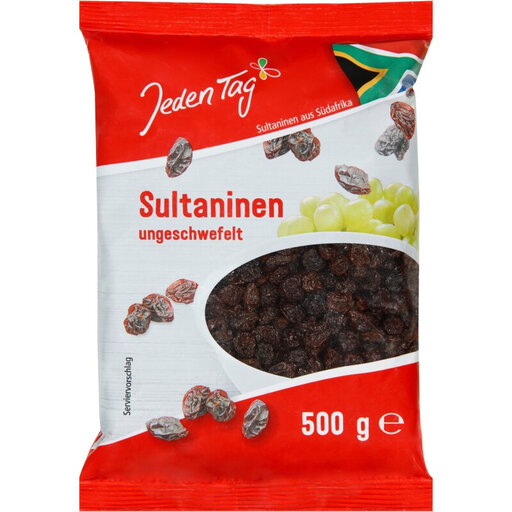
Jeden Tag sultanas, 500 g
The 500 g pack is worth considering if you regularly portion out sultanas after exercise or add them to other foods.
Before buying, check the ingredients list and nutritional information on the specific pack.
View at Joybuy
 No image available
Seeberger soft, pitted prunes, 500 g
If you’d rather portion out prunes than sultanas or dates, this 500 g pack is an option to keep in your cupboard.
Check the ingredients, and bear in mind the warning that traces of stones may remain despite the “pitted” description.
View at Joybuy
Frequently asked questions
Is dried fruit enough on its own as a post-workout snack?
Dried fruit can provide a fruity source of carbohydrates, but on its own it doesn’t make a meal that includes a planned source of protein. If protein matters to you too, take into account the nutritional information for the foods you pair it with.
Is dried fruit with no added sugar sugar-free?
No. The fruit’s natural sugars are still there; according to the German Federal Centre for Nutrition, removing water makes them more concentrated in dried fruit. The sugar content per 100 g can help you compare products and portions.
How can I tell if dried fruit has been treated with sulphites?
Read the ingredients list and allergen information on the specific pack, and look out for ingredients such as sodium metabisulphite. REWE lists this substance as an antioxidant in Seeberger mango strips; that doesn’t mean it’s automatically used in other products from the brand.
How should I store an opened bulk pack?
Reseal the pack securely after opening and follow its storage instructions. Seeberger mango strips should be stored away from heat and moisture; for other dried fruit, check the instructions on its own packaging.


