Groups on a budget
If you’re buying breakfast for several people, compare the price per kilogram and pack size with the number of breakfasts you’re planning. A label such as ‘value pack’ doesn’t necessarily mean you’ll save money.


A larger pack of cornflakes is only worth buying for a holiday apartment if the price per kilogram and the amount you actually need stack up. The consumer advice centre recommends comparing the price per kilogram when pack sizes differ. Also check that everyone in your group likes the flavour and that the ingredients are suitable for them.
If you’re buying breakfast for several people, compare the price per kilogram and pack size with the number of breakfasts you’re planning. A label such as ‘value pack’ doesn’t necessarily mean you’ll save money.
If anyone in your group needs to avoid certain ingredients, check the label on the specific variety. Corn as the main ingredient doesn’t, on its own, mean a product is gluten-free or suitable for people with allergies.
If you’re only having breakfast a few times, a smaller pack may be easier to finish. Once opened, dry cereals need to be kept somewhere dry in an airtight container, as recommended by the consumer advice centre for dried foods.
First, work out how much you need. Then compare the price per kilogram of varieties that are actually suitable for your group. Ingredients, flavour and storage space could all affect whether a larger pack is the right choice.
| What to consider | What to check when buying | Who it matters to |
|---|---|---|
| Price per kilogram and pack size | Compare the price per kilogram in €/kg and the pack size with the number of people eating and breakfasts planned. | If I’m shopping for several people, I want to buy enough without being swayed by the words ‘value pack’. For around 36 % of consumers, this question of cost and quantity is the main concern. |
| Leftovers and storage | Make sure you have enough storage space and somewhere dry to keep the opened pack airtight. | For a short stay, I don’t want to leave a large, opened pack behind or have to store it somewhere damp. Around 29 % of consumers are primarily concerned with avoiding leftovers and storage problems. |
| Ingredients and allergens | Check the ingredients, sugar per 100 g and allergen information for the specific variety. | If anyone in the group needs to avoid certain ingredients or prefers a less sweet variety, the recipe matters more than the pack size. For around 21 % of consumers, checking the ingredients is the top priority. |
| Group preferences | Before buying a large pack, find out whether several people want to eat the chosen corn, cinnamon or oat cereal. | If people with different tastes are having breakfast together, I don’t want to buy a large pack of something only one person likes. For around 14 % of consumers, choosing the right variety comes first. |
A bigger pack doesn’t automatically have a lower price per kilogram. The consumer advice centre recommends using the price per kilogram to compare different pack sizes.
Compare the price per kilogram in €/kg for varieties you’d actually buy, then check whether you’ll use the amount during your trip.
If you have cereal left over, it still needs to be kept dry and sealed after opening. A smaller pack may be easier to finish during a short stay.
Plan the amount you need based on the number of people and breakfasts. Before you buy, check that there’s room in the holiday apartment to store the opened pack.
If you need to take leftovers home, you’ll need a way to keep the cereal dry and sealed during the journey.
The Kellogg's Corn Flakes listed by REWE contain barley malt. Other cereals may contain wheat or carry a warning about possible traces. The product type alone doesn’t tell you what allergens are listed.
Check the ingredients and allergen information for the variety you want. If you need a gluten-free product, don’t rely on the word ‘cornflakes’ alone.
REWE lists different values for the varieties reviewed: less than 0.5 g of sugar per 100 g for REWE Bio Cornflakes ungesüßt, 8 g for Kellogg's Corn Flakes, 17 g for Kölln Haferfleks and 24 g for Nestlé Cini Minis.
Compare the nutritional information per 100 g. Treat wholegrain content, ingredients and flavour as separate things to consider.
The details below refer to specific varieties described by REWE, not to each brand’s entire range.
The 500-g pack of Corn Flakes is a classic cornflake option for several breakfasts.
The 625-g value pack is a cinnamon cereal for groups who specifically want this variety, rather than a plain cornflake option.
The 375-g pack of unsweetened cornflakes could suit a smaller group or work as an additional plain option.
The 750-g pack of Vollkorn-Haferfleks Klassik is an oat cereal for groups who aren’t specifically looking for cornflakes.
These cornflake packs include a 300-g option for shorter stays and two different 500-g varieties for groups who’ll get through more. Which, if any, offers better value depends on the current price per kilogram and how much you need.
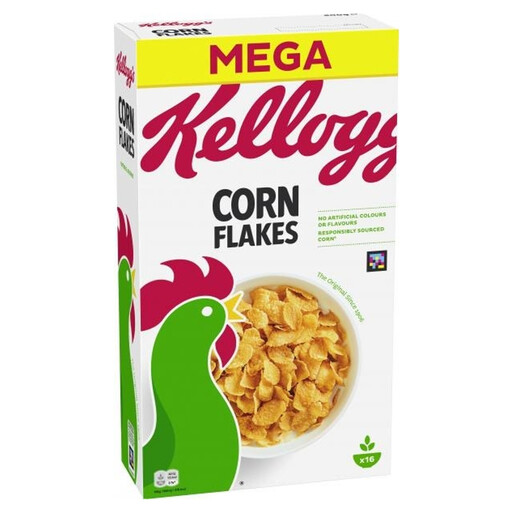 No image available
This classic cornflake variety could be a good choice if several people in your group want it for breakfast. The pack contains 500 g. Match the quantity to the length of your stay, and check the label on the specific pack if you need to avoid gluten.
 No image available
These unsweetened cornflakes could suit a shorter stay if your group would prefer a smaller pack. The pack contains 300 g. Check that it’ll be enough for all the breakfasts you have planned, and read the pack’s allergen information if you have allergies.
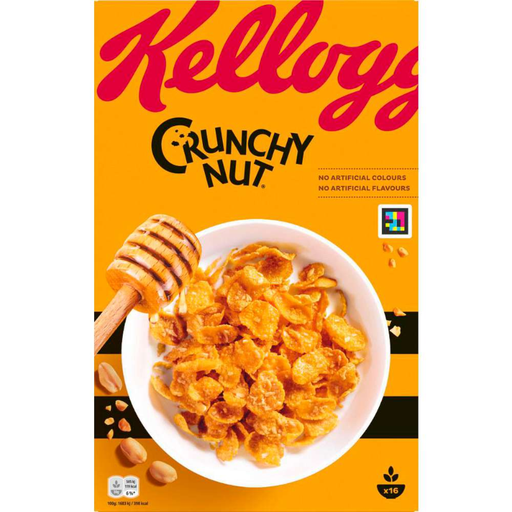 No image available
This variety is only worth considering if your group wants a sweeter cornflake with a nutty flavour. The pack contains 500 g. Check how much you’re likely to use, and read the ingredients and allergen information before buying if anyone has a peanut allergy.
Compare the price per kilogram of varieties that are suitable for your group. The consumer advice centre recommends using it to compare different pack sizes. Even if a larger pack is cheaper, it’s only worth buying for your trip if you’ll use it all.
No. You can’t tell from the main ingredient alone. For example, the Kellogg's Corn Flakes described by REWE contain barley malt, so always check the ingredients and allergen information for the specific variety.
Keep the cereal somewhere dry in an airtight container. The consumer advice centre recommends this for dried foods. If you buy a large pack, make sure you have room to store what’s left.