Families who regularly need snacks
If you serve dried fruit several times a week, consider the pack size alongside how much you actually use. A resealable pack or suitable container is important if you won't finish it all at once.


A larger pack of dried fruit can work well for regular after-school snacks if your family will use it all and you can store it somewhere dry and airtight once opened. Other things to consider include the ingredients, your preferred texture and whether the fruit is easy to portion out. Dried fruit should not replace fresh fruit, as Verbraucherzentrale NRW explains.
If you serve dried fruit several times a week, consider the pack size alongside how much you actually use. A resealable pack or suitable container is important if you won't finish it all at once.
Ingredients vary between dried fruit and fruit mixes. If you need to avoid certain ingredients, check the ingredients list and highlighted allergens on the specific pack.
Classic dried fruit, softer fruit and crunchy freeze-dried fruit all offer different textures. Before buying a large pack, it’s worth checking which type your family will actually eat.
Start with the type of fruit and quantity your family uses regularly. Then check the ingredients, ease of use and storage instructions for the specific pack.
| What to consider | What to check | Who is it important for? |
|---|---|---|
| Pack size and how much you use | Compare the net weight and resealable packaging with how much you use regularly. | If dried fruit is served several times a week after school, you’ll want to finish the pack before its quality starts to decline. Around 33% of consumers put having the right amount in stock first. |
| Ingredients and allergens | Check the ingredients list, sugar content per 100 g and highlighted allergens on the specific pack. | With a fruit mix, I want to know what else it contains rather than assume from the name. Around 27% of consumers prioritise comparing ingredients. |
| Texture and ease of eating | Check the type of fruit, its texture and whether it contains stones or pieces of stone. | If chewy fruit gets left uneaten, a softer or crunchier option might be more to our taste. Around 20% of consumers prioritise choosing a texture people will actually eat. |
| Serving and storage | Plan how to portion it out, reseal the pack and store it somewhere dry. | For an easy snack, I want to take out only what I need and keep the rest protected. Practicality comes first for around 20% of consumers. |
A large pack isn’t much use if the fruit is left for a long time after opening or absorbs moisture.
Choose a quantity your family will use regularly, and check how well the pack can be resealed.
A dried fruit mix may contain additional ingredients. EDEKA, for example, lists potassium sorbate and sulphur dioxide in one fruit mix.
Compare the ingredients list and nutritional information per 100 g on the packs you’re considering.
If a product contains sulphur dioxide or sulphites, the name of the fruit alone isn’t enough to make an informed choice.
If these substances are relevant to your household, check the highlighted allergens on each specific pack.
Moisture can affect the quality of stored dried fruit. REWE advises against keeping it in the fridge because of the moisture there.
Seal the pack tightly or transfer the fruit to a suitable container, then store it somewhere dry and away from light.
Seeberger offers classic dried fruit as well as softer options. Its range can help households choose between different types of fruit and textures.
REWE’s dried fruit range includes different types of fruit and pack sizes.
EDEKA’s own brands offer dried fruit and fruit mixes. With mixes, checking the ingredients list is especially important.
ALDI SÜD lists dried fruit from several own brands, including dates and mango.
Lidl’s Alesto range includes dried fruit alongside nuts and other snacks.
This selection includes larger packs of classic dried fruit and a softer dried prune option. The Red Dates are also individually portioned; with the other products, how you use and store the opened pack is more important.
 No image available
For households that want to serve dried fruit in individual portions after school.
The 900 g is divided into 30 individually sealed 30-g portions. Red Dates are listed as the only ingredient; the fruit contains stones, which is worth bearing in mind when serving it to children.
 No image available
For families who want to take jujubes from a larger pack for regular snacks.
The product details list 100% jujube and describe the fruit as ready to eat. Once opened, the 500-g pack should be used promptly and stored somewhere cool and dry.
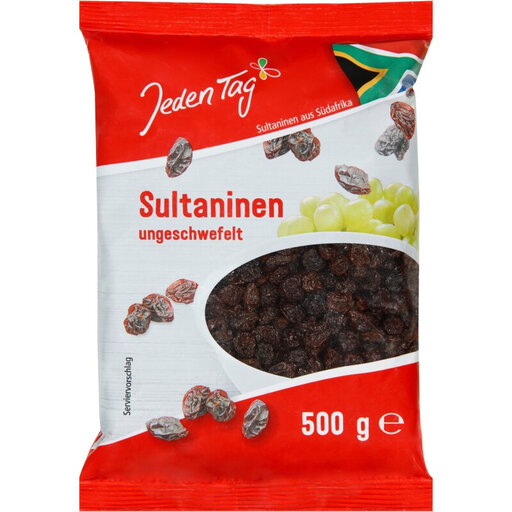 No image available
For households that use sultanas as a snack, in muesli or for baking.
The ingredients listed are sultanas and sunflower oil. Once opened, the 500-g pack should be sealed airtight. The product description warns of a possible choking risk for young children; supervise them while they eat.
 No image available
For families who prefer softer dried fruit in a 500-g pack.
The product details list plums and potassium sorbate as ingredients. Although the plums are described as pitted, the description notes that stones or pieces of stone may still be present; check the fruit carefully, especially when serving it to children.
 No image available
For households looking for jujubes as a snack in a 500-g pack.
The product name describes the fruit as seedless, and the description says it has a soft, chewy texture. Before buying, check the ingredients, nutritional information and storage instructions on the specific pack.
No. Dried fruit should not replace fresh fruit, as Verbraucherzentrale NRW explains. It can be served as a snack or used as an ingredient. When comparing products, check the sugar content per 100 g, as drying concentrates sugar and other components relative to the fruit’s weight.
Check the ingredients list and highlighted allergens on the specific pack. One fruit mix listed by EDEKA contains sulphur dioxide, but this doesn’t tell you anything about the ingredients in other dried fruit products.
Store dried fruit somewhere dry and away from light, in an airtight container. For dried apple rings, EDEKA recommends a resealable, opaque container; also follow the storage instructions for the product you’ve bought.
Not necessarily. Freeze-dried fruit is crunchy, while soft fruit is softer. Choose according to your preferred fruit and texture, and compare the ingredients and pack size before buying a bulk pack.