A 500 g pack can suit a regular coffee break if you also use the fruit in cereal or baking, and can finish it in good time once opened. If you want to try a variety first, or need to avoid certain ingredients, check the type of fruit, ingredients list and pack instructions before choosing the pack size.
Who are larger packs suitable for?
Households that regularly eat dried fruit
If you enjoy dried fruit with your coffee, in cereal or in baking, you’re more likely to finish a 500 g pack. Whether it’s right for your store cupboard also depends on the instructions for storing it once opened.
Shoppers with specific ingredient preferences
If you want to avoid additives or compare the sugar content of different varieties, check the ingredients list and nutritional information per 100 g. Verbraucherzentrale NRW notes that dried fruit contains natural sugars, even when no sugar has been added.
Shoppers checking sulphites and allergen information
If sulphur dioxide, sulphites or specific allergens affect your choice, check the information on the actual pack before considering its appearance or size. Lebensmittelklarheit lists sulphur dioxide and sulphites among the substances that must be declared when present above certain levels.
What should you look for when choosing?
Start by choosing a type of fruit and preparation that you’ll actually use. Then consider the ingredients, nutritional information and whether you can finish the pack after opening it.
| What to consider | What to check when buying | Who it matters to |
|---|
| Pack size |
Pack weight and instructions on how soon to use it after opening. |
If you regularly enjoy a variety with your coffee and also use it in cereal or baking, you may find a larger pack easier to finish. This is the main consideration for around 36 % of shoppers. |
| Ingredients and sugar |
The ingredients list and the ‘of which sugars’ figure per 100 g. |
If you want dried fruit without a particular added ingredient, you’ll still want to know how much sugar the variety contains. Around 29 % of shoppers prioritise this information. |
| Sulphites and allergens |
The ingredients and allergen information on the actual pack. |
If you need to check for sulphur dioxide, sulphites or a specific allergen, clear information on the pack is essential before you buy. This is the main selection criterion for around 21 % of shoppers. |
| Type of fruit and texture |
Type of fruit, drying method and pack size. |
For a coffee break, a particular texture or trying a new variety may matter more than buying a large pack. Around 14 % of shoppers choose mainly on this basis. |
What mistakes can you avoid?
-
Assuming different fruits are interchangeable
Raisins, dates, mango and freeze-dried berries differ in both fruit type and preparation. A larger pack is no use if the variety isn’t right for your coffee break.
Choose the fruit and texture you want first, then pick the right pack size.
-
Assuming ‘no added sugar’ means low in sugar
Verbraucherzentrale NRW notes that drying can concentrate the natural sugars in fruit. A claim about added sugar doesn’t tell you the total sugar content.
As well as checking the ingredients list, look at the ‘of which sugars’ figure in the nutritional information per 100 g.
-
Leaving sulphite and allergen checks until after you buy
If you have a sensitivity or allergy, the labelling on the specific product is what matters; its colour and product image aren’t a reliable guide.
Before choosing, check the ingredients list and allergen information for sulphur dioxide, sulphites and any substances relevant to you.
Dried fruit brands to consider
Seeberger
The Seeberger range includes dates, figs, plums, sultanas and blue raisins, with several varieties available in packs of up to 500 g.
- A range of fruit types lets you choose the variety you want.
- Pack sizes vary between varieties, so check the specific option.
EDEKA / Gut & Günstig
EDEKA24 stocks Gut & Günstig unsulphured sultanas in a 500 g pack, among other products.
- The product name specifies the fruit, pack size and that it is ‘unsulphured’.
- Always check the information on the specific pack for ingredients and potential allergens.
REWE Beste Wahl / REWE Bio
The REWE range includes REWE Bio sultanas in 200 g packs and REWE Beste Wahl mango strips in 100 g packs.
- Smaller packs are a good option if you want to try a variety first.
- Check the fruit type and preparation for each product individually.
Alesto (Lidl)
Lidl’s Alesto range includes nuts and dried fruit, including mango strips.
- The range offers a different type of fruit from classic dried grapes.
- Check the size and information on the specific pack when choosing how much to stock up on.
FARMER NATURALS / NATURLIEBLINGE - KLEINE SCHÄTZ (ALDI SÜD)
ALDI SÜD offers dried mango under FARMER NATURALS in a 125 g pack, and dates under NATURLIEBLINGE - KLEINE SCHÄTZ in a 200 g pack.
- The choice of fruit and pack size can be matched to how much you plan to use.
- A smaller pack for trying a variety serves a different purpose from a 500 g pack.
Dried fruit on Joybuy
These 500 g packs contain jujubes or sultanas. Choose the fruit you want, and pay particular attention to the instructions for storing a larger pack once opened.
 No image available
Haoxiangni Grade A No-Wash Jujubes, 500 g
A pack of jujubes for shoppers who regularly enjoy this fruit with their coffee. The product description says to use the contents immediately after opening, so check that 500 g is right for you.
View on Joybuy
 No image available
Changsi Dried Red Dates, 500 g
This pack could suit you if you regularly use dried red dates as a snack or ingredient. Check the ingredients and nutritional information on the specific pack to help you decide.
View on Joybuy
 No image available
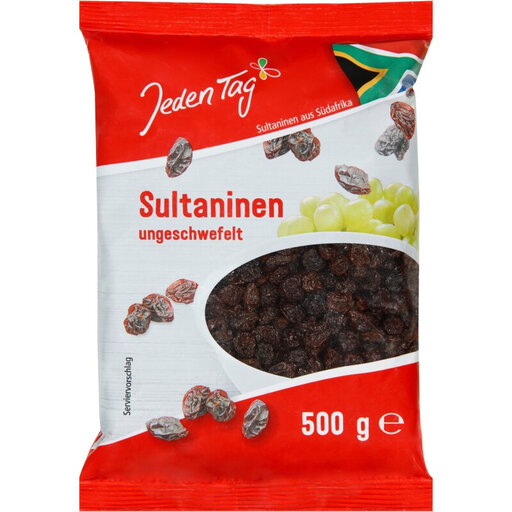
Jeden Tag Sultana Raisins, 500 g
Sultanas are handy for regular coffee breaks and baking. The product description recommends storing the opened pack in an airtight container and using it within a few weeks.
View on Joybuy
Frequently asked questions
When is a 500 g pack a good choice for a coffee break?
A 500 g pack makes sense if you eat the fruit regularly or also use it in cereal and baking. Check how the contents should be stored and used once the pack is open.
Is dried fruit with no added sugar low in sugar?
No. ‘No added sugar’ doesn’t mean a product is low in sugar. Verbraucherzentrale NRW points out that dried fruit contains concentrated natural sugars; for a specific product, check the ‘of which sugars’ figure per 100 g.
How can I tell if dried fruit has been treated with sulphites?
Check the ingredients list and allergen information for sulphur dioxide or sulphites instead of judging by the colour of the fruit. Lebensmittelklarheit states that these substances must be declared when they exceed 10 mg/kg or 10 mg/l, calculated as SO₂.
How should I store an opened bulk pack?
Follow the instructions on the specific pack. For REWE Beste Wahl currants, for example, REWE recommends storing them in a dry place and protecting them from heat; other products may have different instructions for after opening.


