Households avoiding a specific allergen
If you need to avoid a particular allergen, check the labelling for the specific variety. Even with a plain variety, read the ingredients and look for a ‘may contain’ warning.


If you have a food allergy, first check the ingredients and allergen information for the specific rice cakes, then decide whether to buy a larger quantity. A short ingredients list doesn’t rule out relevant ‘may contain’ warnings, and the flavour or coating can affect the product information too. Stocking up only makes sense if each pack suits your allergy requirements and you’ll use the quantity you buy.
If you need to avoid a particular allergen, check the labelling for the specific variety. Even with a plain variety, read the ingredients and look for a ‘may contain’ warning.
Once you’ve found a suitable variety, check the labelling on each individual pack, the best-before date and how much your household is likely to use before buying several packs.
If rice cakes are often on the menu, buying a large pack shouldn’t mean relying on rice snacks alone. The German Federal Institute for Risk Assessment notes that rice products such as rice cakes can contain relatively high levels of inorganic arsenic.
Start by checking the allergen information for the specific rice cakes, then choose the variety you want and finally decide how much to buy based on your household’s usual consumption.
| What to check | What to look for when buying | Who it matters to |
|---|---|---|
| Allergens and traces | Read the ingredients, highlighted allergens and any ‘may contain’ warning on the specific pack. | If I need to avoid a particular allergen, I want to consider possible cross-contamination even with a plain variety. For around 42 % of consumers, checking allergens comes first. |
| Quantity to stock up on | Check the number and weight of the individual packs, as well as the best-before date. | Once I’ve found a suitable variety, I only want to buy as many packs as we’ll use. Around 25 % of consumers put this need to stock up first. |
| Ingredients and flavour | Check the ingredients separately for each plain, salted or coated variety. | When choosing between flavours, I want to know what each one contains rather than assume they’re all the same. For around 25 % of consumers, choosing between varieties takes priority. |
| Frequent consumption | Plan to serve other snacks as well as rice cakes, and check their allergen information too. | If children eat rice cakes regularly, I don’t want a large stock-up to make their snack routine one-sided. Around 8 % of consumers put this consideration first. |
A gluten-free claim doesn’t tell you whether other ingredients or possible traces are relevant to you. For example, EDEKA Bio’s plain rice cakes list rice as an ingredient but warn that they may contain traces of sesame.
Before stocking up, read the ingredients and ‘may contain’ information for the specific variety you want to buy.
Coatings and other ingredients can change the product information. Even if a manufacturer describes a recipe as vegan, that doesn’t guarantee it may not contain traces of milk: Kallo warns that its lightly salted wholegrain rice cakes may contain traces of milk, sesame and soya.
Check each variety separately, even if you already know another product from the same brand.
A larger pack tells you nothing about whether a product is suitable for someone with allergies or whether your household will use it before its best-before date.
Compare the information on each individual pack and choose a quantity that suits your usual consumption and the best-before date.
The German Federal Institute for Risk Assessment notes that rice cakes can contain relatively high levels of inorganic arsenic; it has not been able to establish a safe level of intake.
Enjoy rice cakes as part of a varied diet, and check whether the allergen information on other snacks is suitable for your household too.
The documented 135-g plain variety is a useful example of how to check the information for a specific rice cake product.
The REWE range includes different rice and corn cakes; when choosing for an allergy, check the product information for the specific item.
The documented organic rice cakes with salt come in a 135-g pack. The information on the pack you actually buy is what matters when choosing.
Kallo’s information for its lightly salted wholegrain rice cakes shows why ingredients and possible cross-contamination need to be considered separately.
The Senbei below is a rice cracker in a larger pack, not a product specifically described as a rice cake. If you’re looking for rice cakes or need to avoid allergens, check these differences before choosing.
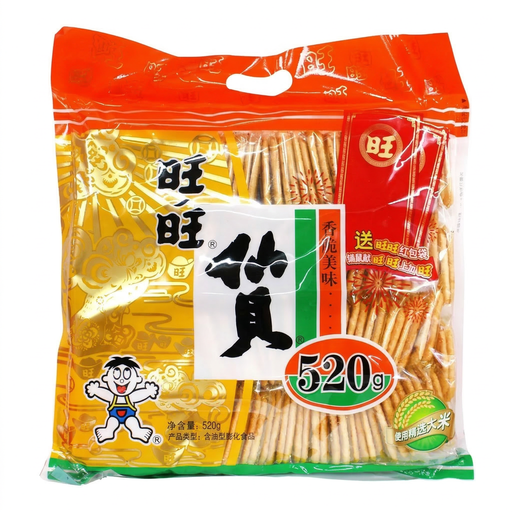 No image available
This variety could suit you if you’re looking to stock up on individually wrapped rice crackers and the product information meets your needs; it isn’t specifically described as a rice cake. According to the product name, the pack contains 520 g across 88 individual packs. If you need to avoid wheat or soya, the product information says this variety isn’t suitable. Before buying, also check any ‘may contain’ warnings against the information on the actual pack.
No. Suitability depends on the specific variety and the allergens you need to avoid. Check the ingredients and any ‘may contain’ warnings: for example, EDEKA Bio says its plain rice cakes may contain traces of sesame.
This voluntary warning draws attention to the possibility that an allergen may have been unintentionally introduced. It doesn’t confirm that the allergen is present, but it doesn’t rule it out either. How you take the warning into account depends on how you personally manage possible cross-contamination.
A larger quantity is a good fit if the information on the packs is suitable for you and your household will use them before the best-before date. Check the number and weight of the individual packs rather than judging by the size of the outer packaging alone.
Stocking up shouldn’t lead to a one-sided diet or very frequent consumption. The German Federal Institute for Risk Assessment notes that rice products, including rice cakes, can contain relatively high levels of inorganic arsenic. If your household has allergies, choose alternative snacks by checking their product information too.
Yes. When choosing a product for someone with an allergy, the information on the pack you actually buy is what matters. EDEKA notes that its online product information may differ from the packaging, while ALDI SÜD says that different suppliers may provide its documented rice cake variety.