Single servings of filter coffee
If you only grind enough beans for a small brew at a time, the grinder’s capacity and grind size should suit your dose. The German Coffee Association explains that grind size depends on the brewing method.


For single filter-coffee servings and limited worktop space, a compact hand grinder is a natural place to start, provided you’re happy to grind by hand and its capacity suits your dose. If you grind frequently, make espresso or would rather not turn a handle, look for electric burr grinders with a clearly stated adjustment range for your brewing method. You’ll also want to consider the appliance’s actual dimensions, how it’s cleaned and, for electric models, the space needed for the grinder and a power socket.
If you only grind enough beans for a small brew at a time, the grinder’s capacity and grind size should suit your dose. The German Coffee Association explains that grind size depends on the brewing method.
If you want to put the grinder away after use or have little worktop space, consider the dimensions of the whole appliance and how much room you need to operate it. Manual and electric grinders come in different shapes and sizes.
If you make espresso regularly and don’t want to grind by hand, look for a model with a stated adjustment range for espresso. An electric grinder also needs a suitable spot and a nearby power socket.
The right grind size depends on how you brew your coffee. So first compare your serving size and brewing method with the specifications for the exact model.
| Consideration | What to look for when buying | Who is it important to? |
|---|---|---|
| Getting the dose right | Compare the amount of beans you want to grind with the stated capacity: Hario lists a 24 g grounds container for the Mini-Slim+, while 1Zpresso gives the Q Air a capacity of 15–20 g. | If I’m making just one or two cups, I want to be able to add the right amount of beans. Portion size is likely to be the main concern for around 33% of consumers. |
| Worktop space and storage | Check the appliance’s dimensions and the space needed to fill and operate it. For an electric grinder, make sure a socket is within reach, too. Baratza lists the Encore ESP as measuring 13 × 15 × 34 cm. | If I have a small worktop, I want to be able to use the grinder comfortably or put it away afterwards. Available space is likely to be the main consideration for around 27% of consumers. |
| Grind size for your brewing method | Check the brewing methods and adjustment ranges specifically listed for the exact model. The German Coffee Association points out that grind size needs to suit the brewing method. | If I make espresso, I want to be able to adjust the grind to suit my brewing method and machine. Around 20% of consumers are likely to prioritise an espresso grind setting. |
| Ease of use and cleaning | Compare how the grinder works and the cleaning instructions for the specific model. Hario says the grinding section of the Mini-Slim+ can be taken apart for washing; Baratza lists a quick-release mechanism for cleaning the Encore ESP. | If I grind frequently, I want to avoid turning a handle or be able to clean the grinder easily. Low effort is likely to be a priority for around 20% of consumers. |
A grinder with rotating blades isn’t the burr grinder you’re looking for, even if it’s described as a coffee grinder.
Check the technical description for a conical or flat burr grinder, rather than blades.
Height and room to operate the grinder can matter just as much on a small worktop. Baratza lists the Encore ESP as measuring 13 × 15 × 34 cm; a hand grinder also needs room for its handle.
Measure the space available, including the height, as well as the room needed to fill and use the grinder.
Baratza describes the single-dose hopper for the Encore ESP as an optional accessory. Hario’s washing instructions apply to the grinding section of the Mini-Slim+.
Check what’s included and read the cleaning instructions for the exact model, rather than assuming the same features apply to other grinders.
An optional accessory may mean an additional purchase. Before you buy, check whether you need the single-dose hopper for your preferred dose.
The Mini-Slim+ is a manual option for grinding small amounts of coffee. HARIO Europe lists a ceramic grinding section and a grounds container with a capacity of 24 g.
The manufacturer describes the Q Air as a lightweight manual grinder for pour-over coffee, with a capacity of 15–20 g.
The Encore ESP, featured by Baratza Germany, combines electric grinding with separate adjustment ranges for espresso and coarser brewing methods.
The C40 Mk4 Nitro Blade is a manual alternative for readers who value grind adjustment and build quality. The F.A.Z. Kaufkompass includes it in its guide to hand coffee grinders.
The Chestnut C3 family includes manual models with steel burrs. When comparing them, it’s important to check the exact version and its adjustment mechanism.
This selection includes manual and electric coffee grinders. If you’re specifically looking for a burr grinder, check whether electric models actually use conical or flat burrs rather than blades.
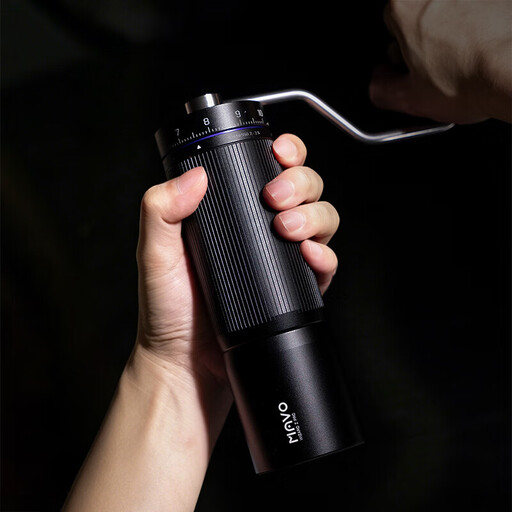 Image unavailable
This manual model could suit you if you’re happy to grind by hand and don’t need an electric motor.
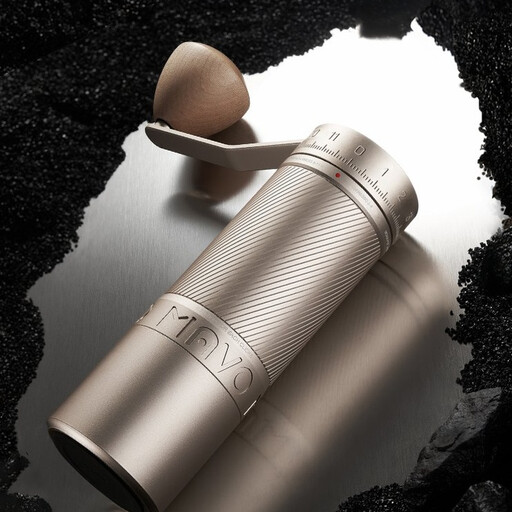 Image unavailable
A manual grinder could be the right choice if you want to grind the beans yourself. Check that the brewing method and capacity suit your needs by referring to the model specifications.
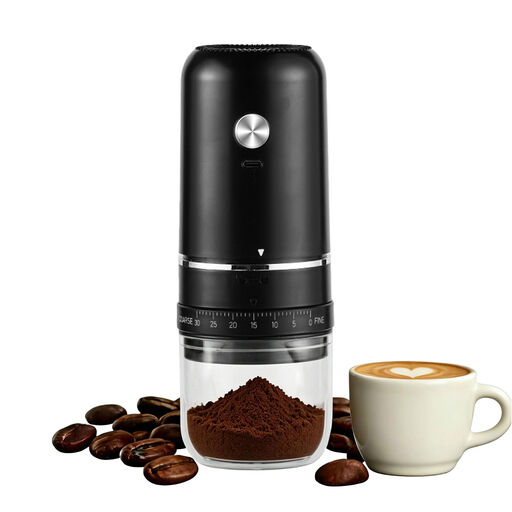 Image unavailable
If you’d rather not grind by hand, check before buying whether this model actually uses burrs rather than blades.
Features stated in the product name: 30 grind settings and USB-C.
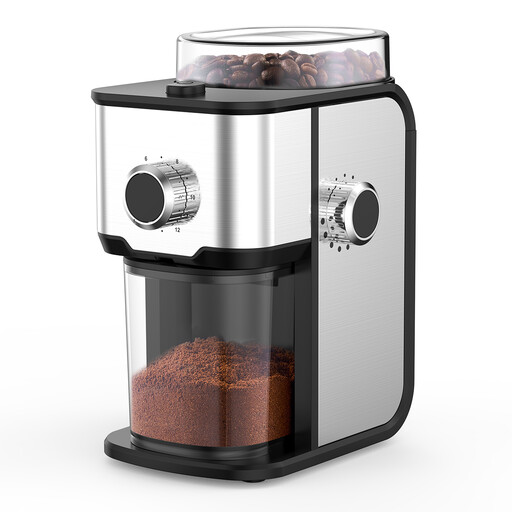 Image unavailable
This electric model could suit you if you’d rather not grind by hand. Check that its settings match your preferred brewing method.
The product name specifies flat burrs and 14 grind settings.
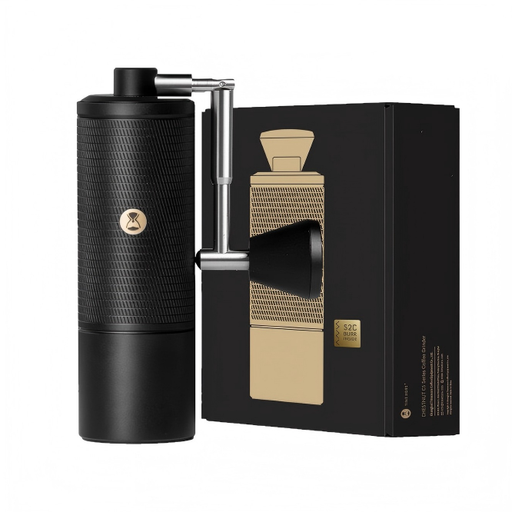 Image unavailable
This manual model is an option if you want to grind your own beans. Check the specifications for the exact version and make sure they suit your serving size and brewing method.
Start by matching the grind size to your brewing method, whether that’s filter coffee, French press or espresso. Then check the adjustment range of the specific grinder. The German Coffee Association explains that grind size should be adjusted to suit the brewing method.
Not as a general rule. HARIO Europe says the grinding section of the Mini-Slim+ can be taken apart for washing. This doesn’t mean other models can be washed; follow the cleaning instructions for your grinder.
No. Your statutory rights cover faults and apply against the seller, while a warranty is an additional voluntary promise with its own terms and conditions. The Verbraucherzentrale explains the difference. Check the terms for the exact model when it comes to warranty cover and spare parts.
According to the Verbraucherzentrale, consumers in Germany generally have 14 days to withdraw from an online purchase, and must notify the retailer. Check when the withdrawal period starts for your purchase and whether an exception applies.
CE marking is required if EU rules that explicitly require it apply to the product. According to the European Union, the manufacturer uses it to declare that the product meets the applicable requirements; it isn’t a quality mark issued by a central EU body. A manual grinder isn’t unlawful simply because it doesn’t have CE marking.