
Lieferung heute & morgen

Qualitätsgarantie

Willkommens-Angebote freischalten: KOSTENLOSE Lieferung | Bis zu 80 % RABATT | Kostenlose 30-Tage-JoyPlus-Testphase
App herunterladen
A busy book, also known as a quiet or sensory book, seems like the ideal screen-free activity for toddlers. It promises to develop fine motor skills, improve concentration, and keep children quietly engaged on long car rides or in waiting rooms. But the market is crowded, and not every activity book lives up to the promises made by its colourful pictures. Before you make a decision that later turns out to be unsuitable or even unsafe, you should know the common pitfalls.
Disappointment often sets in when the much-anticipated educational toy is left unused in a corner after just a short time. Watch out for these three common flaws to avoid a bad purchase.
A common problem with poorly made books is weakly attached elements. Buttons, zippers, or small felt figures that are only fixed with glue or sewn on with weak thread can easily come loose. For children under three, such small parts pose a significant choking hazard. A safe product is distinguished by components that are securely stitched or riveted.
Many inexpensive busy books are made of thin felt that quickly pills or tears under stress. The seams are often messy and come apart as soon as a child pulls on them with a bit more force. Such a book not only loses its visual appeal but also its function, becoming useless.
The "for ages 1–3" label is often misleading. Many books include activities like tying shoelaces or fastening small buckles, which are far beyond the fine motor skills of a one-year-old. This leads to frustration instead of playful learning. A good educational toy for developing fine motor skills offers a challenge that is appropriate for the child's developmental stage.
To find the right book that is both safe and offers real value, you should focus on objective features.
A high-quality fabric or felt activity book feels sturdy. Look for dense, firm felt and double stitching, especially on the edges and moving parts. All elements should be attached so they won't tear off even with repeated pulling. In Germany and the EU, the CE marking is a mandatory indicator that the product meets the essential health and safety requirements set out in the Toy Safety Directive (EN 71).
A good Montessori toy for 1- to 3-year-olds follows the principle of isolating the difficulty. This means each page focuses on one specific skill. For a child aged 1 and up, simple activities like opening and closing Velcro fasteners, exploring different textures in a sensory book for toddlers, or moving large objects along a set path are ideal. More complex tasks like buttoning or using zippers are better suited for children aged two and older.
An engaging theme, such as a farm-themed quiet book, can further capture a child's interest. If the book is intended to be a travel toy for toddlers in the car, a compact size, light weight, and ideally a carrying handle are key advantages. A well-designed, durable busy book also makes a thoughtful 1st birthday gift.
Based on these criteria, we have identified some products that are suitable for different requirements and age groups.

Why This Fits Their Persona: Ideal for parents looking for a versatile and compact book for home and on the go. The lightweight design makes it a practical companion in the car or a waiting room.
According to the manufacturer, the elements are securely stitched to minimise the risk of loose small parts. The activities (zipper, Velcro, buttons) are tiered for the 1-3 age group.
Offers 15 different activities in one book, ensuring long-lasting engagement. The farm theme is very popular with toddlers.
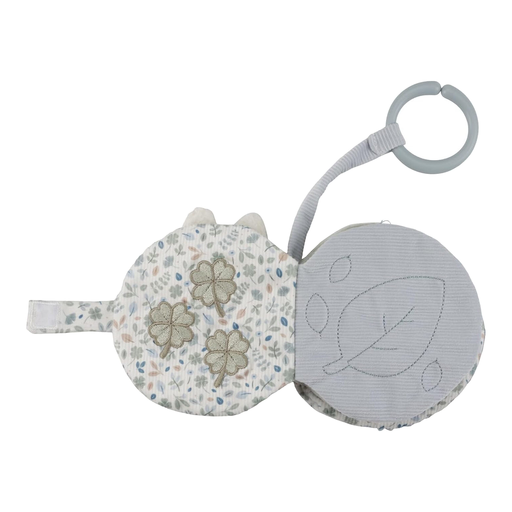
Why This Fits Their Persona: Perfect for parents who want to encourage sensory development right from birth. This book focuses on touch, hearing, and sight.
It contains no small parts that can be swallowed and is designed specifically for babies. Instead of complex tasks that could cause frustration, it relies on simple sensory stimuli like crinkle paper and a mirror.
Thanks to its attachment ring, it can be easily fastened to a stroller or car seat, making it a practical toy for on the go.
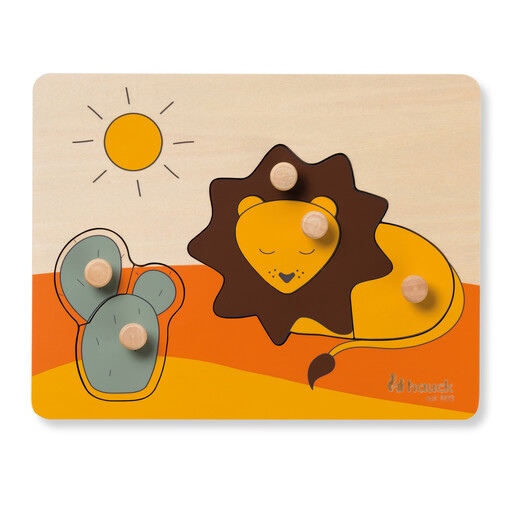
Why This Fits Their Persona: A great alternative for parents who want to focus on shape recognition and first puzzle experiences, and who prefer wood as a material.
The sturdy wood is more durable than felt. The large puzzle pieces with grip knobs are specially designed for small hands from 12 months and up, preventing frustration from an overly complex task.
Made from wood from FSC-certified forests. Specifically promotes hand-eye coordination and logical thinking.
We have compiled a complete, up-to-date list of products that fully meet these strict selection criteria and safety regulations.
Most felt or fabric busy books are not machine washable, as adhesives could dissolve or electronic components could be damaged. The recommended cleaning method is spot cleaning. Use a slightly damp cloth, perhaps with a mild soap solution, to gently dab away stains. Then, let the book air dry completely.
Simple sensory books with different textures and crinkle elements are engaging for babies from around six months of age. Interactive busy books with tasks like zippers or buttons are generally suitable for children from 12 to 18 months, depending on their individual development. Always pay attention to the manufacturer's age recommendation and observe your child to avoid frustration.
The terms are often used interchangeably in common language. Both refer to an interactive fabric book designed to keep toddlers occupied. The term "quiet book" emphasizes the calm nature of the play, making it ideal for situations where noise is discouraged, such as in church, at doctor's appointments, or during travel.