Quick-evening-meal cooks
You want to enjoy already-cooked butter beans together today and, above all, avoid unnecessary appliances and lengthy cooking times.


If you want to heat up pre-cooked tinned butter beans for a meal together, you don’t need a slow cooker: according to the Federal Centre for Nutrition (BZfE), tinned pulses are already cooked and can be eaten straight from the tin. A slow cooker may be worth considering if you regularly make entire stews for several people or want to keep a dish hot until it’s time to serve. However, a keep-warm setting alone doesn’t prove that the food has reached a particular temperature.
You want to enjoy already-cooked butter beans together today and, above all, avoid unnecessary appliances and lengthy cooking times.
You regularly cook beans with other ingredients for several people and need an appliance with enough capacity for your whole recipe.
You want to keep a cooked dish hot until it’s time to eat, and are considering both how easy the appliance is to use and the temperature of the food.
First, decide what matters most for your meal together: quick reheating, room for the whole recipe, flexible serving times or extra ways to use the appliance.
| Consideration | What to check before buying | Who is it important to? |
|---|---|---|
| Time and reason for buying | Consider whether you regularly make whole stews or simply want to heat up pre-cooked beans. The BZfE points out that tinned pulses are already cooked. | If I mainly want to heat the beans quickly for this evening’s meal, another appliance isn’t much of a priority for me. Around 36% of consumers put quick reheating first. |
| Room for your recipe | Compare the total quantity of ingredients with the filling guidance for the specific model. Tristar lists a capacity of 3,5 l and up to four portions for the VS-3915, and 4,5 l and up to six portions for the VS-3920. For the CY7548, Tefal gives a nominal capacity of 5,0 l, but a usable capacity of 3,2 l. | If I’m cooking beans, vegetables and liquid together for several people, I want to be sure the recipe will fit. Around 29% of consumers give priority to a capacity that suits the number of portions they need. |
| Serving and keeping food hot | Know the difference between a cooking timer and a keep-warm setting. If you’re keeping food hot for longer, check its actual temperature. The Federal Institute for Risk Assessment (BfR) advises keeping heated food at a minimum of 60 °C throughout. | If not everyone is eating at the same time, I want to keep the finished dish hot until it’s time to serve and keep an eye on its temperature. Around 21% of consumers prioritise flexible serving times. |
| Cleaning and other uses | Check the cleaning instructions for each use and consider whether you’ll actually use any additional programmes. Tristar lists removable inserts for the VS-3915 and VS-3920; Tefal lists functions including browning and pressure cooking for the CY7548. | If I want to use an appliance for other dishes too, suitable functions and ease of use matter more to me than programmes that go unused. Around 14% of consumers focus on versatility and ease of use. |
According to the BZfE, tinned pulses are already cooked. So there’s no proven benefit to a long cooking time for this one meal.
Before buying, consider whether you regularly make whole stews or want to keep food hot until it’s time to serve.
According to the manufacturer, the Tefal CY7548 has a nominal capacity of 5,0 l but a usable capacity of 3,2 l. So the larger figure alone doesn’t tell you how much food will actually fit in this model.
Add together the beans, liquid and other ingredients, then check the filling guidance for the specific model.
An appliance function doesn’t prove that food has reached the temperature recommended by the BfR throughout.
If you’re keeping food hot for longer, check its actual temperature. Don’t leave leftovers in a switched-off appliance if you plan to store them for longer.
The VS-3915 and VS-3920 offer different pot sizes for making slow-cooked dishes regularly.
The Cook@Home 22740-56 is a 3,5-l slow cooker for making slow-cooked dishes regularly.
The Turbo Cuisine CY7548 combines slow cooking with other cooking programmes.
The 2904 range combines rice cooking and slow cooking for households that want to use both methods.
This selection includes slow cookers and multi-cookers with a slow-cook function for making stews regularly and tackling other cooking tasks. You don’t need to buy a new appliance just to heat up pre-cooked tinned beans.
 No image available
This is a better fit if, as well as reheating, you regularly cook, steam or stew food.
2.6L capacity; two manual heat settings; non-stick coating. One setting is listed at 1000 W for fast cooking or hot pot.
According to the product description, this appliance isn’t designed for high-temperature frying.
 No image available
This model is a better fit if you want to steam food or make soup as well as slow-cooked dishes.
Described as a slow cooker, steamer and soup maker. The product description also lists a 2,5-l main pot and four 0,4-l inner pots.
Hot steam may escape while the appliance is in use. Switch it off before opening and, according to the instructions, leave it to cool for a few minutes.
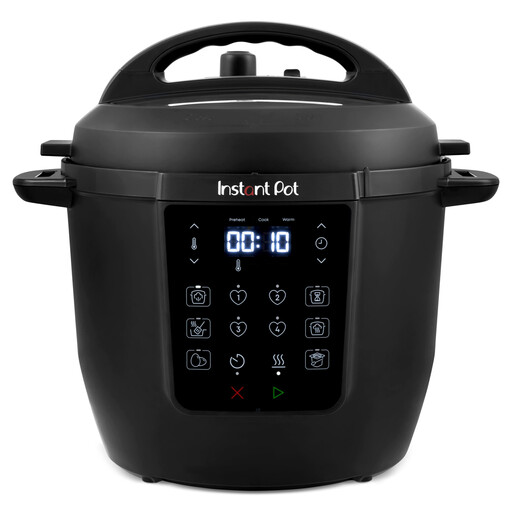 No image available
A multi-cooker is a better fit if you want to use other cooking programmes as well as slow cooking.
5.7L; according to the product description, it’s designed for up to six people. Listed functions include slow cooking, pressure cooking, browning, steaming and keeping food warm.
The keep-warm function doesn’t prove that the food has reached at least 60 °C throughout. The BfR recommends this temperature throughout when keeping food hot for longer.
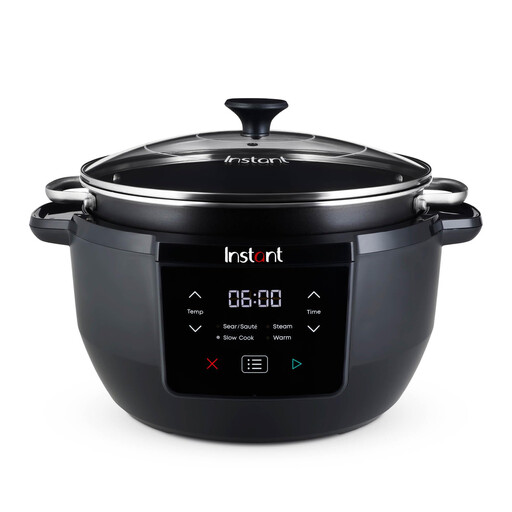 No image available
This appliance is a better fit if you want to combine slow cooking with rice cooking or steaming.
The description lists rice cooking, steaming, browning and slow cooking, as well as automatic keep-warm.
Automatic keep-warm doesn’t prove that the food has reached at least 60 °C throughout. The BfR recommends this temperature throughout when keeping food hot for longer.
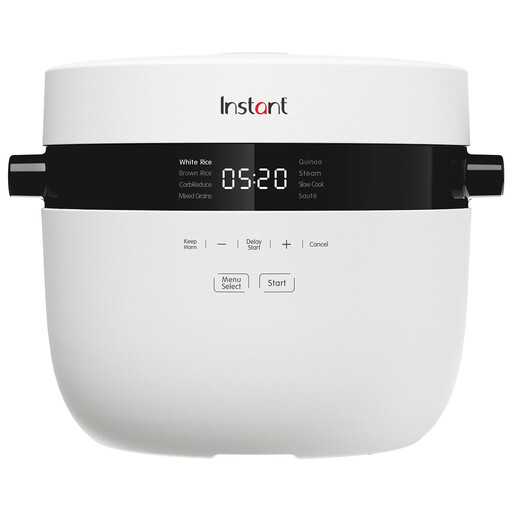 No image available
This appliance is a better fit if you want to cook rice, steam food or use other listed programmes as well as slow cooking.
The product name gives a capacity of 5L (20 Cups) and a power rating of 860W. The description lists slow cooking, browning, steaming, pressure cooking, making yoghurt and keeping food warm.
The keep-warm function doesn’t prove that the food has reached at least 60 °C throughout. The BfR recommends this temperature throughout when keeping food hot for longer.
No. Most tinned pulses are already pre-cooked. According to the BZfE, you can even eat them straight from the tin; for a hot evening meal, simply heat them to suit your dish. This doesn’t necessarily apply to raw or dried beans.
A keep-warm setting alone doesn’t confirm a particular food temperature. The BfR advises keeping heated food at a minimum of 60 °C throughout while it’s being kept hot. So if you’re serving food over an extended period, the temperature of the food itself is what matters.
If you want to keep the dish for longer, the BfR recommends cooling hot food quickly to below 7 °C. A removable appliance pot doesn’t replace proper refrigeration.
When buying an electrical household appliance sold in Germany, check for the CE marking, manufacturer details and clear instructions for use. The Federal Network Agency lists these points as part of its market surveillance; on their own, they don’t tell you whether the appliance is suitable for your recipe.