Shopping for a group
If you’re filling a biscuit tin for a group or several get-togethers, the most important thing is to choose a pack size that suits the number of people you’re planning to share it with.


For a group and a biscuit tin, a 400 g pack of butter biscuits is a sensible starting point; REWE, ALDI SÜD and EDEKA all describe options in this size. But the ingredients and allergens in the specific pack matter too, as does whether you can divide the biscuits between several get-togethers. A 150 g option with less sugar may be a better fit if this matters more to you than having a larger quantity.
If you’re filling a biscuit tin for a group or several get-togethers, the most important thing is to choose a pack size that suits the number of people you’re planning to share it with.
If anyone in the group needs to avoid certain ingredients, check the allergen and ‘may contain’ information on the pack you’re actually buying.
If you’re comparing sugar in the nutritional information, you could also consider a smaller option, but you’ll need to plan separately for whether its pack size will be enough for the group.
When filling a biscuit tin for a trip to the Christmas market, it’s worth working out how much you need first. Then check how the biscuits are packed, along with the ingredients and nutritional information on the specific pack.
| Criteria | What to check | Who it matters most to |
|---|---|---|
| Pack size | The pack contents in grams and the number of people you’re planning to share them with. | If I’m filling a biscuit tin for a group, I want to make sure there are enough biscuits without relying on the words ‘family pack’ alone. Around 36% of consumers prioritise getting the right quantity. |
| Pack format | Whether the pack contains individually wrapped portions and how much each one holds. | If I want the biscuits to last for several get-togethers, I don’t want to open everything at once. Pack format is the top priority for around 29% of consumers. |
| Ingredients and allergens | The ingredients list, highlighted allergens and ‘may contain’ information on the pack. | If I’m bringing biscuits for a group with specific dietary needs, I need to check the label against those needs. This is the top priority for around 21% of consumers. |
| Sugar content | Sugar per 100 g, pack size and the ingredients in the particular option. | If sugar content matters more to me than having a large supply, I’ll consider a 150 g pack too. Around 14% of consumers put this criterion first. |
EDEKA notes that online product information may differ from what’s on the packaging. This can affect your choice, particularly if anyone has specific dietary requirements.
Before buying, check the ingredients list, highlighted allergens and ‘may contain’ information on the pack itself.
The LEIBNIZ ‘less sugar’ option described here contains 150 g, so it’s not the same size as a 400 g pack of butter biscuits.
Work out how much you need for the group before deciding whether the smaller option will be enough on its own or could be included alongside other biscuits.
EDEKA says that its product may not be available in some shops, while ALDI SÜD notes that its option is only available for a limited time.
If you’re shopping for a group, check what your local shop stocks and, if necessary, plan to buy another suitable pack.
REWE describes a 400 g pack of ja! butter biscuits containing 13% butter.
ALDI SÜD and ALDI Nord each describe a 400 g pack of BISCOTTO butter biscuits.
EDEKA describes a 400 g pack of butter biscuits divided into two 200 g portions.
REWE describes a 150 g pack of LEIBNIZ ‘less sugar’ butter biscuits, with 12 g of sugar and 11 g of fibre per 100 g.
Bahlsen’s biscuit range, as described here, includes both Bahlsen and LEIBNIZ products.
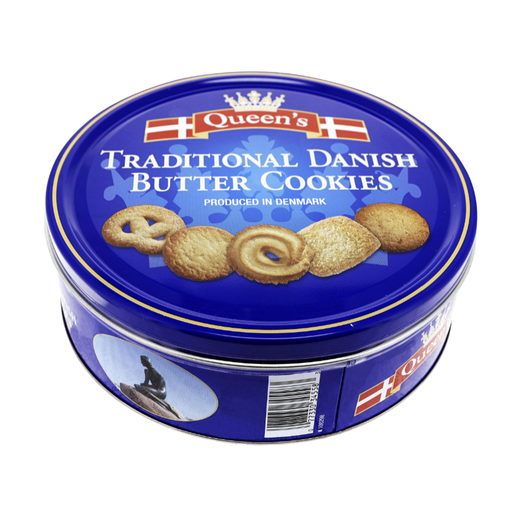
Here you’ll find a 500 g Danish Butter Cookies product for a larger quantity of biscuits, and a 150 g LEIBNIZ butter biscuit option if you’re choosing based on sugar content. Danish Butter Cookies and the classic butter biscuits described above are different product types, so compare the ingredients and pack information for each one separately.
 No image available
The 500 g pack is worth considering if you’re planning a larger quantity of butter biscuits for a group.
The product information lists wheat and butter, and says the biscuits may contain traces of nuts, peanuts and egg. Check the pack information against your group’s needs; if you only want to open some of the biscuits, check the inner packaging.
 No image available
The 150 g option is suited to choosing based on sugar content, not as a like-for-like replacement for a full biscuit tin.
The product information gives a sugar content of 12 g per 100 g. It lists wheat, milk and egg, so check the pack before sharing. If you want to compare the percentage reduction in sugar, check the comparison basis stated on the pack.
Choose a pack size based on the size of your group and what other snacks you’ll be serving. REWE, ALDI SÜD and EDEKA describe 400 g options, but that alone doesn’t tell you whether one pack will be enough for your get-together.
You can open just one portion at first if you’re saving the biscuits for more than one occasion. EDEKA describes a GUT&GÜNSTIG pack with two 200 g portions; remember to check the best-before date and storage instructions on the pack you buy.
Check the ingredients and ‘may contain’ information on the specific pack against the needs of the people who’ll be sharing the biscuits. The 400 g options described by REWE and EDEKA list wheat and milk ingredients; some also state that the biscuits may contain traces of certain nuts.
Not if you’re buying the same number of packs: the LEIBNIZ option described here contains 150 g rather than 400 g. If you’re choosing it for its sugar content, work out how much you’ll need separately and check its ingredients and allergens too.