Families who regularly share
If you share biscuits on several afternoons a week, think about the overall quantity, how you plan to portion them and how you’ll store them once opened.


If several people regularly share biscuits after school, a larger pack could be a convenient option to keep in the cupboard. For individual snack occasions, it may be easier to plan a smaller overall quantity. But for a lunchbox, pack weight alone doesn’t tell you everything: check whether the biscuits are divided into separate inner packs, and compare the nutritional information, ingredients and allergens on the specific pack.
If you share biscuits on several afternoons a week, think about the overall quantity, how you plan to portion them and how you’ll store them once opened.
When you need a set amount for a lunchbox, how the pack is actually divided up matters more than its total weight. A small pack doesn’t necessarily contain individually wrapped portions.
If you want to compare sugar and fibre, or need to take allergens into account, check the per-100 g information and the labelling for the specific variety. The examples listed by REWE and ALDI SÜD have different recipes.
First, decide whether you’ll mainly be sharing the biscuits or packing individual portions. Then compare the recipes of the products you’re considering for that purpose.
| Criterion | What to check when buying | Who it matters to |
|---|---|---|
| A pack to share | Check the total weight and storage instructions for after opening. A 400 g pack doesn’t mean the biscuits are divided into separate portions. | If several people regularly share the biscuits, I want to have enough for the afternoons I’ve planned. Around 40% of consumers would prioritise having a supply to share. |
| Amount for a lunchbox | Check the number and weight of any inner portions, as well as whether the pack can be resealed. | For a lunchbox, I want to prepare a set amount rather than take a large pack along. Portion planning would be the top priority for around 30% of consumers. |
| Recipe and allergens | Compare sugar and fibre per 100 g, and read the ingredients and allergen labelling for the variety you’ve chosen. | Before choosing a variety, I want to check its nutritional information and labelled ingredients against my requirements. For around 30% of consumers, this would be their main reason for buying. |
The total weight doesn’t tell you whether the pack contains inner bags or individually wrapped biscuits. For a lunchbox, this can matter more than the pack size.
Before planning to use pre-portioned snack amounts, check how the biscuits are divided inside the specific pack and the weight of each portion.
The Bahlsen Butter Biscuits listed by REWE contain 25% butter. The Leibniz “less sugar” variety listed there has 12 g of sugar and 11 g of fibre per 100 g. These figures describe different characteristics and don’t replace a comparison of the full labelling.
Compare the nutritional information per 100 g, ingredients and allergens side by side, then decide on the pack format and quantity you need.
The products described by REWE contain wheat; depending on the variety, they may also list milk, egg or possible traces of other ingredients. The name “butter biscuit” alone doesn’t tell you this.
Choose based on the current ingredients and allergen labelling on the specific pack.
A lower declared sugar value per 100 g doesn’t determine how many biscuits to pack for a snack.
Set the amount you want independently of the variety name, rather than taking biscuits straight from the larger pack.
A classic butter biscuit and a “less sugar” variety, giving you options to compare pack sizes and nutritional information within the same brand.
Butter biscuits as an alternative to classic butter biscuits, if you’re also considering other types of biscuits.
A 400 g pack of butter biscuits for shoppers planning a larger quantity to share.
Butter and wholemeal varieties listed by ALDI SÜD in 400 g packs.
This selection includes smaller packs of butter biscuits to help you plan quantities, as well as a larger pack of butter biscuits to share. Check how each pack is divided up to see whether it contains separate snack portions.
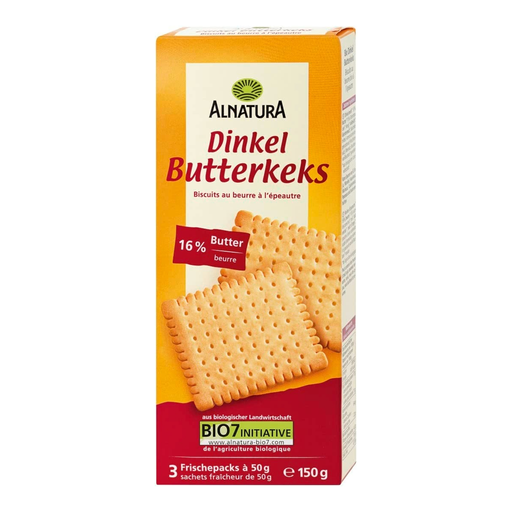 No image available
The 150 g pack could work if you’re planning smaller snack quantities. For a lunchbox, check the weight of any inner portions and the current ingredients and allergen labelling.
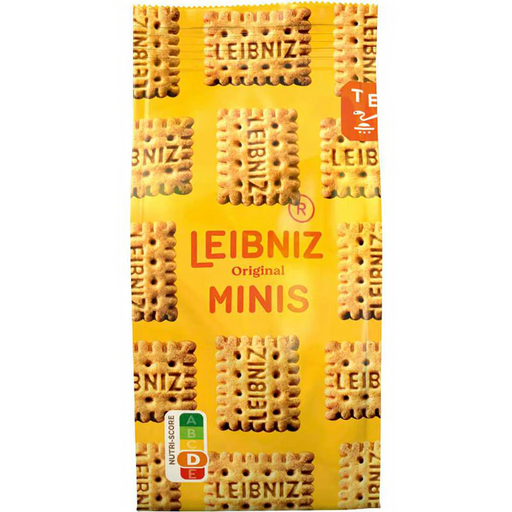 No image available
This 150 g pack of mini butter biscuits is an option if you’re planning a smaller overall quantity. Their mini size doesn’t mean they’re individually wrapped, so check how the biscuits are packed inside.
 No image available
This 150 g variety could be worth considering if you want to compare the sugar content of different butter biscuits. Also check the ingredients, allergens and how the pack is divided up for the snack quantity you’re planning.
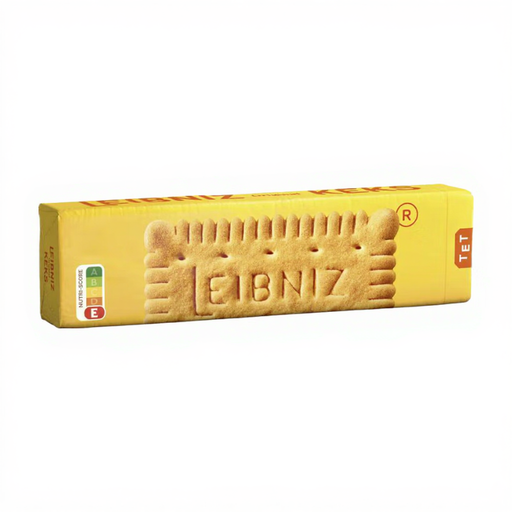 No image available
This 200 g pack is a classic option if you’re planning a smaller overall quantity than you’d get from a larger multipack. If you need separate portions for lunchboxes, check the inner packaging.
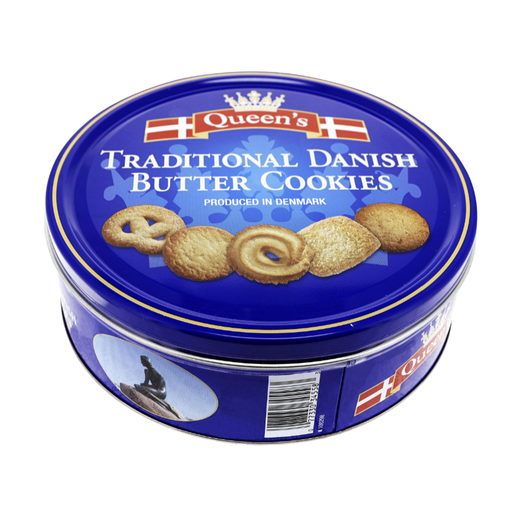 No image available
This 500 g pack of butter biscuits could be a good option if you want a larger quantity to share on several occasions. The weight doesn’t confirm that the biscuits are divided into separate inner portions, so check the pack’s allergen labelling too.
The standard varieties described here that contain wheat aren’t suitable for a gluten-free or wheat-free diet. The product information listed by REWE includes wheat; other ingredients and may-contain information vary by variety. Check the labelling on the specific pack.
Plan the quantity separately from the pack’s total weight and portion out the biscuits before eating. The Verbraucherzentrale recommends no more than one portion of sweets and snacks a day; the size of a multipack doesn’t tell you what counts as one snack portion.
No. The sugar content alone doesn’t determine whether a variety is suitable for a lunchbox. For the Leibniz “less sugar” variety listed, REWE states 12 g of sugar per 100 g, compared with 21 g per 100 g for the classic Leibniz butter biscuit. Also compare the ingredients, allergens and the amount you can actually pack.