Hosts filling a larger biscuit tin
If several guests will be helping themselves, the net weight matters more than the words ‘family pack’. EDEKA and ALDI SÜD both sell the butter biscuits covered here in 400 g packs.


For a biscuit tin to share with several guests, a 400 g pack is a sensible starting point: EDEKA sells GUT&GÜNSTIG butter biscuits in 2 × 200 g packs, while ALDI SÜD sells BISCOTTO butter biscuits in a 400 g pack. If sugar content matters more to you than pack size, compare the nutritional information per 100 g. If you need to check for allergens, the labelling on the specific pack is what counts.
If several guests will be helping themselves, the net weight matters more than the words ‘family pack’. EDEKA and ALDI SÜD both sell the butter biscuits covered here in 400 g packs.
If you’re choosing between the two LEIBNIZ varieties covered here, you can compare their sugar content per 100 g. However, the ‘less sugar’ variety contains just 150 g, compared with 200 g for the classic butter biscuits.
If certain ingredients need to be avoided, check the labelling on each individual pack. The LEIBNIZ varieties described by REWE contain wheat, milk ingredients and egg; EDEKA lists wheat and milk in GUT&GÜNSTIG, along with a possible ‘may contain nuts’ warning.
When choosing biscuits for your Oktoberfest tin, it’s worth deciding how much you need first, then comparing the nutritional information and ingredients on the packs you’re considering. A larger pack won’t tell you how much sugar it contains or whether it’s suitable for someone with an allergy.
| Criteria | What to check | Who it matters to |
|---|---|---|
| Pack size | Compare the net weight with the amount you’re planning to buy. According to EDEKA, GUT&GÜNSTIG butter biscuits come in a 400 g pack with two inner packs of 200 g each. | If several guests will be taking biscuits from the tin, I want to make sure there’s enough without relying on the words ‘family pack’. Around 45% of consumers put pack size first when making this choice. |
| Sugar content | Compare the sugar content in the nutritional information per 100 g, rather than relying on the wording on the front of the pack. REWE lists 12 g and 21 g per 100 g for two LEIBNIZ varieties. | Sugar content matters more to me than buying a large pack, so I’d consider a smaller variety too. For around 27% of consumers, this comparison comes first. |
| Ingredients and allergens | Read the current ingredients list and check which allergens are highlighted. Pay particular attention to any ‘may contain’ warnings. | If I need to avoid certain ingredients, I check every pack before buying rather than assuming what’s in it based on the product type. Around 28% of consumers put this check first. |
The packs covered here contain 150 g, 200 g or 400 g. If you’re filling a tin for several guests, a smaller pack may contain less than you’d planned for.
Compare the net weight with the amount you need. For its 400 g pack, EDEKA lists GUT&GÜNSTIG as containing two inner packs of 200 g each.
The LEIBNIZ ‘less sugar’ variety described by REWE still contains wheat, milk ingredients and egg. Its sugar content doesn’t tell you whether these ingredients can be avoided.
Check the sugar content per 100 g separately from the ingredients and allergen information.
EDEKA warns that online information may differ from the details on the packaging. ALDI SÜD says that different suppliers may mean nutritional information varies.
Check the current pack before buying. If you need a particular variety, also check whether it’s available at the store you plan to visit.
REWE sells classic LEIBNIZ butter biscuits in a 200 g pack, as well as a 150 g ‘less sugar’ variety.
EDEKA describes its butter biscuits as a 400 g pack containing two inner packs of 200 g each.
ALDI SÜD sells BISCOTTO butter biscuits in a 400 g variety made with butter.
Bahlsen includes LEIBNIZ in its biscuit range. Pack sizes and ingredients depend on the specific LEIBNIZ variety.
This selection includes butter biscuits and other butter-based biscuits in pack sizes from 150 g to 500 g, to suit different plans. Danish butter cookies and butter shortbread are different types of biscuits, so if you’re looking for classic butter biscuits, check the product name carefully.
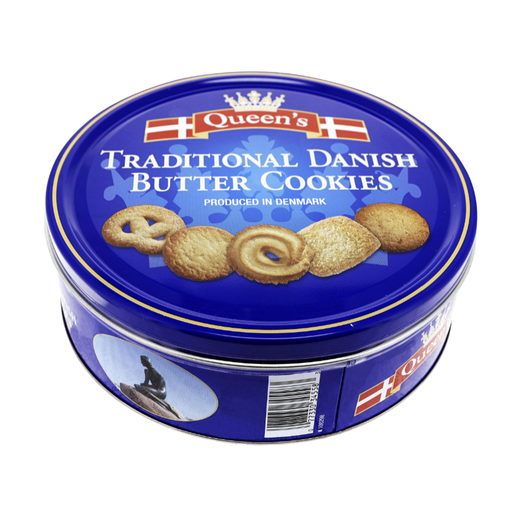 No image available
The 500 g pack could suit you if you’re planning a larger amount of Danish butter cookies for several guests. Danish butter cookies aren’t the same as classic butter biscuits. Check the current pack for ingredients and allergen information.
 No image available
The 150 g variety could suit you if you want to check the sugar content on the pack and a smaller amount is enough. The ‘less sugar’ claim is no substitute for comparing the nutritional information per 100 g or checking the ingredients and allergens.
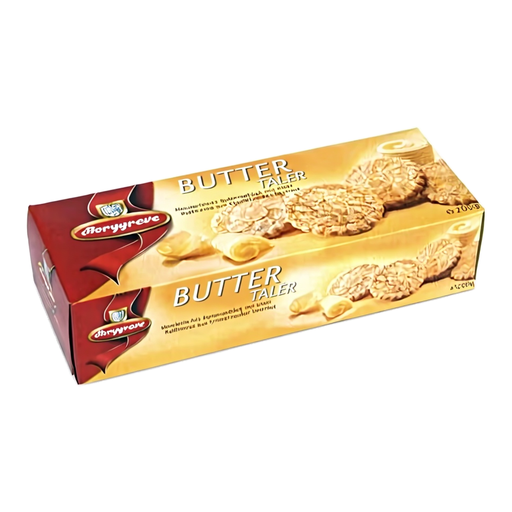 No image available
The 200 g pack could suit a smaller gathering. If you’re expecting more guests, work out how much you’ll need in total before buying. Check the ingredients and allergens on the current pack.
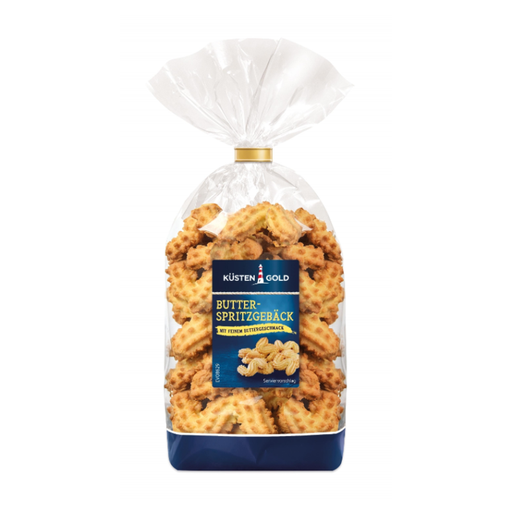 No image available
The 200 g pack could suit you if you’d prefer shortbread to classic butter biscuits and this amount is right for the occasion. To compare sugar content, check the nutritional information per 100 g on the current pack.
A 400 g pack is one option if several guests will be taking biscuits from the tin. EDEKA lists GUT&GÜNSTIG as two inner packs of 200 g each, while ALDI SÜD lists BISCOTTO as 400 g in total. Still, make sure the quantity suits your actual needs.
To compare the sugar content of the two LEIBNIZ varieties described, the nutritional information per 100 g is more useful than the pack size. REWE lists 12 g for ‘less sugar’ and 21 g for the classic butter biscuits. You’ll need to assess the ingredients, allergens and total quantity you need separately.
Read the ingredients list and check the allergens highlighted on the specific pack. The LEIBNIZ varieties described by REWE contain wheat, milk ingredients and egg, among other ingredients; for GUT&GÜNSTIG, EDEKA also lists a possible ‘may contain nuts’ warning.
The absence of a ‘may contain’ warning doesn’t guarantee that a product is free from traces. Lebensmittelklarheit explains that in Germany, allergenic ingredients deliberately added to a product must be labelled, but precautionary ‘may contain’ warnings aren’t regulated in the same way. Check the specific labelling if you need to avoid nuts.
Check the current pack before making your final choice. EDEKA warns that online information may differ from the packaging, while ALDI SÜD says that different suppliers may provide products with different nutritional information.