Hosts of small coffee get-togethers
If you only serve butter biscuits to a few people occasionally, a smaller pack can help limit the amount left over once opened. For example, REWE stocks 200 g packs of Leibniz Butterkeks.


For regular coffee get-togethers, a 400 g pack containing two separate 200 g portions can be a practical choice if you only want to serve some of the biscuits at a time. EDEKA describes this format for GUT&GÜNSTIG. For smaller or less frequent gatherings, a 200 g pack may be a better fit. Alongside the quantity, check how the biscuits are actually divided inside the pack, as well as the ingredients, allergen information and nutritional values on the specific product.
If you only serve butter biscuits to a few people occasionally, a smaller pack can help limit the amount left over once opened. For example, REWE stocks 200 g packs of Leibniz Butterkeks.
If you need the biscuits to last for several occasions, a larger pack divided into separate portions can be handy. EDEKA describes the GUT&GÜNSTIG Butterkeks as a 400 g pack containing two separate 200 g portions.
If you need to take ingredients and allergens into account for your guests, or want to compare nutritional values, check the information on the specific pack. Recipes and warnings about possible traces can vary, even between similar butter biscuits.
Start by deciding how many biscuits you’re likely to serve at each get-together. Then check whether any leftovers can be kept sealed and whether the ingredients are suitable for your guests.
| What to consider | What to check when buying | Who it matters most to |
|---|---|---|
| Separate portions | Check the number and weight of the inner packs. EDEKA lists GUT&GÜNSTIG as two separately packed 200 g portions; this does not mean the biscuits are individually wrapped. | If I’m only serving some of the biscuits at regular get-togethers, I want to keep the rest sealed. Around 31% of consumers prioritise having separate portions. |
| Total quantity | Compare the pack size with your usual number of guests and how much you get through at each occasion. REWE stocks 200 g packs of Leibniz and 400 g packs of ja! Butterkekse. | For a small get-together, I don’t want to open more biscuits than we’re likely to eat. The right overall quantity is the top priority for around 25% of consumers. |
| Ingredients and nutritional values | Check the ingredients and allergen information on the specific pack. For similar products, compare sugar, fat, salt and fibre per 100 g. | If guests need to avoid certain ingredients, or I want to compare varieties, I need the information on each specific pack. This check is a priority for around 25% of consumers. |
| Availability | Check your chosen shop and the current packaging before your planned get-together. EDEKA notes that the product mentioned may not be available in every store. | If I need biscuits for a specific occasion, I want to know in good time whether I can get the pack I want locally. Being able to plan ahead is the main concern for around 19% of consumers. |
The 400 g pack described by EDEKA contains two 200 g portions. Even after opening one portion, you may still have biscuits left over after a small coffee get-together.
Check the weight of each inner pack and whether you can reseal it once opened.
Information varies between products: REWE lists wheat, milk and egg among the ingredients in Leibniz Butterkeks; the EDEKA example also warns of possible traces of tree nuts.
If you have allergies, read the ingredients and allergen information on the specific pack, even if you already know the brand.
ALDI SÜD lists 7 g of fibre per 100 g for its BISCOTTO wholegrain butter biscuits. However, the variety name alone doesn’t tell you about the rest of the nutritional profile.
Compare sugar, fat, salt and fibre per 100 g across the varieties you’re actually considering.
EDEKA notes that its butter biscuits may not be available in every store, and that the information may differ from what’s on the packaging.
Before a planned coffee get-together, check availability at your chosen store and read the information on the current pack.
A smaller pack option for occasional or smaller coffee get-togethers.
An option for regular get-togethers when you don’t want to open the whole pack at once.
A 400 g option if you need a larger quantity for your coffee get-together.
400 g packs of butter biscuits and wholegrain butter biscuits, making it easy to compare options in the range.
This selection includes smaller packs of butter biscuits and a larger pack of Danish butter biscuits for a coffee get-together. If you want to spread the biscuits across several occasions, check how each product is divided inside the pack.
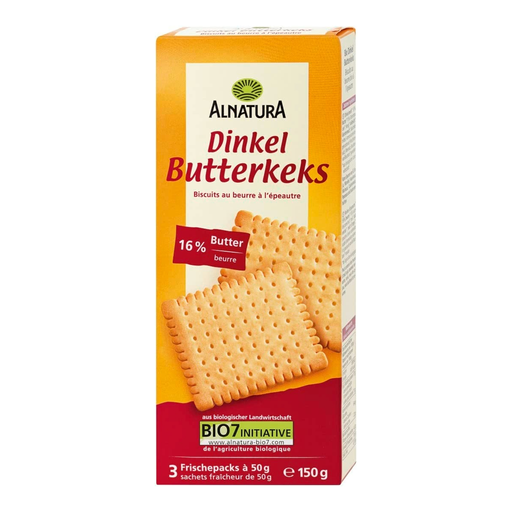 No image available
The smaller quantity may suit occasional serving. Before sharing, check how the biscuits are divided inside the pack; if you have allergies, check the information on the specific packaging.
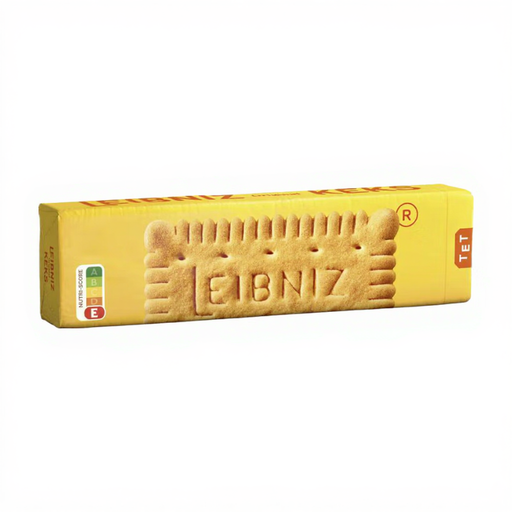 No image available
The 200 g pack is a smaller quantity for a modest coffee get-together. If you only want to open some of the biscuits, check how the pack is divided inside and whether it can be resealed.
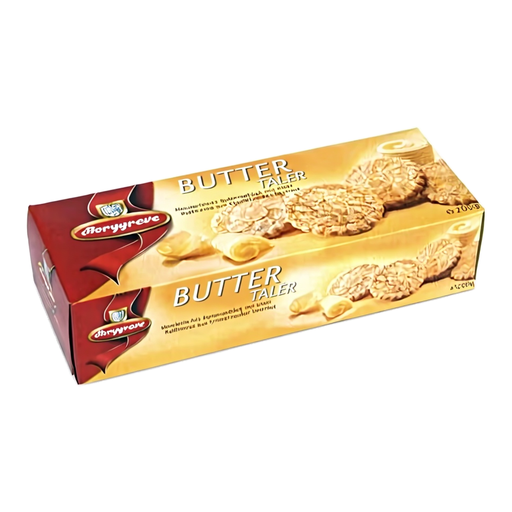 No image available
The 200 g pack may suit smaller get-togethers. Check the packaging for advice on storing biscuits once opened and whether there are separate inner packs.
 No image available
The 150 g pack keeps the quantity manageable for a small get-together. If you’re comparing this variety because of its name, check the sugar content per 100 g on the current pack.
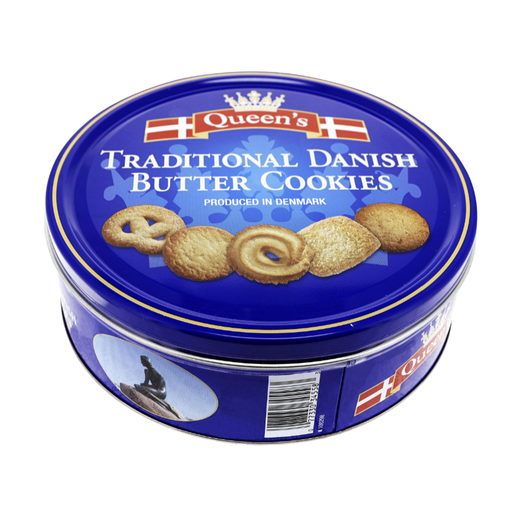 No image available
The larger quantity may suit a get-together with several guests. Before buying, check how the biscuits are divided inside the pack, along with the ingredients and allergen information on the specific packaging.
The 400 g pack contains two separate portions of 200 g each, as EDEKA describes for GUT&GÜNSTIG. You can open just one portion to start with; it doesn’t mean each biscuit is individually wrapped.
Read the ingredients list and check for information about allergens present and possible traces on the specific pack. REWE lists wheat, milk and egg among the ingredients in Leibniz Butterkeks; the EDEKA example also warns of possible traces of tree nuts.
No. The term “wholegrain” doesn’t answer every question about ingredients and nutritional values. ALDI SÜD lists 7 g of fibre per 100 g for its wholegrain variety; compare the other nutritional information with similar products too.
Not necessarily. The Verbraucherzentrale notes that food which has been kept sealed and stored correctly is often still safe to eat after its best-before date. Follow the storage instructions and check the packaging and condition of the product. An unopened pack isn’t a suitable comparison for biscuits that have already been opened.
Follow the storage instructions on the specific pack and reseal any opened portion if possible. If a pack contains two separate inner packs, you can leave the unopened portion sealed until your next get-together.