If you’re keeping an eye on sugar
You want to buy butter biscuits for a snack, but would rather compare the sugar content of different varieties than rely on the wording on the pack alone.


The right butter biscuit for your mid-morning snack depends on what matters most to you. To choose a lower-sugar option, compare sugar values; for more fibre, check the fibre content; and for a classic biscuit, look at the ingredients and pack size. Don’t choose butter biscuits expecting them to aid digestion. Allergens and how much you eat still matter, even with lower-sugar varieties.
You want to buy butter biscuits for a snack, but would rather compare the sugar content of different varieties than rely on the wording on the pack alone.
You compare wholemeal and other butter biscuit varieties by checking their fibre content. You also know that more fibre doesn’t necessarily mean less sugar.
You want a familiar butter biscuit for a short break and are looking for a suitable pack size, while checking the ingredients and allergens.
First decide whether sugar, fibre or a classic recipe matters most to you. Compare the nutritional values on the same basis of 100 g, then check the ingredients, allergens and pack size.
| What matters to you | What to check | Who it matters to |
|---|---|---|
| Sugar and energy | Sugar in g and energy in kcal, both per 100 g; then consider the portion you plan to eat. | When I eat biscuits in the morning, I mainly want to compare sugar content without losing sight of how much I eat. Around 40% of shoppers are likely to put sugar and energy at the top of their list. |
| Fibre and wholemeal | Fibre in g per 100 g and the ingredients list; compare the sugar content as well. | For a biscuit to enjoy during a break, fibre content matters more to me than a classic recipe, even though wholemeal doesn’t automatically mean less sugar. Around 30% of shoppers are likely to put this first. |
| Classic recipe and pack | Pack size, ingredients and allergen labelling; check for precautionary allergen statements if needed. | I’m looking for a familiar butter biscuit in a suitable pack size, and may need to take allergens into account. For around 30% of shoppers, taste and pack format are likely to make the difference. |
You can’t assume a biscuit will aid digestion based on its name or the fact that it’s a butter biscuit. The German Nutrition Society gives biscuits as an example of processed foods that may contain sugar and fat.
Choose a butter biscuit based on its ingredients, nutritional information and how well you tolerate it, not to treat digestive problems.
According to ALDI SÜD, BISCOTTO wholemeal butter biscuits contain 7 g of fibre and 25 g of sugar per 100 g. So the wholemeal label doesn’t tell you how much sugar they contain.
Compare fibre, sugar and energy per 100 g, then choose according to what matters most to you.
REWE lists Leibniz Butterkeks weniger Zucker as containing 12 g of sugar, but still 422 kcal per 100 g. The product name doesn’t replace checking the portion size or allergens.
Read the nutritional information and ingredients list on the specific pack before choosing.
EDEKA notes that the online information for GUT&GÜNSTIG butter biscuits may differ from the packaging. ALDI SÜD says its classic BISCOTTO butter biscuits may come from different suppliers.
If you have allergies or specific nutritional requirements, check the information on the pack you’re actually buying.
The butter biscuits listed by REWE include a classic variety and one labelled “less sugar”.
Bahlsen is listed as the contact company for Leibniz Butterkeks on REWE’s product page.
EDEKA describes classic GUT&GÜNSTIG butter biscuits in a 400-g pack, made with 13% butter.
ALDI SÜD describes classic butter and wholemeal butter biscuits from BISCOTTO in 400-g packs.
Sondey is a Lidl own-brand. In May 2025, Lidl Germany reported on Sondey butter biscuits.
This selection includes a Leibniz butter biscuit labelled “less sugar”, classic Leibniz butter biscuits and Alnatura spelt butter biscuits. For your mid-morning snack, the information on the specific pack matters more than the type of biscuit alone.
 No image available
For anyone who wants to compare the sugar content of a butter biscuit with a classic variety.
For this Leibniz variety, REWE lists 12 g of sugar and 11 g of fibre per 100 g. Before buying, check the nutritional and allergen information on the specific pack.
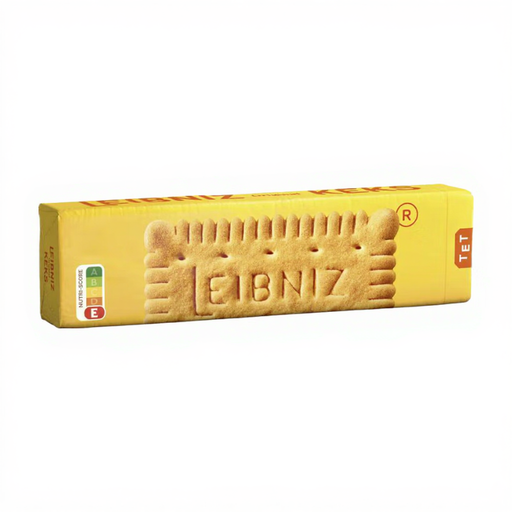 No image available
For anyone looking for a classic butter biscuit to enjoy during a mid-morning break.
REWE lists 21 g of sugar and 2.8 g of fibre per 100 g for classic Leibniz Butterkeks. If you have allergies, check the information on the specific pack.
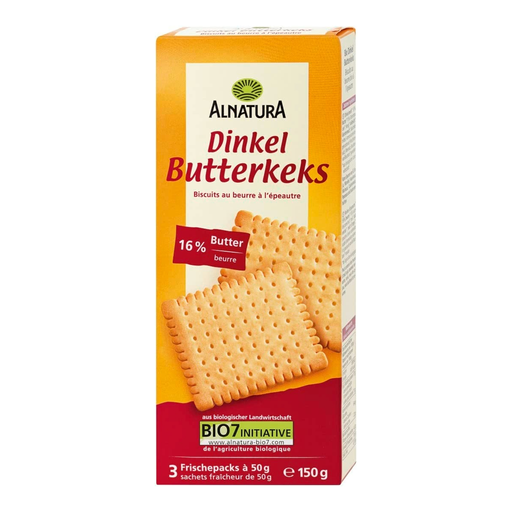 No image available
For anyone specifically looking for spelt butter biscuits in a 150-g pack for their break.
The word “spelt” alone doesn’t tell you whether this variety contains less sugar or more fibre. Check the nutritional information on the pack to compare.
Don’t choose butter biscuits expecting them to aid digestion. The German Nutrition Society gives biscuits as an example of processed foods that may contain sugar and fat. If you have persistent or severe digestive problems, it’s sensible to seek individual medical advice.
Compare the sugar content per 100 g and make sure you know which variety you’re looking at. REWE lists 12 g of sugar per 100 g for Leibniz Butterkeks weniger Zucker and 21 g for classic Leibniz Butterkeks. Energy, ingredients, allergens and how much you eat are also relevant when choosing.
No. The word “wholemeal” doesn’t mean a lower sugar content. According to ALDI SÜD, BISCOTTO wholemeal butter biscuits contain 7 g of fibre and 25 g of sugar per 100 g. If fibre matters to you, compare the fibre and sugar values separately.
Check the ingredients list, any allergens highlighted on the pack and, where relevant, precautionary allergen statements. The consumer advice centre explains allergen labelling on packaged foods. For the butter biscuits described here, pay particular attention to information about wheat and milk, as well as any other allergens that may be present depending on the variety.