Small biscuits for breakfast
If you want to serve individual little biscuits with coffee, tea, yoghurt or fruit, the mini format is practical. You can still decide how many to serve.


Mini butter biscuits are a good choice if you want to serve small individual pieces at breakfast; the size of each biscuit alone does not change the nutritional values per 100 g. If having enough biscuits for several breakfasts matters more than the mini format, larger packs of classic butter biscuits are also an option. For a gluten-free variety, check the explicit gluten-free label and the ingredients on the current pack, as gluten-free does not mean free from milk or egg.
If you want to serve individual little biscuits with coffee, tea, yoghurt or fruit, the mini format is practical. You can still decide how many to serve.
If you need gluten-free biscuits, look for the relevant label. According to the ingredients listed by REWE, Leibniz Minis Glutenfrei also contain butterfat, egg and a dried milk product, so check the other ingredients and allergens separately.
If you’re mainly looking for a larger pack to keep in the cupboard, classic butter biscuits are an alternative. EDEKA and ALDI SÜD offer examples in 400 g packs; these are not labelled as mini butter biscuits.
First, decide whether small biscuits, a specifically gluten-free variety or a larger pack for your breakfast supplies is your priority. Then check the details on the specific pack.
| What to consider | What to check when buying | Who it matters to |
|---|---|---|
| Mini format and portions | Is the product specifically labelled as a mini butter biscuit? Compare nutritional values per 100 g rather than looking only at the size of each biscuit. | If you want to serve individual little biscuits with coffee or on a breakfast plate, the size of each biscuit matters. Around 45% of consumers put this need first. |
| Gluten and allergens | Check the gluten-free label, ingredients, highlighted allergens and any precautionary ‘may contain’ statements on the current pack. | If gluten-free biscuits are essential, you’ll also want to know whether the other ingredients are suitable for you. Around 33% of consumers give this check priority. |
| Pack size and availability | Compare the net quantity and check whether the specific product is available in your local shop or delivery area. | If you’re buying biscuits for several breakfasts, you’ll want to make sure you have enough, even if they’re not in a mini format. Around 22% of consumers prioritise stocking up. |
The smaller size of each biscuit doesn’t tell you how energy and sugar levels per 100 g compare. REWE lists 449 kcal and 23 g of sugar per 100 g for Leibniz Original Minis, and 427 kcal and 26 g of sugar per 100 g for Pickerd Mini-Butterkekse.
Compare the nutritional values using the same serving basis, then decide separately how many biscuits you want to serve.
According to the ingredients listed by REWE, the gluten-free labelled Leibniz Minis Glutenfrei contain butterfat, egg and a dried milk product. So the gluten-free label doesn’t tell you whether these ingredients are present.
If you have an allergy, read the ingredients list, highlighted allergens and any precautionary ‘may contain’ statements on the current pack.
EDEKA notes that online information about its GUT&GÜNSTIG Butterkeks may differ from the packaging. ALDI Nord labels its BISCOTTO Mini-Kekse as a special-buy product with limited availability.
Check availability before you shop, and read the ingredients and nutritional values on the product itself.
Leibniz offers both classic Original Minis and a separate mini variety labelled gluten-free.
Bahlsen is listed as the contact company for the Leibniz mini products featured by REWE.
REWE lists product information for Leibniz Original Minis and Pickerd Mini-Butterkekse; REWE is the retailer, not the manufacturer of these biscuits.
EDEKA sells GUT&GÜNSTIG Butterkeks in a classic 400 g pack.
Sondey Butterkekse are a classic butter biscuit option in Lidl’s range.
BISCOTTO includes different biscuit formats: classic butter biscuits at ALDI SÜD and mini biscuits at ALDI Nord.
If you’re after small biscuits for a sweet breakfast, a classic mini butter biscuit could be a good choice. When choosing, remember to check the ingredients and the portion size you want.
 No image available
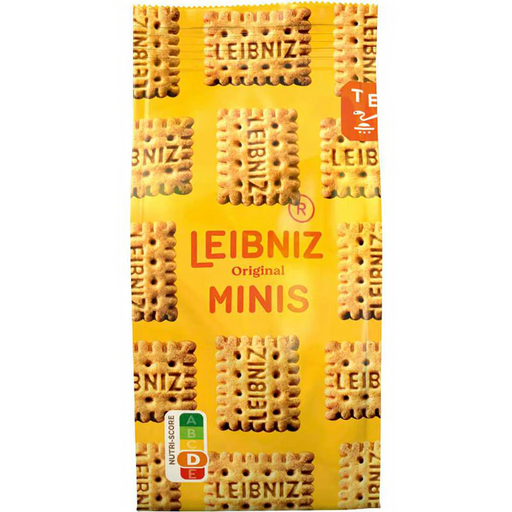
These mini butter biscuits are a good choice if you want to serve individual little biscuits at breakfast.
The pack contains 150 g. REWE lists 449 kcal and 23 g of sugar per 100 g for Leibniz Original Minis; these figures are not per biscuit.
The product information lists wheat and milk; it may also contain egg and nuts. If you have allergies, check the label on the current pack.
No. Mini describes the size of each biscuit. REWE lists 449 kcal per 100 g for Leibniz Original Minis and 427 kcal per 100 g for Pickerd Mini-Butterkekse. Compare the nutritional values per 100 g, then consider separately how many you’re serving.
No, they need to be explicitly labelled gluten-free. Leibniz Minis Glutenfrei are labelled accordingly, but according to the ingredients listed by REWE they contain butterfat, egg and a dried milk product. Check the current pack for other allergens.
Check the ingredients, highlighted allergens, nutritional values and net quantity on the specific pack. The European Commission explains the harmonised highlighting of allergens on prepacked foods; if you have specific dietary requirements, precautionary ‘may contain’ statements may also be important.
Follow the storage instructions on the pack, and reseal any resealable packaging after opening. The Verbraucherzentrale distinguishes between the best-before date and the use-by date; for biscuits, the storage instructions for the specific product are also relevant.
It depends on the specific product. ALDI Nord labels its BISCOTTO Mini-Kekse as a special-buy product with limited availability, so check what’s on offer before you shop. These mini biscuits are also not labelled as classic mini butter biscuits.