Bakers using a large mixing bowl
If you prepare several batches in a heavy bowl, check the combined weight of the bowl and ingredients against the scale’s maximum capacity. Soehnle, Beurer and CASO Design list higher capacities for selected models.


When weighing butter repeatedly, the first thing to check is whether the combined weight of the bowl and ingredients is within the scale’s maximum capacity. The tare function then makes it easier to weigh several portions in turn. For smaller containers, a compact scale with a 5 kg capacity may be enough, while larger bowls are better suited to a bigger weighing platform and higher capacity. A 1 g graduation does not automatically mean that every measurement will be accurate to within 1 g.
If you prepare several batches in a heavy bowl, check the combined weight of the bowl and ingredients against the scale’s maximum capacity. Soehnle, Beurer and CASO Design list higher capacities for selected models.
If you regularly weigh individual portions of butter, a tare function for resetting the scale to zero and an easy-to-read display are useful features to look for. Manufacturer specifications list a tare function on selected models from WMF, Beurer and Soehnle, for example.
A more compact scale may suit smaller quantities, provided the bowl and its contents fit on the platform and the capacity is sufficient. WMF lists a platform measuring 23 × 15 cm and a capacity of up to 5 kg for model 3201000339.
Start by checking the weight of your largest bowl together with its ingredients. Then consider how often you’ll need to tare the scale between portions and how easy the display is to read.
A good fit if: you weigh smaller containers and individual portions, and the total weight stays within the scale’s maximum capacity.
Trade-off: A smaller platform or lower capacity may be a limitation when you use a heavy mixing bowl.
A good fit if: you use a large bowl or weigh several ingredients into it one after another.
Trade-off: Larger models take up more worktop space. Also check the graduation and make sure you can still read the display with the bowl in place.
| What matters | What to check when buying | Who should consider it? |
|---|---|---|
| Total capacity | The weight of your largest empty bowl plus the largest quantity of ingredients you’ll have on the scale at once; compare this with the maximum capacity of the specific model. | If my large mixing bowl and its ingredients are heavy, I want to know whether the scale can support the total load. Around 29% of consumers put capacity first. |
| Repeated taring | Check whether you can easily reset the display to zero between ingredients or portions, and whether the scale remains usable during pauses in your work. | If I weigh several portions of butter or ingredients one after another, I want to reset the scale easily without changing bowls. Around 29% of consumers prioritise weighing ingredients in succession. |
| Graduation and measurement performance | Compare the display increments across the weight range you need; the graduation alone does not prove the scale’s actual measurement deviation. | When weighing smaller amounts of butter, I look for suitable increments and consider how the specific model measures. Around 24% of consumers prioritise graduation and measurement performance. |
| Ease of reading and care | Check the display position with your own bowl in place. If the scale has a hold function, also check how long the reading is held and follow the care instructions. | If my bowl might obscure the display or I bake often, I want to be able to see the reading and reach the scale’s surface easily. Around 18% of consumers prioritise visibility and care. |
The bowl and any ingredients already weighed also add to the load on the scale.
Work out the greatest total weight that will be on the scale at one time before choosing between 5, 15, 20 or 30 kg models.
The graduation describes the weight increments shown on the display; it does not automatically indicate the actual measurement deviation under every load.
Compare the graduation across the weight range you need. If measurement deviation is important, look for independent tests of the specific model.
A scale with enough capacity can still be awkward to use if the bowl hides the display.
Compare the dimensions with your own bowl and, if relevant, check whether a hold function and its duration suit the way you work.
According to the manufacturer, the Page Profi 300 is designed for larger containers.
According to the manufacturer, the KS 34 Stainless Steel combines a high maximum capacity with a larger weighing platform.
According to the manufacturer, the black digital kitchen scale with model number 3201000339 is a more compact option.
According to the manufacturer, the L 15 is designed for heavier weighing tasks.
ADE describes the PW501 portion scale as suitable for semi-professional use.
The Joybuy products below include compact digital kitchen scales and a hanging scale. When weighing butter in a mixing bowl, check that the capacity, weighing platform and design suit your container.
 No image available
For smaller containers and weighing ingredients in succession, the stated tare function is useful. Check that the maximum capacity is enough for the combined weight of your bowl and ingredients.
The product name describes a white scale with a tempered glass platform and a capacity of up to 5 kg.
 No image available
The stated tare function can help when weighing ingredients one after another; remember to include the combined weight of the container and its contents.
The product name lists a stainless steel platform and a capacity of up to 5 kg.
 No image available
When weighing smaller portions, take the stated graduation and maximum capacity into account.
The product description lists a tare function, a stainless steel platform, 1 g increments and a capacity of up to 5 kg.
 No image available
The tare function is useful when weighing ingredients in succession; check that the stated maximum capacity is enough for your bowl and its contents.
The product name lists a stainless steel platform, a tare function, 1 g increments and a capacity of up to 5 kg.
 No image available
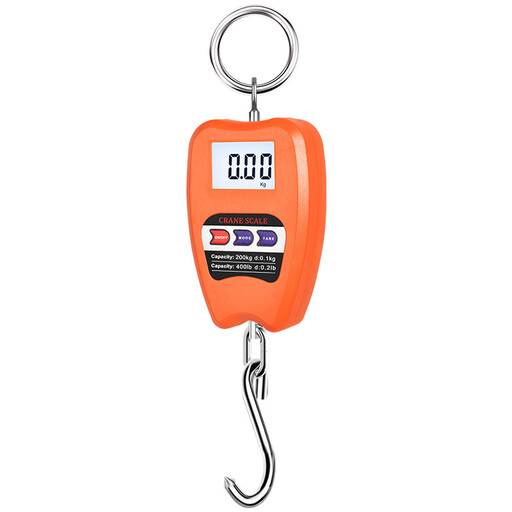
A hanging scale is different from a kitchen scale with a flat weighing platform. If you want to weigh a mixing bowl, check whether it can be hung securely and whether the reading will be easy to see.
The product name lists 200 kg, a hook, a tare function and kg, lb and N units.
Yes. Check the combined weight of the bowl and any ingredients on the scale against its stated maximum capacity. Tare resets the display to zero so you can weigh ingredients, but it does not reduce the weight of the bowl on the scale.
Compare the diameter of your bowl with the weighing platform and check where the display is positioned. According to the manufacturer, the reading stays visible for ten seconds when you use hold on the Soehnle Page Profi 300; Beurer lists a hold function for the KS 34 Stainless Steel. Whether that suits the way you work depends on how long you need to see the reading.
For a consumer purchase in Germany, statutory consumer rights against the seller are separate from any voluntary manufacturer’s or retailer’s guarantee. The Verbraucherzentrale recommends contacting the seller first to request a remedy if a product is faulty, and checking the terms of any guarantee offered separately.
Scales used in private households do not need to be officially verified. The Physikalisch-Technische Bundesanstalt distinguishes household scales from scales subject to statutory minimum requirements. Different legal requirements for verification apply if you sell goods by weight and use the measurement to calculate the price. Don’t use an ordinary household scale for this purpose without checking that it is suitable.