If you want to photograph skittish butterflies from a comfortable distance or zoom in on the details of their wings, choose a camera body and a suitable macro or telephoto lens as a combination: the camera body alone determines neither magnification nor framing. A robust compact camera can be a good choice for spontaneous close-ups with minimal kit, but the OM SYSTEM Tough TG-7’s Microscope mode, with a stated focusing distance of 1 cm, does not prove that you can photograph skittish butterflies from a suitable distance.
Which camera suits you?
Photographing skittish butterflies
If you need to frame your shot from a comfortable distance, the lens’s focal length or angle of view and its close-focusing capability both matter. Canon Europe explains how to take close-ups with a kit lens, while Canon Germany and OM SYSTEM Germany also list specific macro and telephoto lenses.
Macro photography on woodland walks
If you want to magnify wing patterns and tiny details, look for a suitable macro lens and factor in the need to change lenses and carry extra weight. OM SYSTEM Germany and Canon Academy Germany describe macro photography and focus bracketing for suitable shooting situations.
Spontaneous nature walks
If you want to carry as little kit as possible for nearby, stationary subjects, a compact camera that doesn’t require lens changes could be a good option. OM SYSTEM Germany lists a Microscope mode for the TG-7; its short focusing distance does not mean you can photograph a butterfly from far away.
What to look for when buying
First decide whether you want to bring the butterfly into the frame from a distance, capture movement in changing light, magnify fine details or carry as little kit as possible. Then compare the specific camera body and lens combination.
Interchangeable-lens camera with macro lens
A good fit if: You want to capture wing details at a larger size and are happy to carry an extra lens.
Things to consider: The macro lens must fit the camera mount and adds weight; 1:1 magnification doesn’t guarantee that you can keep your distance from the butterfly.
Rugged compact camera
A good fit if: You want to take spontaneous photos of nearby or stationary subjects on woodland walks without changing lenses.
Things to consider: The built-in lens can’t be replaced with a macro or telephoto lens of your choice; a close-up mode doesn’t prove that you can photograph skittish butterflies from a suitable distance.
Interchangeable-lens camera with telephoto zoom
A good fit if: You want to bring a stationary butterfly into the frame from farther away.
Things to consider: Check the focal length and close-focusing capability of the specific zoom lens together; a telephoto zoom isn’t a 1:1 macro lens just because of its focal length.
| What you’re looking for |
What to check |
Who it matters most to |
| Framing from a distance |
Compare the focal length or angle of view and maximum magnification of the specific lens. Don’t mistake the focusing distance for the clear space in front of the front element. |
If I can’t get close to a skittish butterfly, I still want it to appear at the right size in the frame. Consumers whose top priority is keeping their distance account for around 33%. |
| Movement and woodland light |
Check the camera body’s exposure controls and autofocus, as well as the aperture and stabilisation of the lens you plan to use. Stabilisation to counter camera shake doesn’t replace a suitable shutter speed for a moving butterfly. |
In changing light, I want to photograph a moving butterfly without relying on stabilisation alone. Consumers who prioritise movement and lighting account for around 27%. |
| Magnifying fine details |
Check the magnification and mount on the exact lens; a stated 1:1 magnification applies to that particular macro lens. Focus bracketing requires a subject that stays as still as possible. |
If I want to capture wing patterns at a larger size, I’ll look specifically for a suitable macro combination. Consumers whose top priority is magnifying details account for around 20%. |
| Lightweight kit and weather protection |
Check the weight of the combination you’ll actually carry and the protection ratings for the camera body and lens separately. Compare what’s included and any accessories you’ll need, too. |
On a longer walk, I want an easy-to-carry combination that suits the conditions I’ll encounter. Consumers who prioritise travelling light and ruggedness account for around 20%. |
Common buying mistakes
-
Choosing a camera body based only on megapixels
Published macro magnification figures apply to specific lenses, not automatically to every camera body from a particular brand.
Choose a camera body and compatible lens as a combination. Then compare the magnification, angle of view and weight of the full kit.
You may need an extra compatible lens to get the magnification you want.
-
Assuming “1 cm macro” means you can photograph skittish butterflies from 1 cm away
The OM SYSTEM Tough TG-7’s 1 cm figure refers to its Microscope mode. It doesn’t show how far away you can be and still get a skittish butterfly large enough in the frame.
Check the framing from a realistic shooting position. Don’t touch or disturb the butterfly to get closer to your subject.
-
Assuming the camera body’s weather protection applies to the whole setup
OM SYSTEM rates the OM-5 Mark II at IP53, while the separately available M.Zuiko Digital ED 60mm F2.8 Macro is rated IPX1. These ratings apply to different components.
Check the protection ratings for every component you plan to take with you, and consider how you intend to use it.
Depending on the weather, individual components may need extra protection.
Camera brands to consider
OM SYSTEM
The Tough TG-7 offers a compact camera option with a fixed lens and close-up modes; the OM-5 Mark II can be paired with a separately available macro lens.
- OM SYSTEM states that the TG-7 can focus from 1 cm in Microscope mode. This doesn’t prove you can photograph skittish butterflies from that distance.
- OM SYSTEM lists the OM-5 Mark II at 418 g, including battery and card, with an IP53 rating. For the separate M.Zuiko Digital ED 60mm F2.8 Macro, the manufacturer lists 1:1 magnification, 185 g and an IPX1 rating. These protection ratings are not interchangeable.
Canon
The EOS R7, with its RF mount, is an interchangeable-lens camera option that can be paired with a compatible RF macro lens.
- Canon Germany lists an APS-C sensor with 32.5 MP, in-body stabilisation and an RF mount for the EOS R7.
- For the separate RF 100mm F2.8L Macro IS USM, Canon lists up to 1.4× magnification and a weight of approximately 685 g. The lens adds to the camera body’s weight; general subject detection isn’t an explicit promise that it can detect butterflies.
Sony
The α6700 with E-mount and the separate FE 90mm F2.8 Macro G OSS offer an interchangeable-lens setup for macro photography.
- Sony Germany lists around 26.0 effective MP for the α6700. For the 90 mm lens, Sony lists a maximum magnification of 1×, a minimum focusing distance of 0.28 m and a weight of 602 g.
- The stated focusing distance is not the same as the clear space in front of the lens.
Nikon
The Z50II is a DX interchangeable-lens camera; a separate Z macro lens is worth considering for close-up photography.
- Nikon lists 20.9 MP, an electronic viewfinder and a vari-angle screen for the Z50II. For the NIKKOR Z MC 105 mm 1:2.8 VR S, Nikon lists up to 1:1 magnification and stabilisation.
- Camera body specifications alone don’t prove macro magnification or guarantee autofocus performance with butterflies.
Joybuy products on this topic
This selection includes cameras for taking on the go and a mirrorless camera with a zoom lens. For butterfly photography, check the framing, focusing and potential macro magnification of the specific model.
 No image available
KOMERY G7 5K digital camera, 80 MP, 18× zoom, white
The product title describes an 18× zoom and a travel camera. Check what framing you can achieve from a realistic shooting position and whether the camera offers the macro magnification you need.
Specifications listed: 5K, 80 MP, 18× zoom.
View at Joybuy
 No image available
Sony Alpha 6100 APS-C interchangeable-lens camera with 16–50 mm power zoom lens
The kit includes a 16–50 mm power zoom lens. If you want to photograph butterflies from farther away, check whether its angle of view suits your shooting position.
Specifications listed: APS-C, 16–50 mm, tilting screen.
View at Joybuy
 No image available
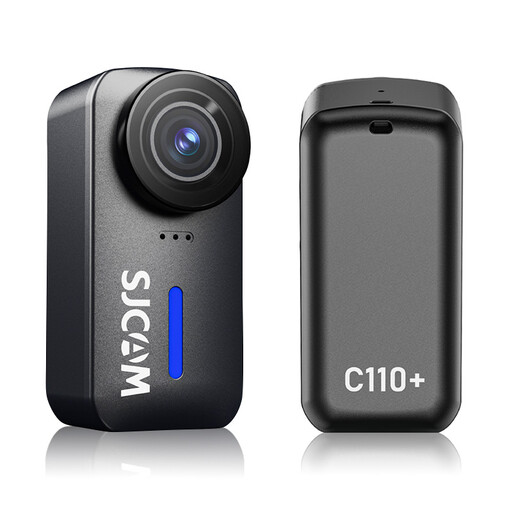
SJCAM C110+ 4K action camera with 170° wide-angle lens and housing
The stated 170° wide angle is designed to capture a broad view. If you’re photographing a small butterfly, check whether you can frame it tightly enough.
Specifications listed: 4K, 170° wide angle, 20 MP photos, 82 g.
View at Joybuy
Frequently asked questions
Is a particularly short minimum focusing distance enough for photographing skittish butterflies?
No. A short minimum focusing distance alone doesn’t prove that you can keep far enough away from the butterfly. According to OM SYSTEM Germany, the TG-7’s 1 cm figure applies to Microscope mode. Also check the angle of view and magnification from your shooting position; the focusing distance of an interchangeable lens isn’t automatically the clear space in front of the front element.
How do I use focus bracketing with a stationary butterfly?
Focus bracketing is best suited to a subject that’s as still as possible and a stable camera. Canon Academy Germany explains that the individual shots need to align as closely as possible for them to be combined later. If the butterfly is moving, a single correctly exposed shot may be more practical.
Can I catch a butterfly for a photo or leave the path in a protected area?
Using a camera doesn’t exempt you from the wildlife protection rules in force. Germany’s Federal Ministry for the Environment describes different levels of protection against taking or disturbing protected species; the rules for a particular woodland path also depend on the specific area and its regulations. Follow signs and local rules, and take photos without touching or chasing wildlife.


