
Lieferung heute & morgen

Qualitätsgarantie

Willkommens-Angebote freischalten: KOSTENLOSE Lieferung | Bis zu 80 % RABATT | Kostenlose 30-Tage-JoyPlus-Testphase
App herunterladen
As a Joybuy Product Recommendation Officer, I see every day how the right choice of craft supplies brings creative projects to life. A butterfly cutting die is a versatile tool that adds an elegant touch to greeting cards, albums, and decorations. However, not every die delivers the desired results. Often, subtle flaws lead to frustration and messy outcomes.
This guide will help you avoid the common pitfalls and find a butterfly-themed die that delivers precise cuts and perfectly executes your creative ideas.
Before making a purchase, you should be aware of the potential defects found in low-quality products.
To avoid these issues, pay attention to a few objective criteria during your selection. These parameters are crucial for the longevity and functionality of your tool.
The choice of material is fundamental to a cutting die's quality. Dies made from carbon steel are often an excellent choice. This material is known for its hardness and edge retention, which results in consistently clean and precise cuts. Solid construction without sharp burrs on the outer edges of the die itself is also an indicator of quality.
Consider the primary projects you plan to use the butterfly die-cutter for.
Most thin metal dies on the market are compatible with common manual die-cutting and embossing machines (e.g., from Sizzix, Spellbinders, or Vaessen Creative). Nevertheless, it's wise to check the die's thickness. Standardised dies ensure they will fit into your machine's "sandwich" without causing damage.
Here are some recommendations tailored to the different needs of crafters.
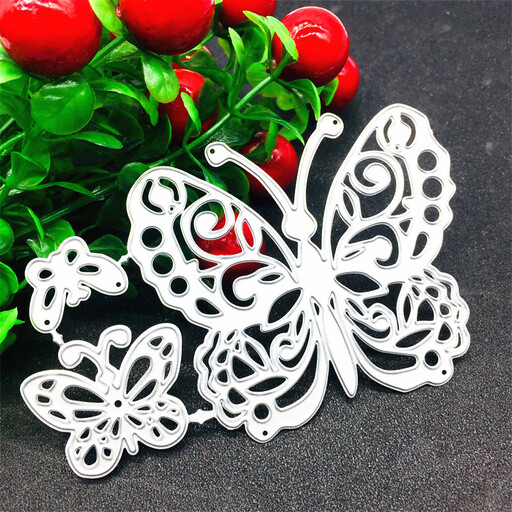
Why This Fits Their Persona: Ideal for anyone starting out with card making. The single, clean design is easy to handle and quickly delivers appealing results without being overwhelming. Its size is well-suited as a centrepiece on a standard greeting card.
The straightforward design with clean lines minimises the risk of messy cuts, which often occurs with more complex designs and cheaper dies.
Versatile single design; a solid staple for various paper projects.
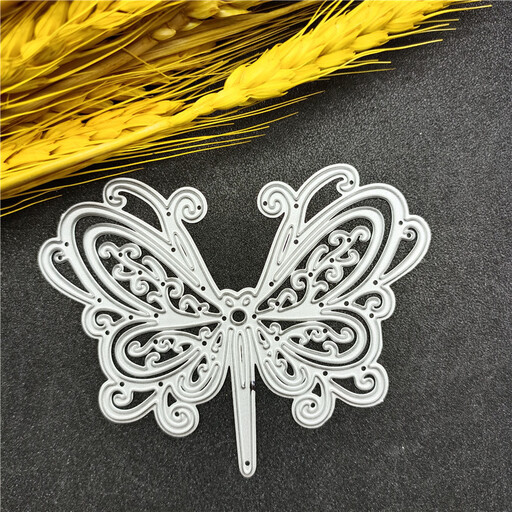
Why This Fits Their Persona: For crafters who value fine details. The intricate wing pattern creates a very elegant and high-end result, suitable for wedding cards, anniversaries, or as a sophisticated decorative element.
This die avoids the "misleading details" problem. Its construction from hard metal ensures that even the finest lines are cut cleanly and the result matches the preview.
Creates highly detailed, intricate die-cuts; ideal for elegant and sophisticated projects.
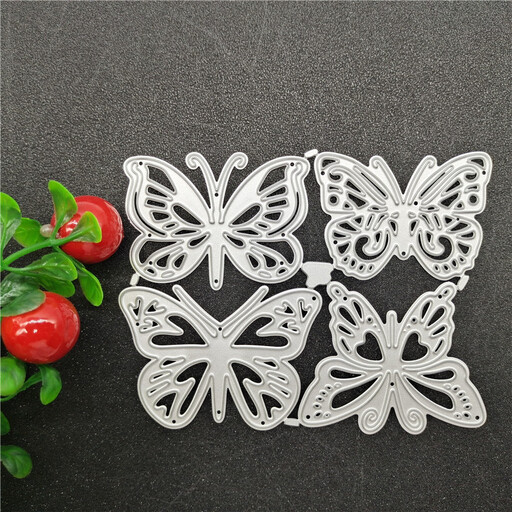
Why This Fits Their Persona: Perfect for scrapbookers who love working with layers and compositions. This set provides four butterflies in a single pass, simplifying the creation of clusters or repeating patterns on a layout page.
Instead of buying multiple individual dies of potentially varying quality, this set offers consistent quality and a unified style across all four designs.
Efficiently cuts multiple elements at once; ideal as a scrapbooking accessory for dynamic pages.
We have compiled a comprehensive, up-to-date list of products that meet these strict selection criteria.
1. What types of paper can I cut with a metal die? Most cutting dies for card making are optimised for standard cardstock weighing between 160 GSM and 250 GSM. Thinner materials like designer paper, parchment, or vellum can also be cut effectively. For very thick materials like chipboard or craft foam, you should check if the die is designated as "thick" or "for mixed-media".
2. How do I properly clean and store my cutting dies? After cutting, small paper scraps can get stuck in the fine crevices. These are best removed with a die brush or a pointed tool (e.g., a piercing tool). Store your dies flat and dry to prevent warping and rust. Magnetic storage sheets are a practical solution for keeping them organised.
3. Will every cutting die fit in my die-cutting machine? The vast majority of thin metal dies (often called "Thinlits" or "Wafer-Thin Dies") are universally compatible with common manual die-cutting machines. The key is using the correct plate combination ("sandwich"), which can vary by machine. A quick look at your machine's manual will clarify the right combination of base plate, cutting plates, and any necessary adapters.