Photographing butterflies from a distance
If you want to photograph timid butterflies from an authorised path, telephoto reach and the minimum focusing distance at the telephoto end are important factors to consider.


A sturdy compact camera with a close-up mode can be handy for butterflies resting nearby. For more timid subjects, look for a suitable telephoto reach and a practical minimum focusing distance at the long end of the zoom. A system camera with a macro lens gives you more scope to capture specific details, but means carrying extra kit. In coastal weather, check the protection rating of the camera body and lens separately, and follow the care instructions for the specific combination.
If you want to photograph timid butterflies from an authorised path, telephoto reach and the minimum focusing distance at the telephoto end are important factors to consider.
For close-ups of resting butterflies, consider whether a simple close-up mode will do, or whether you’d prefer a system camera with a suitable macro lens.
If you’re dealing with damp, sand or salt, check the protection details for the complete camera-and-lens combination, and follow the care instructions afterwards.
A good fit if: You want to photograph butterflies resting nearby; OM SYSTEM says the TG-7 can focus from 1 cm in Microscope mode.
The trade-off: The short focusing distance is not a recommendation to get that close to a live butterfly.
A good fit if: You want to change lenses and compose close-ups with precision; OM SYSTEM gives both the OM-5 Mark II and the M.Zuiko ED 90mm F3.5 Macro IS PRO an IP53 rating.
The trade-off: According to OM SYSTEM, the 90 mm lens adds 453 g; an IP53 rating is not a guarantee that contact with salt water is safe.
A good fit if: You want to switch between subjects at different distances without changing lenses; Sony lists a 24–600 mm full-frame equivalent range for the RX10 V and a 72 cm minimum focusing distance at the telephoto end.
The trade-off: The Nikon COOLPIX P1100 offers a 24–3000 mm full-frame equivalent focal-length range, according to Nikon, but weighs around 1.4 kg; maximum focal length alone tells you little about the minimum focusing distance.
A good fit if: You want to start with a lightweight interchangeable-lens camera body and choose the lens to suit the shot; Canon lists the EOS R50 at around 375 g with battery and memory card.
The trade-off: Canon’s RF 100mm F2.8L Macro IS USM adds around 685 g, and the EOS R50 does not have in-body image stabilisation.
| What you need | What to check before buying | Who it matters most to |
|---|---|---|
| Photograph butterflies from a distance | Compare the telephoto range, minimum focusing distance at the telephoto end and the weight of the specific model. | If I need to keep my distance, I want to know how large the subject will appear at the long end of the zoom; around 36% of consumers put keeping their distance first. |
| Capture fine details | Check the minimum focusing distance and magnification of the specific camera mode or lens. | For resting butterflies, I want to capture close-up details of their wings and bodies without losing sight of the distance I need to keep from the animal; around 29% of consumers prioritise close-up detail. |
| Protect your kit in coastal weather | Check the protection details for the camera body and attached lens separately, and follow the care instructions. | If sand, damp or salt could affect my kit, I want to know which protection details apply to the complete combination; around 21% of consumers prioritise weather protection. |
| Keep your kit lightweight | Compare the weight of the camera body, battery, memory card and required lens on the same basis. | On a longer walk, I want to know the weight of the complete kit, not just the camera body; around 14% of consumers prioritise travelling light. |
The minimum focusing distance of 1 cm stated by OM SYSTEM for the TG-7 describes a technical focusing capability, not the necessary or permitted distance from a live butterfly.
For timid butterflies, also check the minimum focusing distance at the telephoto end. In protected areas, take photos only from authorised paths or areas.
With a system camera, the weight of the lens and its protection rating affect the kit you’ll actually be carrying.
Compare the camera-and-lens combination you plan to use, and follow the care instructions for the specific model.
A suitable macro lens is extra kit for the system camera bodies mentioned here, and you’ll need to carry it too.
The TG-7 is aimed at people looking for a sturdy compact camera for close-up subjects. Pair the OM-5 Mark II with a macro lens and you have a system you can build on.
The RX10 V combines a built-in zoom with close focusing at the telephoto end, so there’s no need to change lenses.
The EOS R50 is a lightweight RF system camera body, and you can choose a macro lens to suit the type of shots you want to take.
The COOLPIX P1100 is a bridge camera for buyers who want particularly long telephoto reach without changing lenses.
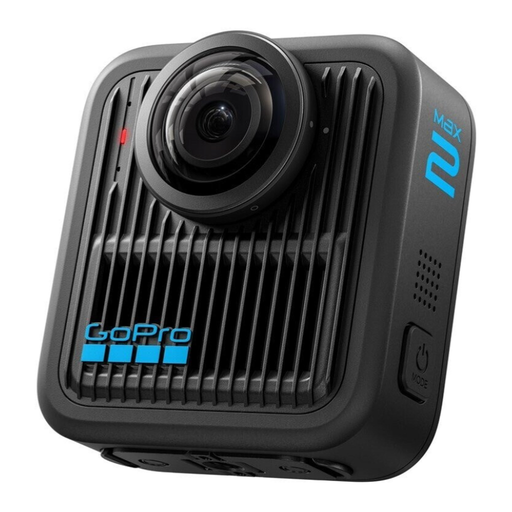
A Joybuy product option focused on 360° action footage, which is only suitable to a limited extent for dedicated butterfly photography.
 No image available
For a leisurely walk when you want to capture 360° action footage; its 360° focus makes it less suitable for dedicated butterfly photography.
Listed at 195 g and described as water-resistant. Features include 29 MP photos from 360° footage and a 12–26 mm focal length with digital zoom.
No. A short focusing distance describes what the camera can technically focus on, not the necessary or permitted distance from an animal. If getting closer would disturb the butterfly, or mean leaving an authorised path, choose a suitable shooting distance and lens instead.
Follow the TG-7 instruction manual. OM SYSTEM describes cleaning the camera with fresh water and lists specific precautions for covers and sealing surfaces. Don’t assume you can submerge another camera model for cleaning unless its manual explicitly says so.
No. Photography and filming are permitted only in authorised, appropriately signposted areas or on designated paths. The National Park Authority also advises visitors not to disturb animals or plants. Rules vary in other coastal locations.
Your statutory rights are generally against the seller, and for new goods the period is usually two years. According to the Verbraucherzentrale (consumer advice centre), for sales contracts entered into from 31 July 2026, the period is extended once by twelve months if you choose a repair rather than a replacement when reporting a fault. This is separate from any voluntary manufacturer’s guarantee.
Check the product labelling and the information supplied with it. For certain electrical and radio products, the Bundesnetzagentur (Federal Network Agency) requires, among other things, correct CE marking, product traceability, manufacturer details and any necessary German-language instructions and warnings. This does not confirm that a specific listing complies.