The key factor is how close you can get to the butterfly: a suitable telephoto lens is an obvious choice for butterflies on flowers further away, while a mirrorless camera with a compatible macro lens is better for capturing details of a resting butterfly’s wings. A compact camera with a close-up mode saves you changing lenses, but very short focusing distances mean you’ll need to get close. Always check exactly what’s included in the camera and lens kit, and photograph wildlife without deliberately disturbing it.
Which camera suits which photographer?
Garden watchers who like to keep their distance
When butterflies settle on flowers further away, it’s important to be able to frame your shot without moving closer each time. The Nikon Z50II Double Zoom Kit includes a 50–250-mm telephoto zoom lens; check its specific close-focusing and magnification figures before relying on it for detailed shots. (Nikon Germany)
Detail photographers
If you want to capture large images of the wing patterns of resting butterflies, check the lens’s magnification ratio and its compatibility with the camera body. Canon lists 1.4x magnification for the RF 100mm F2.8L Macro IS USM; Nikon gives the Z MC 105 mm a 1:1 magnification ratio. (Canon Germany; Nikon Germany)
Spontaneous photographers
If you want to take photos in the garden without changing lenses, consider a compact camera with a close-up mode. OM SYSTEM lists a Microscope mode for the TG-7; however, a short focusing distance doesn’t mean you can photograph a live butterfly from that close without disturbing it. (OM SYSTEM Germany)
What to look for when choosing
First decide whether keeping your distance from the butterfly or capturing fine detail matters most. Then compare what’s included and check whether the specific lens can give you the framing you want.
| Priority |
What to check before buying |
Who will find this especially important? |
| Frame the shot from a distance |
Check the focal length range, minimum focusing distance and maximum magnification of the specific telephoto lens, as well as what’s included. |
When I photograph butterflies on flowers further away, I want to be able to choose my framing without getting closer. That’s why around 36% of consumers put distance first. |
| Capture details on the wings |
Check the maximum magnification, working distance, mount and included lens. |
For capturing the wing patterns of resting butterflies, a high magnification ratio matters more to me than a versatile kit name. Around 29% of consumers prioritise macro details. |
| Take spontaneous shots without changing lenses |
Check the close-up mode and zoom specifications, and consider whether it’s practical to get as close as required. |
When I want to take spontaneous photos in the garden, I don’t want to change lenses first. Around 21% of consumers prioritise ease of use. |
| Keep the kit to a minimum |
Compare exactly what’s included in the kit, including the lens, charger and any accessories you need. |
If I want to limit my equipment and any further purchases, knowing exactly what’s included is essential. Around 14% of consumers pay particular attention to the overall kit requirements. |
Common buying misconceptions
-
Assuming the shortest focusing distance is right for photographing butterflies
A focusing distance figure doesn’t tell you whether a butterfly will tolerate you getting that close, nor does it indicate a 1:1 magnification ratio.
Compare the working distance with the framing you want. Choose a position that lets you photograph the butterfly without deliberately disturbing it; section 39 of the Federal Nature Conservation Act (BNatSchG) also protects wild animals in gardens. (Gesetze im Internet)
-
Assuming a standard zoom kit is a complete macro setup
A kit with a standard zoom doesn’t automatically include a macro lens. The magnification figure for a lens sold separately doesn’t apply to the kit.
Check the exact kit name, the type of lens included and its magnification figures. Any additional macro lens you need must be compatible with the camera mount.
A separate compatible macro lens may mean buying additional equipment.
-
Treating a telephoto zoom and a macro lens as interchangeable
A telephoto zoom lets you change the framing from further away; for a large, detailed image, its maximum magnification is also important. A telephoto lens alone isn’t classed as a macro lens.
Decide whether keeping your distance or magnifying details matters most, then check this feature on the specific lens. (Nikon Germany)
Camera brands at a glance
Nikon
The Z system offers a choice between a Z50II Double Zoom Kit and Z macro lenses sold separately.
- Nikon’s Double Zoom Kit includes a 50–250-mm telephoto zoom as well as a standard zoom. Nikon gives the Z MC 105 mm a 1:1 magnification ratio.
- The telephoto zoom isn’t therefore classed as a 1:1 macro lens. According to Nikon, the kit mentioned doesn’t include a charger.
Canon
The EOS R system includes the EOS R50 with a standard zoom kit, as well as compatible RF macro lenses that you should consider separately.
- Canon lists 1.4x magnification for the RF 100mm F2.8L Macro IS USM and names the EOS R50 as a compatible camera.
- The macro specification applies to the additional lens mentioned, not automatically to the R50 standard zoom kit. According to Canon, the EOS R50 doesn’t have in-body image stabilisation.
OM SYSTEM
The TG-7 is a compact camera with a fixed lens and close-up mode; separate M.Zuiko macro lenses are also available.
- OM SYSTEM lists a Microscope mode for the TG-7 and a lens with a 25–100-mm equivalent focal length.
- Features listed for the M.Zuiko 90mm Macro, including 2x magnification and weather sealing, apply to that lens, not the TG-7.
Sony
The E-mount system is another option if you already have a compatible camera body and are looking for a separate macro lens.
- Sony lists a maximum magnification ratio of 1:1 and optical stabilisation for the FE 90mm F2.8 Macro G OSS.
- These specifications apply to this specific lens; they don’t prove a feature of all Sony cameras or mean that a camera body is included.
Camera options at Joybuy
The Joybuy camera options below include compact models and a range of zoom specifications. For butterfly photography, also check whether the working distance and magnification of the specific camera and lens combination suit your subject.
 No image available
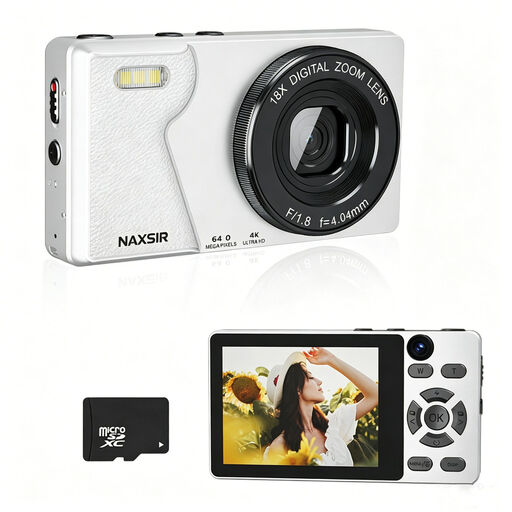
NAXSIR digital camera with 18x digital zoom
Could be worth considering if you want to adjust the framing in the garden; digital zoom alone doesn’t indicate macro capability.
The product name lists 4K, 64 MP, autofocus and a 32 GB memory card.
Joybuy
 No image available
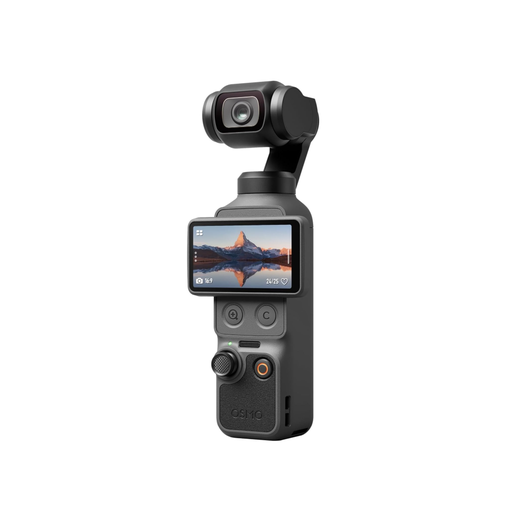
DJI Osmo Pocket 4 Standard Combo
The pocket-sized gimbal design could be handy for handheld shots; the product specifications don’t indicate that it has a macro lens for capturing butterfly details.
The product title lists a 1-inch CMOS sensor, 2x lossless zoom, 3-axis stabilisation and 107 GB of built-in storage. The safety notice says the device isn’t waterproof and should be kept away from water.
Joybuy
 No image available
Komery W6 digital camera
Optical zoom can help you choose your framing; for close-up shots, also check the working distance of the specific system.
The product title lists 12x optical zoom, 4K and 64 MP. The description lists Wi-Fi and smartphone control. The safety notice advises against using it in damp conditions.
Joybuy
 No image available
Komery G7 5K digital camera, white
This portable camera could be an option for taking photos on the go; the zoom specification alone doesn’t show how large a nearby butterfly will appear in the frame.
The product title lists 80 MP, UHD and 18x zoom.
Joybuy
Frequently asked questions
Is a camera body or standard zoom kit enough to capture large, detailed butterfly shots?
Not just because of the camera body’s name. Check the maximum magnification of the included lens; Canon lists the RF 100mm F2.8L Macro IS USM as a separate lens that’s compatible with the EOS R50. (Canon Germany)
How do I take photos in the wind or when a butterfly is moving?
Check focus on your subject and expect a narrow depth of field at high magnifications. Nikon points out that even slight movement of the camera or subject in the wind can affect the result; image stabilisation doesn’t guarantee a sharp photo of a moving animal. (Nikon Germany)
What additional costs and consumer rights should I check before buying?
Check whether the macro or telephoto lens you need and a charger are included in the specific offer. For purchases covered by the statutory warranty in Germany, the seller is responsible for the goods being free from defects at the time of delivery; a voluntary guarantee is separate. (Verbraucherzentrale)
Can I startle or catch wild butterflies to take a photo?
Section 39 of the Federal Nature Conservation Act (BNatSchG) prohibits deliberately disturbing wild animals or catching, injuring or killing them without good reason. Protected species are also covered by the access prohibitions in section 44 of the BNatSchG; whether a particular species is covered depends on the species. (Gesetze im Internet)


