
Lieferung heute & morgen

Qualitätsgarantie

Willkommens-Angebote freischalten: KOSTENLOSE Lieferung | Bis zu 80 % RABATT | Kostenlose 30-Tage-JoyPlus-Testphase
App herunterladen
If you’re looking to buy a bike, you’ll find a huge choice for city riding, commuting, leisure and off-road use. But the differences aren’t just about colour and frame shape. Wheel size, frame height, braking system, gears, tyre width and assembly effort all affect whether a bike actually suits your everyday needs.
A 26-inch bike or 28-inch bike isn’t automatically suitable for everyone. Frame height, inside leg measurement and riding position are equally important. A 28-inch touring bike can be comfortable for taller adults, while teenagers or shorter riders will find a 24- or 26-inch model easier to handle.
When choosing a bike for men and women, don’t just look at the label – check the actual frame geometry. A low step-through makes getting on and off easier, while a higher frame can offer more stretch and a sportier riding position.
A bike with disc brakes can have mechanical or hydraulic brakes. Mechanical systems are operated by a cable and are usually straightforward to maintain. Hydraulic disc brakes use brake fluid and require specific tools and knowledge for servicing.
Even a city bike with V-brakes can be perfectly adequate for dry, everyday riding. What matters is the intended use, the availability of replacement parts, and a correctly adjusted braking system. General claims like “suitable for all weathers” shouldn’t be taken as a safety guarantee without checking the details.
With an e-bike, the range depends on rider weight, assistance level, gradient, temperature, tyre pressure and load, among other factors. A stated range is therefore a product value under specific conditions, not a fixed distance for every ride.
With a folding e-bike, you also need to consider the folded dimensions, weight and locking mechanism. A folding model can be practical for train journeys or storage in a flat, but it isn’t automatically easy to carry. Before buying, check the folded size as well as the shipping and product weight.
Check the frame height stated by the seller and compare it with your inside leg measurement. The saddle should be adjustable without extending the seat post beyond the maximum mark. Equally important are the maximum rider weight and total weight including luggage.
A steel frame can be strong and robust, while an aluminium frame often allows for a lighter overall weight. However, the material alone doesn’t determine everyday suitability. Frame shape, build quality, fork and equipment all need to be considered together.
A 7-speed gear system is suitable for many city routes and moderate hills. More gears can allow finer adjustment on varying gradients, but don’t automatically increase practical use on flat roads. Pay attention to the type of gear shifter, the exact derailleur model, and the availability of replacement wear parts.
V-brakes are common on many city and touring bikes. Disc brakes are mounted at the wheel hub and are unaffected by a dirty rim edge. With both mechanical and hydraulic systems, brake pads, discs and cables or hoses need regular inspection.
Narrow tyres roll easily on tarmac, while fat bike tyres, around 4 inches wide, offer more surface contact. This can be helpful on sand, gravel or soft ground, but usually comes with higher weight and more rolling resistance.
A suspension fork can add comfort on uneven surfaces. For purely city riding, it isn’t essential. Check whether the fork is lockable and whether the bike is approved for the terrain you intend to use it on. A mountain bike is designed for leisure and off-road riding, but not automatically for jumps or extreme downhill.
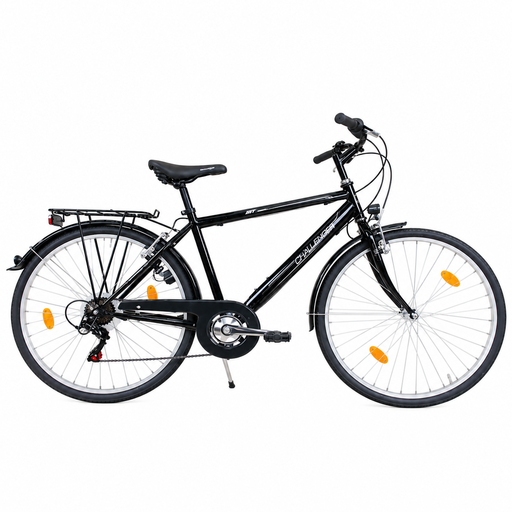
Why this product suits the profile: This touring bike is equipped for daily city rides, shopping and relaxed outings. The frame height is 50 cm; you should check the actual fit against your height and inside leg measurement before buying.
The equipment is clearly stated: 6-speed gears, Shimano Tourney TY-300, V-brakes, mudguards, luggage rack, dynamo hub and front and rear lights.
28-inch tyres, upright city-cruiser handlebar position and a permanently mounted luggage rack.

Why this product suits the profile: This mountain bike combines an aluminium frame with a suspension fork, 18 gears and disc brakes. It is aimed at adults for everyday riding and designated leisure rides on uneven terrain.
Frame material, 26-inch wheels, 18-speed gears, dual disc brakes and suspension fork are all clearly stated, not just described with vague marketing terms.
Stated weight of 15.54 kg, aluminium frame and front suspension.
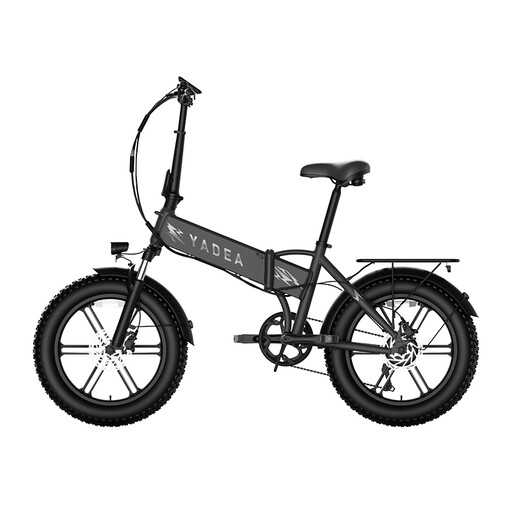
Why this product suits the profile: This folding e-bike is designed for commuting, short trips and varying surfaces. The 20 × 4.0-inch tyres, rear hub motor and removable battery complement its specific focus.
Folded dimensions, partial assembly and charging instructions should be considered before buying. The model comes with a charger, tools and instructions; final assembly is still required.
Hydraulic disc brakes, Shimano 7-speed gears, lockable suspension fork and NFC unlocking.
We’ve put together a full, regularly updated list of products that fully meet these strict selection criteria and the safety regulations in force in the EU.
Many bikes are delivered partially assembled. Before your first ride, check the following:
For the Yadea Rover, the product description states that partial assembly of the handlebars, front wheel, pedals and battery is required. The battery should be stored in a dry place at temperatures between 0 and 40 °C. For a children’s bike or youth bike, the correct rider height, reachable brake levers and suitable protective clothing are also important.
Base your choice on inside leg measurement, height, frame height and riding position. Wheel size alone is not enough. For children and teenagers, the bike should not be bought too large so it “grows with them”, nor should safe operation of the brakes and handlebars be compromised.
The lifespan depends on the frame, load, weather, maintenance and riding distance. Wear parts such as brake pads, chain, sprockets, tyres and inner tubes must be checked regularly regardless of the frame and replaced when necessary. A dry, sheltered storage space can reduce corrosion.
In addition to the purchase price, there are costs for electricity, maintenance, tyres, brake components and possibly a replacement battery. The electricity consumption per charge depends on the battery capacity and charge level. Before buying, check the availability of a spare battery, charger, service contact and warranty conditions.