
Lieferung heute & morgen

Qualitätsgarantie

Willkommens-Angebote freischalten: KOSTENLOSE Lieferung | Bis zu 80 % RABATT | Kostenlose 30-Tage-JoyPlus-Testphase
App herunterladen
When you want to buy a freezer, you will often compare the price and capacity first. For UK households, however, other details are just as important: will the appliance fit in the intended location? Can you reach your food easily and keep it organised? Will the freezer work in an unheated cellar or garage? And how much electricity will it use each year?
That is why our selection is based on clear, verifiable product data rather than general advertising claims.
A large freezer may look attractive on the specification sheet. However, the key figure is the net capacity – the amount of interior space you can actually use. A chest freezer with a capacity of 300 litres may offer plenty of room, but densely stacked packs are less easy to organise than in an upright freezer with several drawers.
Before buying, you should therefore consider:
A freezer with No Frost circulates cold air in a way that reduces or prevents ice from forming on the intended interior surfaces. This cuts down on the need for manual defrosting. However, cleaning, checking the door seal and keeping the ventilation openings clear are still essential.
Models with Low Frost or MinFrost can also reduce ice formation, but depending on their design, they do not always eliminate the need for defrosting. Check the specific manufacturer’s information before buying.
The ambient temperature is an important parameter that is often overlooked. A freezer for the garage should be explicitly suitable for the temperatures expected there. According to the product information, several of the models mentioned here are suitable for unheated rooms down to -15 °C. This is a technical specification from the manufacturer, not a blanket guarantee for every installation location.
You must also consider the floor, ventilation clearances, humidity and power connection. A damp or very draughty environment can cause problems regardless of the stated climate class.
A freestanding freezer makes good use of the room’s height and offers a clear overview thanks to its drawers and flaps. It is particularly suitable for kitchens, utility rooms and households that regularly access different types of food.
A chest freezer, on the other hand, uses one large, continuous interior space. It can be practical for bulky products, portions of meat or seasonal supplies. Because it opens from the top, comparatively little cold air escapes when the lid is opened. Baskets or divider systems are important for keeping everything organised.
As a general guide, the right size depends not only on the number of people in your household, but also on how often you shop and how much food you store.
A large freezer should not be selected based on litres alone. Also check its width, height, door-opening angle and the route for transporting it to its intended location.
The energy efficiency classes on the EU energy label range from A to G. Classes D or E are common among many spacious freezers. More informative than the class designation alone is the stated annual consumption in kilowatt-hours.
For a simple cost calculation:
Annual consumption in kWh × your electricity price per kWh = estimated annual electricity costs
The ambient temperature, frequent opening, heavy ice build-up and an overfilled interior can also affect actual consumption. An energy-efficient freezer should therefore have sufficient ventilation and should not be placed next to radiators or in direct sunlight.
A fast-freezing function temporarily lowers the temperature further when larger quantities of fresh food are being frozen. Pay attention to the stated freezing capacity in kilograms per 24 hours.
Noise levels between around 34 and 40 dB are represented in the product data for this selection. This difference may be relevant in open-plan living areas. A freezer with drawers makes it easier to sort food by type and best-before date. Transparent fronts or interior lighting can improve visibility further.
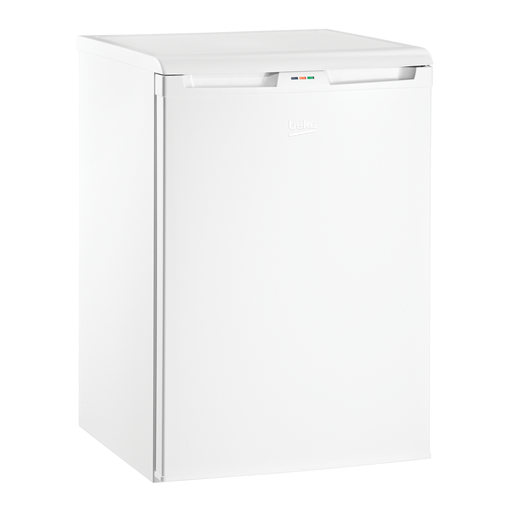
Why this product suits the profile: The 95-litre capacity is suitable for small households, a shared house or as an addition to an existing fridge freezer.
The compact design prevents you from paying for too much unused storage space and unnecessary floor space. According to the product information, MinFrost is designed to reduce ice formation.
95-litre net capacity, two drawers, one transparent flap, 37 dB and reversible door hinge.

Why this product suits the profile: This freestanding freezer combines 286 litres of net capacity with No Frost, five drawers and a stated energy efficiency class of D.
The net capacity specification and clear interior layout make comparisons easier. No Frost reduces the need for manual defrosting, but does not replace regular cleaning.
No Frost, 34 dB, fast-freezing function, reversible door hinge and, according to the product information, suitability for unheated rooms down to -15 °C.
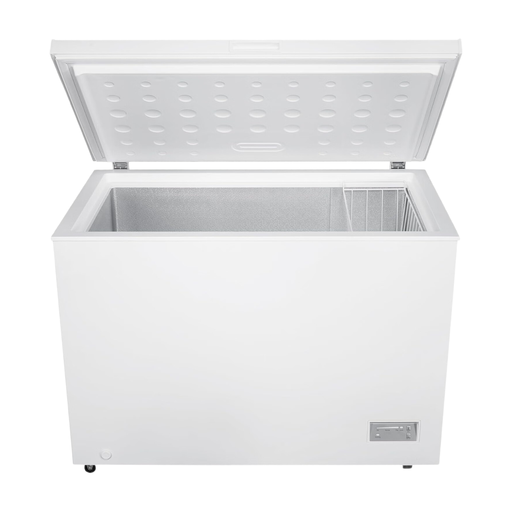
Why this product suits the profile: Its 308-litre net capacity, castors and SN-T climate class make it suitable for storing supplies in a cellar, utility room or suitable garage.
The climate class and temperature alarm provide specific guidance for the installation location. However, a chest freezer still needs a sensible organisation system.
308 litres, freezing capacity of 16 kg per 24 hours, four castors, temperature alarm and 40 dB.

Why this product suits the profile: Its 301-litre capacity, Total No Frost technology and the option to use the appliance as either a fridge or freezer, according to the product information, offer additional flexibility.
The four drawers, glass shelves and LED lighting create a clear, practical layout instead of a hard-to-access storage area.
301 litres, energy efficiency class C, Total No Frost, fast-freezing function and around 36 to 37 dB according to the product data.
We have put together a complete, regularly updated list of products that fully meet these strict selection criteria and the safety regulations applicable in the EU.
Before connecting the appliance, leave it standing upright for several hours so that the refrigerant can settle after transport. The installation surface must be level and stable. Follow the ventilation clearances stated in the instruction manual and use an earthed socket.
For even cooling, food should not be placed inside while hot. The fast-freezing function is intended for larger quantities of fresh food and should be activated according to the manufacturer’s instructions. In a chest freezer, baskets and labelled boxes make it easier to take out older supplies first. A temperature of around -18 °C is generally recommended for long-term storage in a four-star freezer compartment; the specific manufacturer’s instructions remain decisive.
Around 95 to 180 litres may be sufficient for one person or a couple. Families, shared houses and households that store supplies often choose 200 litres or more. The key figure is the actual net capacity, not just the advertised total volume.
That depends on the climate class and the manufacturer’s approval. Models specifically declared suitable for unheated rooms can operate at low temperatures. Before installation, you should also check humidity, ventilation, frost limits and the permitted temperature range.
The annual consumption in kWh and your personal electricity tariff are the key factors. Multiply the two figures together. A higher energy efficiency class can reduce consumption, but the actual cost also depends on the ambient temperature, usage, seals and ice build-up.