
Lieferung heute & morgen

Qualitätsgarantie

Willkommens-Angebote freischalten: KOSTENLOSE Lieferung | Bis zu 80 % RABATT | Kostenlose 30-Tage-JoyPlus-Testphase
App herunterladen
When you want to buy a freezer, you will usually compare capacity and price first. However, other factors are important for a decision that remains suitable over the long term: Will the appliance fit through your doors and into the intended space? Are the ongoing electricity costs reasonable? Can the interior be organised efficiently? And is the model suitable for a cellar, garage or small flat?
As Joybuy Product Recommendation Officer, I assess the relevant information objectively and show you which models suit different usage situations.
A large litre capacity may sound convincing at first. However, the key figure is the net or usable capacity. Drawers, baskets, interior walls and technical components reduce the space actually available. A 200-litre freezer can therefore offer different amounts of storage space for packaging, depending on its internal layout.
For single people or couples, 60 to 120 litres is often sufficient. Families, households that store provisions or users with their own harvest are more likely to need 160 to 300 litres. A 100-litre chest freezer offers plenty of volume on a small footprint, but is less easy to organise than an upright freezer with drawers.
The EU energy label ranges from A to G. Appliances with energy efficiency class E are not automatically economical or expensive to run. For comparisons, the most important figure is the stated annual consumption in kilowatt hours (kWh). Multiply this figure by your electricity price to get a rough idea of the annual running costs.
Where possible, compare appliances with a similar capacity. A larger freezer can consume more electricity than a compact model, even if both have the same energy efficiency class.
A No Frost freezer reduces ice formation using circulating-air technology and can make manual defrosting unnecessary. However, this does not mean that cleaning, checking the door seal or keeping the ventilation openings clear is no longer required. Appliances with Low Frost or MinFrost systems can also reduce ice formation, but may still need to be defrosted occasionally, depending on how they are used.
An upright freezer makes use of vertical space and is suitable for a kitchen, utility room or storage room. Where floor space is limited, width, depth and the door opening angle are particularly important. A reversible door makes it easier to adapt the appliance to existing furniture and walls.
A chest freezer provides a large, open interior and is often suitable for cellars, garages or storing provisions. Before buying, check whether you can reach the bottom comfortably and whether baskets are included for smaller products. Castors or transport wheels make it easier to move the appliance, but they do not replace a stable, level installation.
Guide values:
Drawers and flaps make it easier to separate different food groups. Transparent fronts help you see the contents without having to leave the door open for long.
A 4-star rating indicates that the freezer can store frozen food at a temperature of at least -18 °C. Freezing capacity is stated in kilograms per 24 hours. If you regularly store larger quantities of fresh food, look for a fast-freezing function.
For open-plan kitchens, small flats or work areas, the noise level is relevant. A quiet freezer producing around 36 to 40 dB may be suitable for living areas. However, the perceived noise also depends on the floor, distance from the wall and operating conditions.
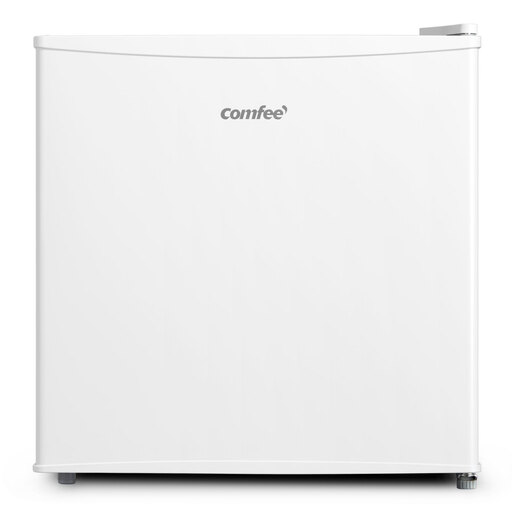
Why this product suits the profile: This compact appliance takes up very little space and is suitable for single people, offices, holiday homes or use as an additional appliance.
The 31-litre capacity clearly defines the appliance’s intended use. This helps prevent you from buying an oversized appliance for a small supply of frozen food.
31 litres of usable capacity, 4-star freezer compartment, reversible door and annual consumption of 147 kWh according to the product information.
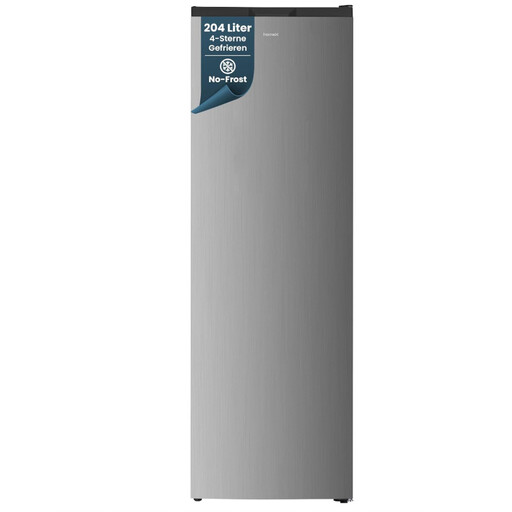
Why this product suits the profile: For households that regularly store provisions, this model offers organised storage space and No Frost technology.
No Frost reduces the need for manual defrosting. The stated noise level of 39 dB and six compartments support use in living areas.
204 litres of usable capacity, No Frost system, Super Freeze function, energy efficiency class E and reversible door according to the product data.
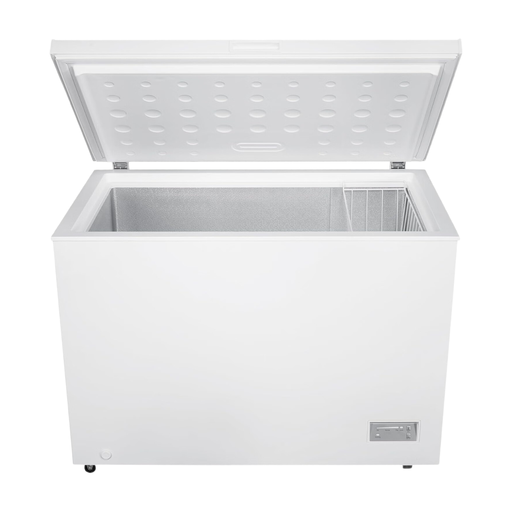
Why this product suits the profile: This large chest freezer is aimed at families, households that store provisions and small commercial users with sufficient space.
The four transport wheels make it easier to reposition the appliance. A basket and temperature alarm help offset the drawbacks of an open interior.
308 litres of usable capacity, freezing capacity of 16 kg in 24 hours, 40 dB, temperature alarm and SN-T climate class according to the product description.
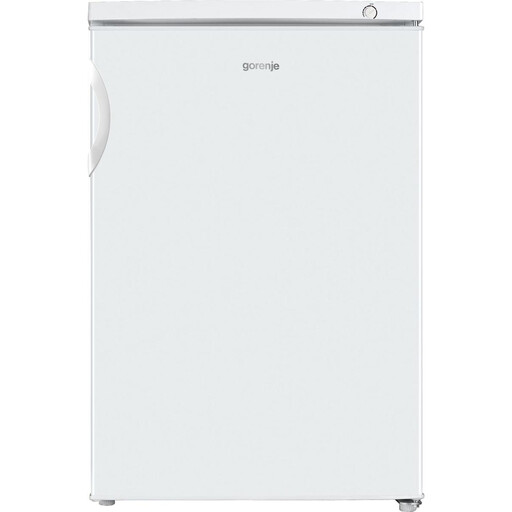
Why this product suits the profile: This compact upright freezer offers better organisation than a small chest freezer and is suitable for flats or as an addition to a fridge.
The three transparent drawers prevent smaller packs from disappearing beneath larger supplies. The door can be reversed to suit the room.
85 litres, energy efficiency class D, annual consumption of 131 kWh, EcoMode, 4-star freezer compartment and 15 hours of storage time during a power cut according to the product information.
We have put together a complete, regularly updated list of products that fully meet these strict selection criteria and the safety regulations applicable in the EU.
Before connecting the appliance, leave it standing upright for several hours so that the refrigerant can settle. Place the freezer on a level, stable surface and observe the ventilation clearances specified in the instructions. For a garage or cellar, the climate class is crucial: not every model is suitable for unheated rooms or low temperatures.
Fill drawers and baskets in a way that allows air to circulate. Warm food should be allowed to cool before freezing. In the event of a power cut, keep the door closed as much as possible. A temperature alarm can indicate unusual warming, but it does not replace checking the stored food.
As a rough guide, 60 to 100 litres is often enough for one person. Depending on their shopping and cooking habits, two people can manage with around 100 to 160 litres. Families and households with larger supplies should plan their requirements based on the packaging they actually store, rather than deciding solely by litre capacity.
The cost depends on annual consumption and your electricity tariff. Example: with annual consumption of 200 kWh and a price of 0,35 euros per kWh, the calculated cost is around 70 euros per year. Actual consumption may vary depending on room temperature, how full the appliance is, how often the door is opened and how well it is maintained.
No Frost can be worthwhile if you want to avoid regular defrosting or use the appliance frequently. For a small secondary appliance with a manageable amount of food, manual defrosting may be sufficient. As well as the features, compare annual consumption, noise level, interior layout and purchase price.