
Lieferung heute & morgen

Qualitätsgarantie

Willkommens-Angebote freischalten: KOSTENLOSE Lieferung | Bis zu 80 % RABATT | Kostenlose 30-Tage-JoyPlus-Testphase
App herunterladen
If you want to buy a grill, you should look beyond wattage, grilling area and an appealing product photo. What really matters is whether the appliance suits where you plan to use it, your preferred cooking method and the amount of cleaning involved. An indoor electric grill has different requirements from a charcoal grill for the garden or a folding camping grill.
Large external dimensions do not automatically mean a large usable grilling area. You should therefore check the actual dimensions of the grill rack or grill plates. A table grill may be sufficient for two people, while families should realistically assess the available space and the number of portions they need to prepare.
The working height is also important. A compact balcony grill is easy to store and saves space, but it is often designed only for use on a sturdy table. An outdoor grill with legs, on the other hand, offers a more comfortable working height but requires more storage space.
Charcoal grills produce smoke and ash. The amount of smoke depends on factors including the fuel, dripping fat, air supply and wind. A low-smoke grill can reduce the impact, but it does not replace adequate ventilation or checking the building regulations. On balconies, you must observe the conditions set out in your tenancy agreement, building regulations and local rules.
Electric appliances do not produce charcoal smoke. Nevertheless, heating fat or marinade can still create vapours. An electric grill should therefore only be used in a suitable, adequately ventilated area.
A thermostat, removable plates or a rotisserie can be useful. However, you should check whether these components are genuinely easy to use and clean. With a grill with removable plates, for example, it is important to know whether the manufacturer states that they are dishwasher-safe. With a grill with rotisserie, load capacity, secure fixing and cleaning the mechanism are key considerations.
The wattage of an electric grill describes its electrical power consumption, not its actual grilling performance alone. Models with 2,000 to 2,400 watts can heat a larger surface quickly, provided the design and temperature control are suitably configured.
A grill with thermostat allows you to adjust the temperature more precisely for different foods. With contact grills, plate height, pressure distribution and the option to open the grill fully are also relevant. A grill with a fixed setting may be straightforward to use, but offers fewer adjustment options.
On charcoal models, air vents regulate the heat from the coals. A lid with adjustable airflow can help with temperature control. However, an integrated thermometer reading is only meaningful if the position of the sensor corresponds to the actual temperature at the food.
Look for a removable drip tray, smooth surfaces and as few hard-to-reach gaps as possible. With electric appliances, the base unit must not be immersed in water. Unplug the appliance before cleaning and allow all hot parts to cool down completely.
For charcoal grills, a secure ash container and sufficient clearance from flammable materials are important. Ashes and embers should only be disposed of once they have gone out completely and cooled down. A folding grill should be securely locked when folded and must no longer be hot when being transported.
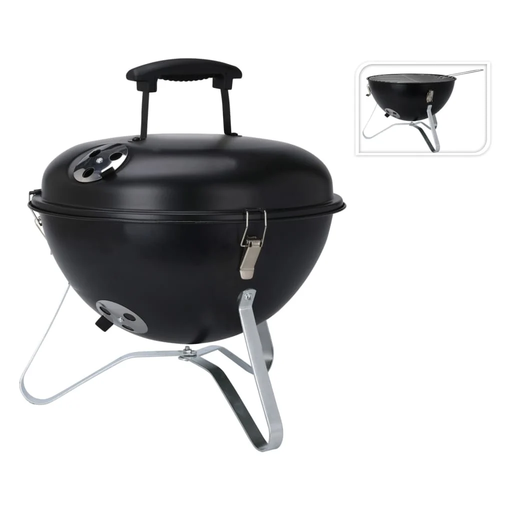
Why this product suits this profile: With a diameter of 37 cm, this compact charcoal table grill is suitable for small outdoor areas such as balconies, patios or gardens.
The product details specify two air vents, an ash tray and three silicone-coated locking clips. This makes control and transport easier, but does not replace outdoor use.
37 cm grill, heat-resistant powder coating and compact design.

Why this product suits this profile: This contact grill is designed for households looking to combine automatic programmes, 2-in-1 functionality and convenient cleaning.
The product description explicitly mentions removable, dishwasher-safe plates and a drip tray. This reduces the cleaning required compared with permanently fitted surfaces.
2-in-1 use, 2,100 watts, nine automatic programmes and removable plates.
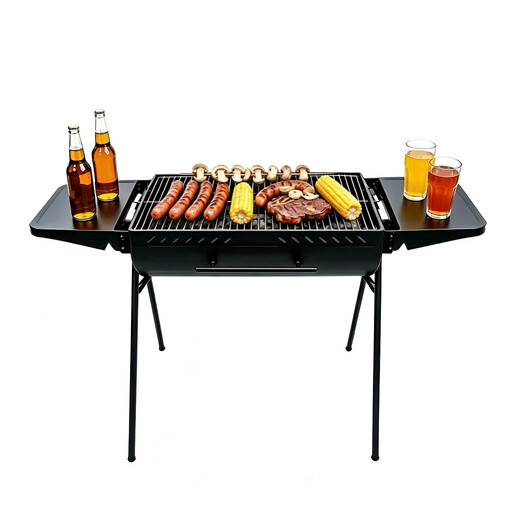
Why this product suits this profile: This model is designed for gardens, camping, picnics and similar outdoor settings, and offers a larger grilling area for multiple portions.
The specifications state a grilling area of 70 × 35 cm, four folding legs and two side shelves. This makes the available space, transport and storage options clear before purchase.
Rotisserie with hand crank, folding frame, 9.6 kg net weight and 82 cm grilling height.
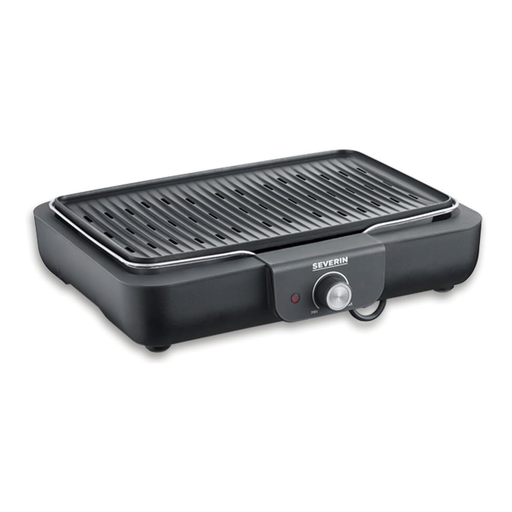
Why this product suits this profile: According to the product details, this appliance is designed for indoor and outdoor use, combining thermostatic control with a griddle plate.
A removable grill plate and the option to add water to the drip tray address smoke and cleaning concerns. The manufacturer's ventilation and safety instructions remain binding.
2,300 watts, 37 × 29 cm aluminium die-cast plate and temperature control.
We have put together a complete, regularly updated list of products that fully meet these strict selection criteria and the safety regulations applicable in the EU.
A compact table grill or electric balcony grill is often a suitable choice for a balcony. Before buying, you should check the building regulations, tenancy agreement and permitted floor space. A charcoal model may only be used if local and private regulations allow it. The feet must stand securely on a heat-resistant surface.
Its lifespan depends on the materials, how it is used, cleaning and storage. Stainless steel and coated components should be cleaned with suitable, non-abrasive products. Charcoal grills must be stored in a dry place and cleared of ash. With electric grills, you should regularly check the cable, plug, plate coating and temperature control for signs of damage.
Running costs depend on the grill's power, how long you use it and your electricity tariff. A 2,000-watt appliance theoretically uses 2 kilowatt-hours after one hour of operation, although the heating element may not remain active continuously depending on the thermostat setting. For a realistic estimate, multiply the actual consumption by your current unit rate.