
Lieferung heute & morgen

Qualitätsgarantie

Willkommens-Angebote freischalten: KOSTENLOSE Lieferung | Bis zu 80 % RABATT | Kostenlose 30-Tage-JoyPlus-Testphase
App herunterladen
Deciding to incorporate fresh juices into your daily routine is a positive step towards a healthy lifestyle. But when searching for the right appliance, the question quickly arises: which juicer is the right one? The market offers a wide range of models, from slow juicers and centrifugal juicers to specialised citrus presses. The differences in technology, price, and handling can make the choice difficult.
This guide is designed to provide clarity. We will introduce the different types of juicers, explain the most important features for daily use, and present a selection of models to give you a solid basis for making an informed decision when you want to buy a juicer.
To find the perfect appliance for your needs, it's helpful to understand the basic technologies and functions.
Choosing the type of juicer is the most fundamental decision and depends on what you want to juice and which features are important to you.
Slow Juicer (Cold Press Juicer): These appliances use an auger to slowly and powerfully crush fruits and vegetables to press out the juice. This process generates little heat, which can help preserve heat-sensitive nutrients and enzymes. A slow juicer is often a quiet juicer and achieves a high juice yield with minimal foam. It is particularly well-suited for soft fruits, leafy greens like kale or spinach, and herbs.
Centrifugal Juicer: These models first shred the produce with a cutting disc and then spin the juice outwards at high speed (several thousand RPM) through a fine sieve. The process is very fast, making them practical for your morning juice. Centrifugal juicers are often more affordable and are excellent for hard fruits and vegetables like apples, carrots, or beetroot.
Besides the type, the following practical aspects are relevant for daily use:
Here you will find a selection of appliances that cover different needs and applications.
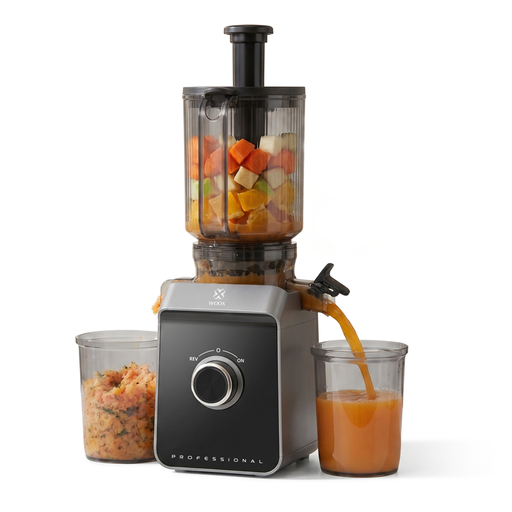
Why this model stands out: The standout feature of the WOOX MX0289 is its exceptionally wide 130 mm feed chute. This design allows for juicing whole small apples, peeled oranges, and large pieces of vegetables with minimal pre-cutting, which significantly reduces preparation effort.
Benefits:
Who is this appliance for? For individuals who value nutrient-rich, cold-pressed juices, process a variety of fruits and vegetables, and want to spend as little time as possible on preparation.
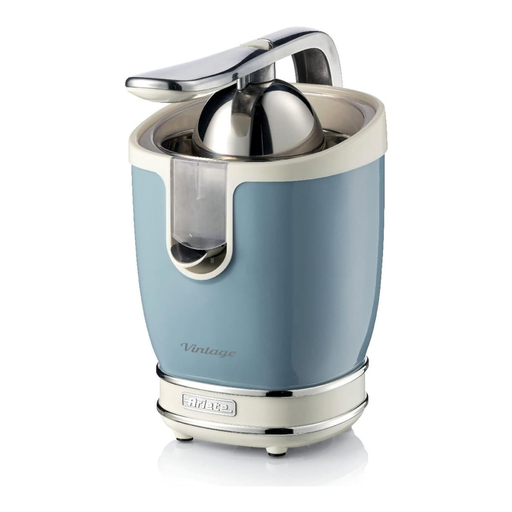
Why this model stands out: The Ariete Vintage 413 combines functionality with an appealing retro design. The lever mechanism allows for effortless and clean pressing of citrus fruits without much physical effort.
Benefits:
Who is this appliance for? For users who primarily enjoy fresh citrus juice and are looking for an appliance that is both functional and a visual highlight in the kitchen.
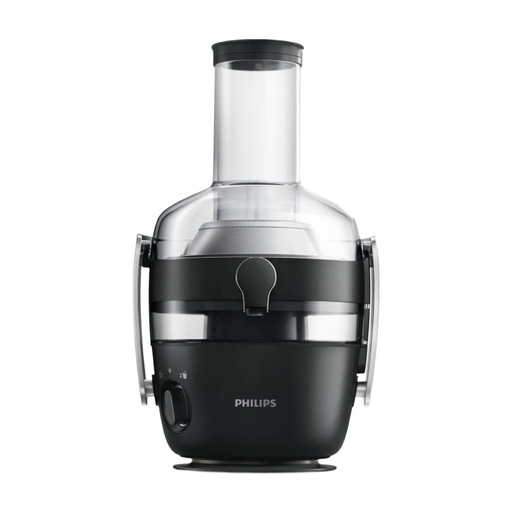
Why this model stands out: This Philips juicer is a powerful centrifugal juicer equipped with FiberBoost technology. This feature allows the user to switch between a clear, refreshing juice and a creamier juice with up to 50% more fibre at the touch of a button.
Benefits:
Who is this appliance for? For households looking for a fast and versatile all-rounder for a wide variety of fruits and vegetables, who also appreciate the choice between clear and fibre-rich juice.
If your focus is mainly on preparing fresh orange, lemon, or grapefruit juice, a dedicated electric citrus press can be a practical and space-saving alternative. These devices are often easier to clean and are specifically optimised for this task.
Discover our selection of other models in the citrus presses category.
A slow juicer (cold press juicer) slowly and gently presses the juice from the produce, resulting in a high nutrient and juice yield. It is quieter and ideal for leafy greens. A centrifugal juicer operates at high speed, is very fast, and is well-suited for hard fruits and vegetables. It is generally louder and generates some heat due to the rotation.
Cleaning is an important factor. Many modern devices are designed as an easy-to-clean juicer. Models with dishwasher-safe parts, smooth surfaces, and special cleaning functions (like Philips' QuickClean technology) significantly reduce the effort. A good practice is to rinse the parts under running water immediately after use to prevent pulp from drying on.
Not every juicer is equally suited for hard vegetables. Powerful centrifugal juicers with high wattage (e.g., 1000 W) and robust slow juicers with a sturdy auger can process carrots, beetroot, or ginger without any problems. With cheaper or less powerful models, there is a risk of overloading the motor. It is advisable to pay attention to the motor power and the manufacturer's specifications regarding suitability for hard produce.