
Lieferung heute & morgen

Qualitätsgarantie

Willkommens-Angebote freischalten: KOSTENLOSE Lieferung | Bis zu 80 % RABATT | Kostenlose 30-Tage-JoyPlus-Testphase
App herunterladen
A lunchbox needs to transport food reliably, be easy to clean in daily use, and suit your meal plan. Yet unclear product details and flashy marketing terms often lead to the wrong purchase. What really matters are the actual internal layout, the closure design, and the permitted cleaning and reheating methods.
The label leakproof lunchbox does not automatically mean that every liquid meal can be carried in any position. What counts is a continuous sealing ring, a sturdy closure, and a design intended for liquids. For soups or sauces, a tightly sealing thermal food container is usually more suitable than a classic lunch box with loosely fitted compartments.
Also check whether the manufacturer mentions any restrictions. For example, a container may only be transported upright and not turned upside down.
A lunchbox with compartments separates bread, fruit, sides and snacks. However, dividers reduce the flexible capacity. For a filled roll and small snacks, a bento lunchbox with several sections can be useful. But if you take larger portions, salad or leftovers from the night before, you will often need a larger, continuous compartment.
Pay attention to the capacity in millilitres or litres, not just the external dimensions. A nominal volume of 1.5 litres also says nothing about how much of it is actually usable for a single food item.
“Microwave-safe” often applies only to the container without the lid. Seals, valves or locking mechanisms may not be suitable for the microwave. So before reheating, always check the lid instructions and the user manual.
It is also worth looking closely at dishwasher safety: some products may only go in the top rack, while others should be washed by hand. For a meal prep container used daily, this difference can significantly affect the cleaning effort.
Weight should also be considered. A stainless steel lunchbox is robust but can be heavier than a polypropylene container. For commuters, it is not just the volume that matters, but also the weight in the rucksack.
Polypropylene, or PP, is commonly used for lightweight lunchboxes. Products with the appropriate labelling may be designed for microwave and dishwasher use. BPA-free claims refer to the absence of bisphenol A; they do not replace checking the full usage instructions.
With stainless steel, a distinction is made between different alloys. 304 stainless steel is widely used for food containers. 316 stainless steel is also offered for containers and is specified as the material for the Maxcook Food Jar. More important than a general quality statement are the specific manufacturer details on the seal, lid, cleaning and temperature use.
A simple flip-lock may be sufficient for dry foods. For liquids, a tight screw cap or a closure explicitly described as leakproof is preferable. The seal should be removable or at least easily accessible so that residues do not build up there.
An insulated thermal lunchbox does not keep the temperature constant indefinitely. The Maxcook 304 Food Jar states a temperature retention time of 4 to 6 hours. For a better starting point, you can pre-temper the container with hot or cold water. Hot food can cause scalding; therefore, a soup thermos must not be used unsupervised by small children.
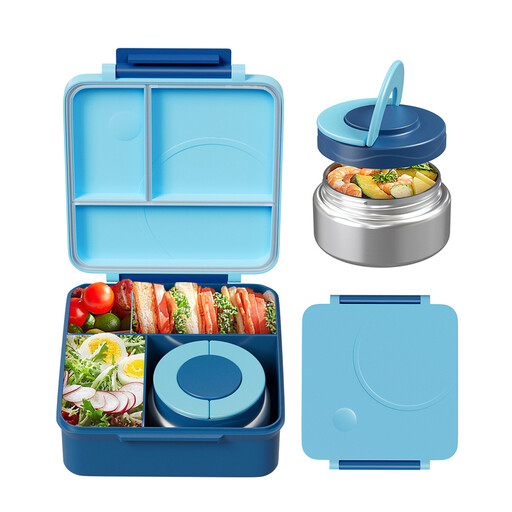
Why this product fits the profile: The divided design is aimed at users who want to transport several components of a meal separately and prefer a single closure.
The visible division reduces the risk of dry and moist foods mixing directly. For liquid foods, you should check the specific manufacturer instructions.
Divided interior format and single-latch closure according to the product name.
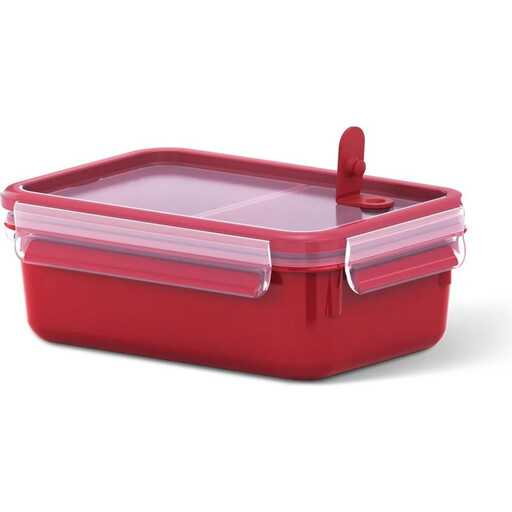
Why this product fits the profile: With 1,000 ml capacity, rectangular format and details on leakproofness, microwave and dishwasher use, it is designed for regular meals in the office or at school.
The product details explicitly state the relevant everyday features. When reheating, the lid must be removed according to the usage instructions.
1 litre capacity, BPA-free material declaration, microwave and dishwasher suitability according to the product description.
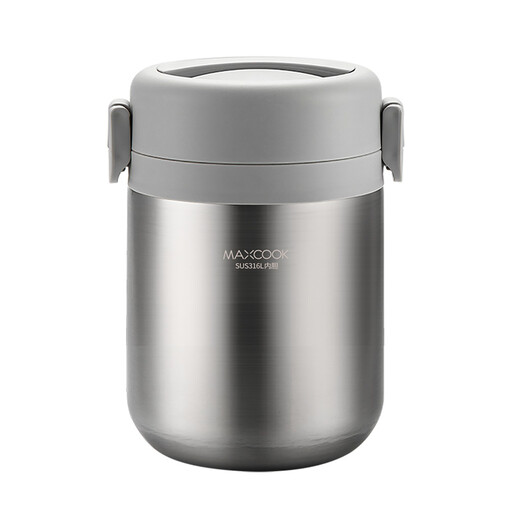
Why this product fits the profile: The wide filling opening and 1.5 litre capacity make it suitable for soups, stews and larger portions at work, during commutes or for outdoor activities.
The screw cap is designed for transporting liquid foods. According to the details, the container is not microwave-safe and should be washed by hand.
316 stainless steel, vacuum insulation, wide opening and 1.5 litre capacity according to the product description.
We have put together a complete, regularly updated list of products that fully meet these strict selection criteria and the safety regulations in force in the EU.
For everyday office use, about 900 ml to 1 litre is often sufficient. A lunchbox with compartments separates sides and snacks, while a tightly sealing container is better for salads with dressing or liquid foods. Also check whether microwave and dishwasher use are important for your daily routine.
The lifespan depends on the material, closure and care. Seals can wear out more quickly due to frequent cleaning, heat and food residue. Check the sealing ring regularly for cracks and replace damaged parts if replacements are available. Stainless steel containers should not be treated with abrasive cleaning agents.
For soup, a soup thermos or a vacuum-insulated thermal food container is generally more practical. A classic bento lunchbox is better suited to solid, separated foods. With hot contents, open the container carefully, do not overfill it, and follow the respective manufacturer instructions.