
Lieferung heute & morgen

Qualitätsgarantie

Willkommens-Angebote freischalten: KOSTENLOSE Lieferung | Bis zu 80 % RABATT | Kostenlose 30-Tage-JoyPlus-Testphase
App herunterladen
If you’re looking to buy a tent, you shouldn’t just focus on the price, the person capacity or a flashy product image. What really matters is where you’ll use it, how much it weighs to carry, its hydrostatic head, ventilation and how easy it is to pitch. A lightweight trekking tent for a mountain hike has very different requirements to a spacious family tent for the campsite.
A 2-person tent is usually designed for two sleeping spaces. Depending on the floor plan, there’s often little room left for luggage, shoes or a dog. With a 2-person tent, it’s worth checking the internal dimensions and the number of porches. If you’re travelling with a lot of gear, you should also look at the usable storage area.
With family tents, only the sleeping capacity is often mentioned. A separate porch or living area can be more important in everyday use than an extra sleeping space. The Portal 60514, for example, offers a sleeping area of 7.05 m² and a separate living area of 5.8 m².
The hydrostatic head is given in millimetres and describes the water pressure a material can withstand under laboratory conditions. It’s not a sole guarantee of a dry interior. Seams, zips, the groundsheet and correct guying all affect protection too.
So look out for:
A waterproof tent should be allowed to dry completely after camping before being stored away. Moisture in the stuff sack can encourage mould and premature ageing of the coating.
An ultralight tent is appealing for long hikes, but it demands careful handling of the materials and the pitching process. Thin nylon or polyester fabrics reduce weight, but they can be more vulnerable to thorns, sharp ground and rough treatment.
For a tent for camping and hiking, you should therefore weigh up:
A trekking tent or lightweight 2-person tent is ideal for hikes where you’re carrying your luggage. A 3-season tent is typically intended for spring, summer and autumn. It’s not automatically designed for heavy snow loads or winter storms.
A 4-season tent usually has a more enclosed construction, stronger poles and features tailored to winter conditions. The higher weight can be a factor when transporting it.
For short stays and fuss-free pitching, a pop-up tent or a tent with an automatic opening system could be suitable. Families often benefit from a tunnel tent with separate sleeping and living areas. A tipi tent or glamping tent is aimed at users who want more headroom and living space and are happy to accept the larger pack size.
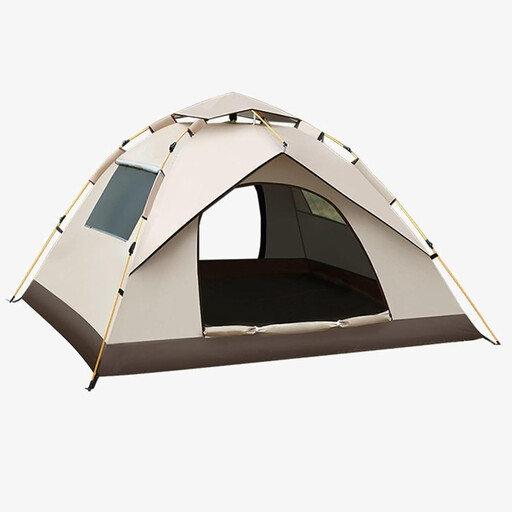
Why this product fits the profile: The automatic opening system and pre-attached poles appeal to users who want a straightforward pitching experience when camping. The construction is stated to accommodate two to three adults or up to four children.
The product details state a hydrostatic head of up to 3,000 mm, two doors and two windows. This makes it easier to assess weather protection and ventilation before you buy.
Automatic opening system, double-layer construction, two doors and a stated pack size of approximately 76.2 × 17.3 × 14.5 cm.
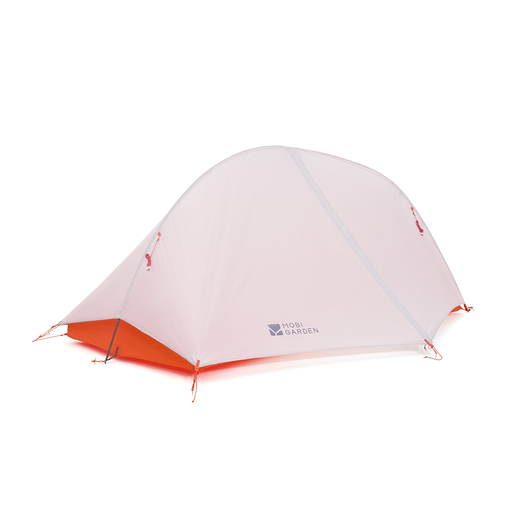
Why this product fits the profile: This model is designed for long, weight-conscious hikes and 2-person trips. The stated net weight of around 1.18 kg reduces the load in your rucksack.
The specifications mention a PU hydrostatic head of 2,000 mm, taped groundsheet seams, aluminium poles and a 20D ripstop nylon flysheet. This makes it easier to weigh up weight against material protection.
Approximately 1.18 kg net weight, pack size of 48 × 11 × 11 cm, two entrances and a ventilating mesh inner tent.

Why this product fits the profile: This tipi tent is aimed at families and groups who need headroom and living space for glamping. The external dimensions are 450 × 390 × 300 cm.
Alongside the large area, a hydrostatic head of 3,000 mm, taped seams, mosquito nets and ventilation openings are specified. For the tall construction, 10 guy lines and 14 pegs are provided.
Headroom of 3 m, stated capacity for six people, steel centre pole and packed dimensions of 63 × 25 × 25 cm.
Before pitching, make sure the ground is level, free of sharp stones and as sheltered from the wind as possible. With a tunnel tent or tipi tent, all pegs and guy lines must be correctly positioned. A large internal area increases comfort, but in windy conditions it may require careful guying.
After use, we recommend the following routine:
The lifespan depends on UV exposure, moisture, how often it’s pitched and mechanical stress. Particularly lightweight fabrics should not be tensioned over sharp ground.
We’ve put together a complete, regularly updated list of products that fully meet these strict selection criteria and the safety regulations in force in the EU.
For simple overnight stays, a compact 2-person tent can be sufficient. If you want to keep rucksacks, shoes or clothes inside the tent, two entrances, a porch or a longer floor plan make sense. Check the internal dimensions rather than relying solely on the capacity rating.
It’s impossible to give a fixed lifespan. Dry storage, UV protection, careful pitching and following the care instructions all affect durability. Coatings can degrade through prolonged sunlight, moisture and abrasion.
For normal camping conditions, the figures for the flysheet and groundsheet are an important point of comparison. You should also consider the seams, groundsheet design and guying. A higher number doesn’t replace proper care and doesn’t offer a blanket guarantee for every type of weather.