
Lieferung heute & morgen

Qualitätsgarantie

Willkommens-Angebote freischalten: KOSTENLOSE Lieferung | Bis zu 80 % RABATT | Kostenlose 30-Tage-JoyPlus-Testphase
App herunterladen
When you’re looking to buy a tent, you’ll probably start by comparing price, capacity and photos. But these details aren’t always enough to judge how well a tent will perform in real life. A budget camping tent might be too heavy to carry, a nominally waterproof tent could let moisture in through poorly sealed seams, and a spacious family tent might be impractical on a small pitch.
That’s why the most important buying decisions come down to where you’ll use it, the hydrostatic head, weight, ventilation and the actual space you need.
A hydrostatic head of 2,000 or 3,000 mm is a technical benchmark for the water pressure the fabric can withstand under controlled conditions. On its own, though, it doesn’t tell you how the whole tent will perform in the rain. Seams, zips, groundsheet material and pitch all play a part.
So look out for details on:
A waterproof tent also needs a dry, level surface to sit on. Even a well-coated groundsheet can struggle on persistently damp ground.
A two-person tent often provides just enough floor space for two sleeping mats. Once you add luggage, wet clothes or plan a longer stay, the interior can feel cramped. Families should also check whether the sleeping compartments are separate and whether there’s a porch area for shoes and camping gear.
If you’re travelling solo, you don’t automatically need a large tent. A one-person tent saves weight and pack size. For two trekkers, interior width, vestibules and two entrances are often more important than a rock-bottom price.
A pop-up tent or an automatic model can be handy for occasional camping. For longer treks, though, low weight, a small pack size and robust guying matter far more. With a large tipi tent or folding gazebo, you also need to consider the footprint, wind protection and the number of pegs.
Every extra kilogram counts when you’re hiking or backpacking. An ultralight 2-person tent is often significantly lighter than a comfort-oriented camping tent, but usually offers less headroom and storage space.
Compare:
The Mobi Garden YADEEN UL2 20D, for example, has a net weight of around 1.18 kg, a pack size of 48 × 11 × 11 cm and aluminium poles. It’s aimed at users who want to carry as little as possible on long hikes.
Polyester, nylon and Oxford fabric differ in weight, tear strength, coating and care. A PU coating can improve water resistance, but shouldn’t be seen as permanent protection against abrasion or UV light.
According to the product specs, the Mobi Garden LUNTA 68D has an outer fabric made from 68D 190T tear-resistant polyester. The hydrostatic head is PU2000 mm for the outer tent and PU4000 mm for the inner groundsheet. With dimensions of 210 × 140 × 110 cm and a weight of around 2.64 kg, it’s designed as a compact 3-season tent for two people.
A mesh inner tent, opposite ventilation openings and multiple entrances can improve airflow. That won’t automatically eliminate condensation, but it does help to remove moist air more effectively.
When it comes to pitching, check whether:
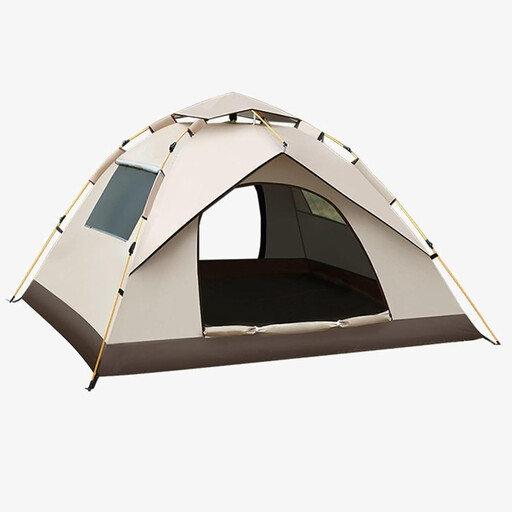
Why this product fits the profile: This model is designed for camping holidaymakers who want a fuss-free pitch and space for two to three adults or several children.
The pre-assembled hydraulic system reduces manual pitching. Two doors, two windows and a detachable flysheet improve access and ventilation.
210T polyester with a stated hydrostatic head of up to 3,000 mm, two doors and a compact pack size.
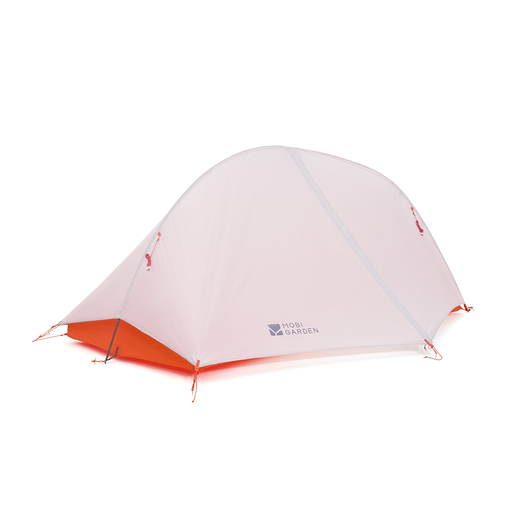
Why this product fits the profile: This trekking tent is built for long hikes, backpacking trips and 3-season use, where weight and pack size are the key criteria.
The product data provides concrete figures for weight, pack size, material and hydrostatic head, rather than relying on vague claims about weather resistance.
Around 1.18 kg weight, 20D ripstop nylon, aluminium poles and two entrances with a mesh inner tent.

Why this product fits the profile: With a height of 3 metres and external dimensions of 450 × 390 cm, this glamping tent is designed for families, groups and longer stays with more room to move.
The specs mention hydrostatic head, seam sealing, guy lines, pegs and the need for dry storage. This makes it easier to assess the space and care required.
150D Oxford polyester, stated hydrostatic head of 3,000 mm, polyester inner tent and integrated mosquito nets.
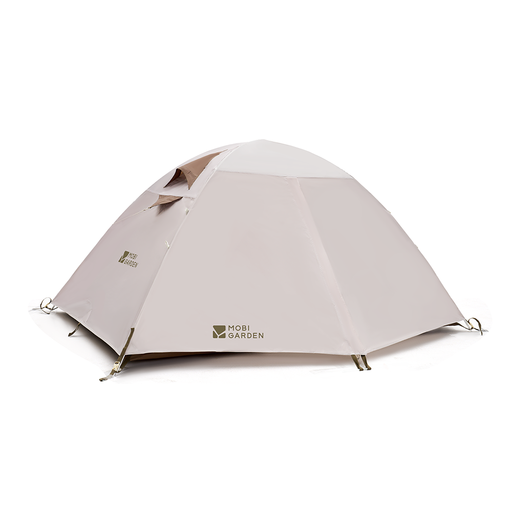
Why this product fits the profile: This tent combines a compact pack size with space for two people, making it suitable for hiking and camping trips with moderate luggage.
The separate figures for the outer tent and inner groundsheet help you understand the moisture barrier. The pack size of 41 × 16 × 16 cm remains manageable for transport and storage.
68D polyester, aluminium poles, around 2.64 kg weight and specified 3-season use.
We’ve put together a full, regularly updated list of products that meet these strict selection criteria and the safety regulations in force across the EU.
The price depends mainly on the material, poles, size, coating and pitching convenience. A lightweight trekking tent can be more expensive than a larger entry-level model because of its specialist materials. So don’t just compare the purchase price – also consider pack size, spare parts availability, care requirements and how often you expect to use it.
It’s impossible to give a reliable lifespan. It depends on UV exposure, how often it’s pitched, wind, ground conditions and storage. Always dry the tent completely before packing it away, clean coatings gently with water, and avoid sharp stones, thorns and naked flames.
Choose as level and wind-sheltered a spot as possible, and orient the lower side of the tent towards the wind. Tension the flysheet and guy lines evenly, secure all the pegs provided, and check the tension again after pitching. Stoves, barbecues and open fires should never be used inside the tent due to the risk of fire and carbon monoxide poisoning.