
Lieferung heute & morgen

Qualitätsgarantie

Willkommens-Angebote freischalten: KOSTENLOSE Lieferung | Bis zu 80 % RABATT | Kostenlose 30-Tage-JoyPlus-Testphase
App herunterladen
An A5 notebook fits into many rucksacks, work bags and shoulder bags, while offering more writing space than an A6 notebook. However, the wide range of options does not automatically make it easy to find the right model. A decorative cover can hide unsuitable paper, while extensive features are not always useful in everyday life.
As a Joybuy Product Recommendation Officer, I therefore focus on clear information about format, paper, binding and features. The following advice helps pupils, students, professionals, writers and journalling enthusiasts choose a notebook with confidence.
The specification in grams per square metre, abbreviated to g/m², initially describes the paper’s weight per unit area. A higher value can indicate a more substantial feel, but on its own it does not show how fountain pen, gel or marker ink will behave. The paper surface and the type of ink used also affect show-through.
If you regularly write with a fountain pen, look for specific manufacturer details such as ‘acid-free’ or ‘ink-proof’. With a lined notebook weighing 90 or 100 g/m², it is also worth considering the writing instruments you use in everyday life.
A lined notebook is suitable for taking notes, journalling and writing longer texts. For calculations or technical sketches, a squared notebook may be more practical. Blank pages offer freedom for drawings, mind maps and creative designs, but require you to find your own orientation when writing.
The term ‘planner’ should also be checked carefully: a dated calendar is ready to use straight away, while an undated planner remains flexible but needs to be filled in by hand.
A notebook with an elastic strap and bookmark is practical when you are out and about. However, the key considerations remain whether the binding, number of pages and type of paper are suitable for everyday use. An elastic strap keeps loose pages together, but cannot replace a sturdy binding. A bookmark makes it easier to find your place again, but does not automatically increase the notebook’s durability.
The DIN A5 format measures approximately 14.8 × 21 cm nominally. The outer dimensions may be larger because of the cover, spiral binding or rounded edges. Check that the notebook fits in the intended bag and that there is enough room for a comfortable hand position.
An A5 notebook for school and the office offers a well-balanced compromise between portability and writing space. A6 is often sufficient for short shopping lists, while an A5 writing pad with removable sheets may be more practical for extensive documents.
Pay attention to:
An A5 hardcover notebook protects the pages better in a full bag and provides a firm writing surface when you are out and about. A softcover is usually more flexible and can be stored more easily. Fabric or PU covers should be protected from moisture; decorative surfaces can generally be cleaned with a dry, soft cloth.
For everyday organisation, an elastic strap, one or more ribbon bookmarks, a pen loop and a rear pocket are useful features. However, they should only be considered if they suit the way you personally intend to use the notebook.
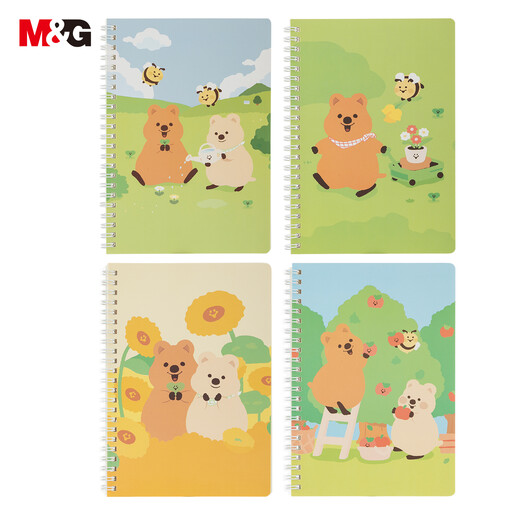
Why this product suits this profile: The set contains four A5 writing notebooks with lined pages, making it suitable for separating school subjects, projects or personal notes.
The number of pages and the contents of the delivery are clearly stated. This makes it easier to plan the need for several notebooks than with an unclear single-item description.
Four notebooks, A5 format, spiral binding and lined pages; according to the product details, the notebooks can lie flat.
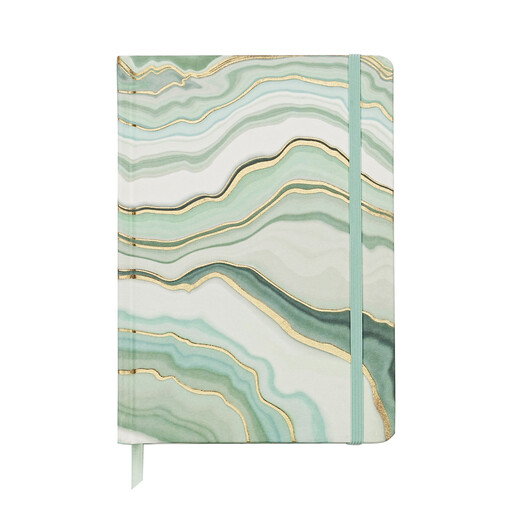
Why this product suits this profile: The fabric hardcover with foil stamping or embossing is aimed at users looking for a formal appearance for the office, university, journalling or a notebook as a gift.
The product details explicitly state the format, page count and paper weight: A5, 96 sheets or 192 pages, and 100 g/m² ivory paper.
Hardcover, 100-g/m² paper, ribbon bookmark and elastic strap. The manufacturer also highlights wood-free paper; no environmental certification is claimed.
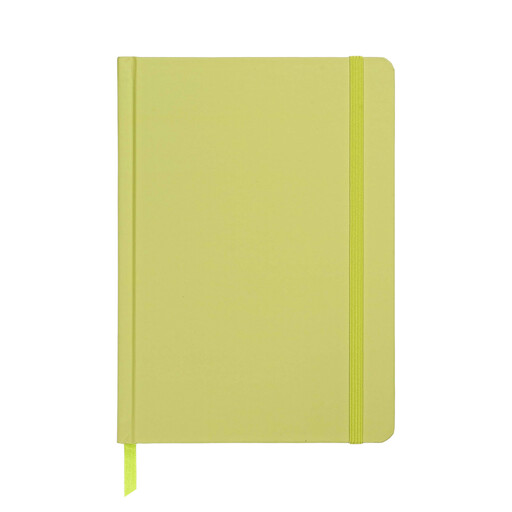
Why this product suits this profile: The undated planner is designed for users who want to start monthly and weekly overviews for appointments, goals or projects whenever they choose.
The planning elements are described clearly: a customisable start page, undated monthly overviews and weekly layouts with note sections.
112 sheets or 224 pages, hardcover, 100-g/m² paper and flexible use without pre-printed dates.
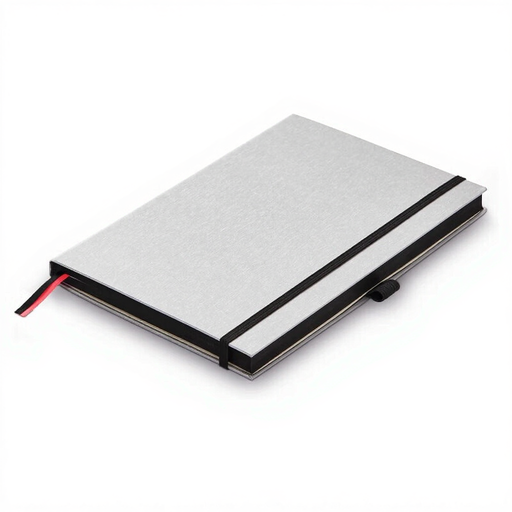
Why this product suits this profile: Blank pages are ideal for sketches, mind maps, designs and creative journalling. According to the product description, the sewn binding is designed to lie flat.
The ruling is explicitly stated as blank. This avoids choosing a squared or lined model for drawings and free-form layouts.
A5 hardcover, blank pages, approximately 90 g/m² acid-free paper and thread-sewn binding; according to the product details, the paper is intended for long-term archiving.
We have put together a complete, regularly updated list of products that fully meet these strict selection criteria and the safety regulations applicable in the EU.
A notebook’s lifespan depends on its cover, binding, transport conditions and exposure to moisture. Store paper products in a dry place and avoid prolonged exposure to direct sunlight. A hardcover protects the contents in a rucksack, but it should not be bent back through 360 degrees for extended periods. With a spiral notebook, excessive bending and tearing out pages can put strain on the binding.
An elastic strap should not be stretched unnecessarily. Loose documents should be kept in an existing rear pocket, provided it is not overfilled. For important notes, digital backup is recommended, as paper is not waterproof.
An A5 notebook is nominally approximately 14.8 × 21 cm. The cover and binding may increase the outer dimensions. For this reason, check the specific product dimensions before buying.
Yes, provided that the ruling and binding are suitable for the intended use. Lined pages are ideal for continuous text, while squared paper is better for maths and drawings. An A5 writing pad with microperforation and punched holes can be useful if sheets need to be removed and filed.
A hardcover provides a firm writing surface and protects the pages during transport. A softcover is more flexible and often lighter. For a diary or journal that is mainly used at home, either option may be suitable. The deciding factors are the writing feel, page count, ruling and the way you prefer to use it.