
Lieferung heute & morgen

Qualitätsgarantie

Willkommens-Angebote freischalten: KOSTENLOSE Lieferung | Bis zu 80 % RABATT | Kostenlose 30-Tage-JoyPlus-Testphase
App herunterladen
If you're looking to buy an e-bike, you'll probably start by comparing motor power, range and price. But these figures alone aren't enough. What really matters is whether the electric bike suits your height, your daily route, the terrain you ride on and the load you need to carry. An electric city bike for your commute has different requirements to a cargo e-bike for shopping or commercial transport.
Claims like "up to 100 km" are usually achieved under ideal conditions. Rider weight, headwinds, hills, tyre pressure, outside temperature and the assistance level you choose all affect the actual range. An e-bike with a 100 km range can go much further on flat roads than on frequent climbs with a heavy load.
So pay attention to:
A 250-watt e-bike on a standard pedelec doesn't automatically mean a certain hill-climbing ability. Torque in Nm, the sensor system, gearing and total weight also matter. For use on public roads, you should check the applicable regulations. For pedelecs, pedal assistance up to 25 km/h and the permitted motor power are among the relevant factors.
Higher torque can be useful on inclines. But it doesn't replace a suitable gear system or correctly adjusted tyre pressure.
A step-through e-bike makes getting on and off easier. But that alone doesn't tell you about the riding position, frame stability or the right frame size. Likewise, disc brakes aren't automatically hydraulic. If you often ride in wet conditions, with luggage or on downhill stretches, you should check the exact brake type.
Watt-hours are calculated from voltage and amp-hours. A battery with 48 V and 10.4 Ah, for example, delivers around 499 Wh. A battery with 36 V and 15.6 Ah gives around 561.6 Wh. These figures allow a more objective comparison than vague range promises.
An e-bike with a removable battery is especially practical if your bike is stored in a courtyard, cellar or bike room without a nearby socket. To prolong battery life, use the original charger, protect the battery from frost and avoid fully discharging it during long-term storage.
Check the recommended rider height and the maximum total load. This usually includes the rider, luggage and any accessories. A cargo e-bike or load e-bike needs a sturdy frame, suitable racks and a clearly stated load limit for heavy transport.
Wide tyres increase the contact patch but can create more rolling resistance. The Fiido T2, for example, uses 20 × 4.0-inch wide tyres and, according to the product specifications, is designed for a total load of up to 200 kg. Actual use must stay within the manufacturer's limits for the frame, rack and attachments.
An e-bike with hydraulic disc brakes offers a different maintenance and operation concept to a model with mechanical disc brakes. Hydraulic systems transmit brake pressure through fluid; mechanical versions use a cable. Both systems require regular checks of pads, discs and hoses or cables.
An e-bike with a Shimano 7-speed gear system is suitable for varying speeds in city traffic and moderate inclines. You should also check for mudguards, a rack, lighting and road-legal markings.
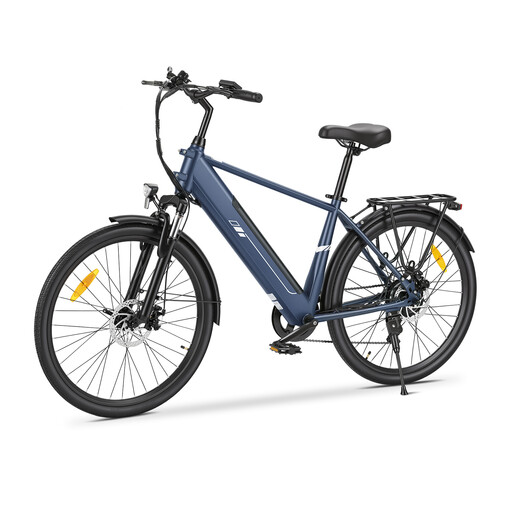
Why this product fits the profile: For city rides and longer commutes, this model combines a 250-watt motor, 36 V battery with 15.6 Ah, 7 gears and a rack.
The range claim of up to 100 km is stated alongside the conditions for optimal use. This makes it easier to assess than a blanket promise.
561.6 Wh removable battery, 45 Nm torque, 60 mm suspension fork and StVZO-certified lighting according to product specifications.
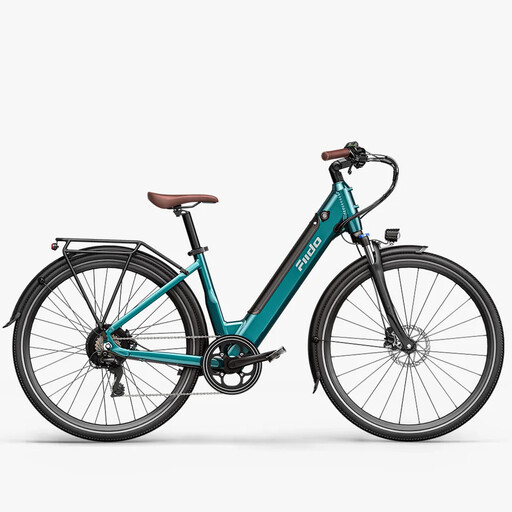
Why this product fits the profile: This city bike is aimed at adults who want an upright riding position, step-through frame and controlled assistance for everyday urban use.
The removable 48 V battery and the stated frame size range of approximately 155 to 195 cm make key everyday details concretely verifiable.
Hydraulic disc brakes, Shimano 7-speed gear system, torque sensor and, according to product specifications, a range of up to 104 km.
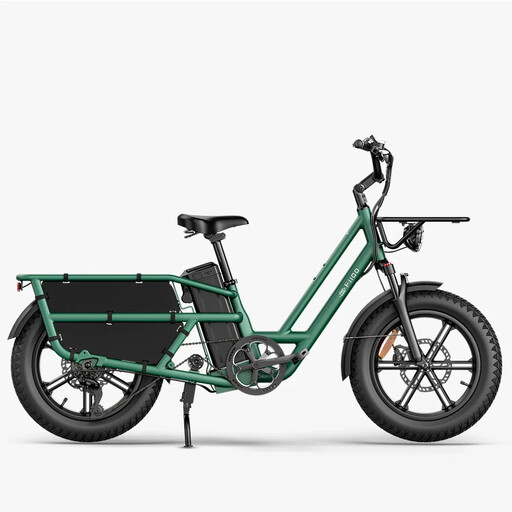
Why this product fits the profile: For families, delivery rides and larger shopping trips, this load e-bike offers integrated front and rear racks plus a step-through frame.
The maximum total load, the intended use and the dimensions of the 20 × 4.0-inch tyres are all clearly stated, making it easier to plan with luggage.
Hydraulic disc brakes, front suspension, removable battery and Shimano 7-speed system according to product data.
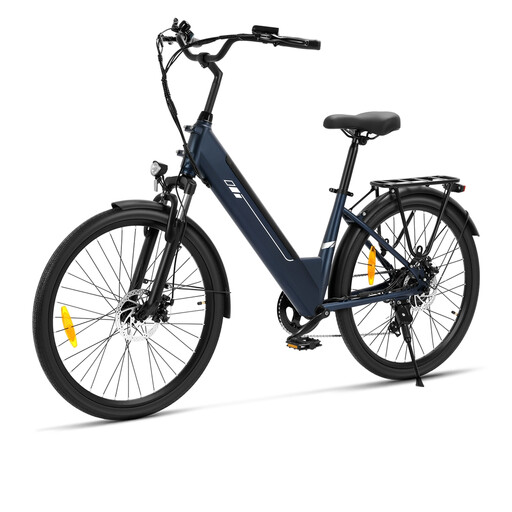
Why this product fits the profile: The low step-through, 26-inch wheels and upright design are practical for frequent stops in city traffic.
The recommended rider height of 160 to 195 cm and the maximum load of 120 kg are clearly stated. This prevents you from choosing based on the step-through alone.
Removable 561.6 Wh battery, Shimano 7-speed gear system, 60 mm front suspension and rack with stated load capacity.
We've put together a full, regularly updated list of products that fully meet these strict selection criteria and the safety regulations in force in the EU.
In addition to electricity consumption, you'll have costs for tyres, brake pads, the chain and regular servicing. The electricity needed per charge depends on the battery capacity and its state of charge. If you commute frequently, you should also check whether a spare battery, charger and wear parts are available.
The lifespan depends on charge cycles, temperature, storage and usage. Store the battery in a dry, frost-free place, avoid deep discharging it for long periods and use the designated charger. For the specific warranty and guarantee terms, please refer to the product conditions.
Yes, provided the frame size, riding position, battery and luggage solution suit the route. For longer commutes, you should also check range reserves, lighting, mudguards, brake type and the ergonomic adjustment of the saddle and handlebars.