
Lieferung heute & morgen

Qualitätsgarantie

Willkommens-Angebote freischalten: KOSTENLOSE Lieferung | Bis zu 80 % RABATT | Kostenlose 30-Tage-JoyPlus-Testphase
App herunterladen
If you’re looking to buy an armchair, you might start by comparing colours and prices. But for long-term use, other factors matter more: will it fit in your room? Is the seat right for your height? How sturdy is the frame, and is the upholstery easy to clean day to day?
Three common buying mistakes can leave you with an armchair you hardly ever use:
Measure the space you have in mind, including walkways. When choosing a living room armchair, it’s not just the overall width that matters. For a TV armchair or sleeper chair, also check how far the backrest and footrest extend forwards or backwards.
Look out for the following details:
For a small flat, a compact upholstered chair or armchair for small spaces may be a better choice than a wide, heavily padded recliner. A bean bag chair may not need a rigid frame, but it still needs enough room at the sides and in front.
The construction affects both stability and how well the chair stands up to everyday use. Metal frames can provide a solid base, while wooden components allow rocking chairs to move as intended. The material alone isn’t what matters: it’s how the frame, legs, joints and floor contact work together.
When it comes to cushioning, look for clear, useful information on:
Velvet, chenille, sherpa and polyester differ in feel, cleaning requirements and sensitivity to light. A soft fabric may be a good choice for a bedroom armchair or reading nook. In homes with children or pets, removable covers or clear spot-cleaning instructions are practical points to consider.
A comfortable armchair should suit the way you plan to use it. A reading chair needs supportive backrest and well-positioned armrests. A wingback chair can feel more enclosed, thanks to its side panels. A swivel chair makes it easier to turn between a table, window and screen.
For chairs with extra features, specific details are particularly important:
If the chair requires assembly, follow the instructions exactly. Never use an armchair as a step or climbing aid.
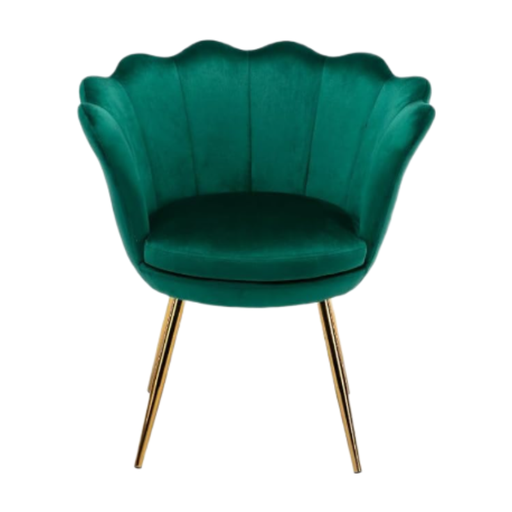
Why this product suits you: Measuring 60 × 70 × 76 cm and weighing 7.9 kg, this upholstered chair is well suited to compact living spaces, bedrooms or as extra seating for guests.
The product details include the overall dimensions, construction materials and a maximum weight capacity of 110 kg, helping you plan where to use it before you buy.
Velvet upholstery, a metal frame and a divided, petal-shaped backrest; assembly is required on a level, stable surface.
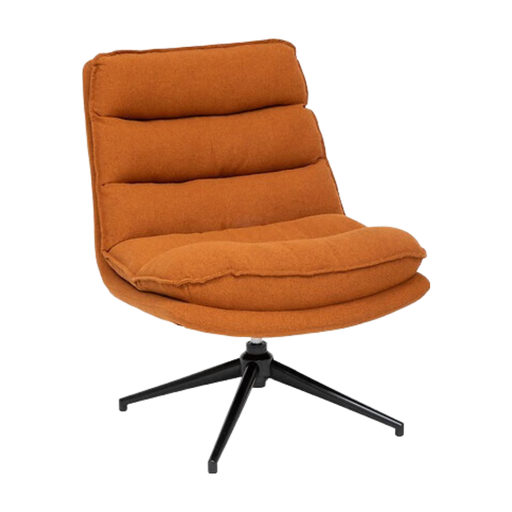
Why this product suits you: Measuring 64 × 74.5 × 87 cm, this swivel chair combines a compact design with a stated 360-degree swivel function, making it suitable for the living room or office.
The swivel function is clearly specified, rather than being promoted with a vague claim about comfort. Assembly and a stable, level surface are still important considerations.
Made with steel, polyester and E1 wood-based panels, with a 360-degree swivel function; self-assembly is required.
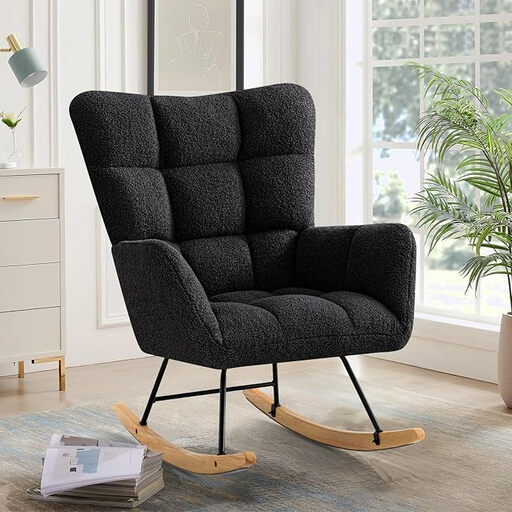
Why this product suits you: Designed for a reading nook, bedroom, living room or nursery, this rocking chair features armrests and a high backrest.
The product details include dimensions of 95 × 72 × 93 cm, a weight capacity of 113 kg, and advice on checking the joints and rocker rails.
Steel frame, beechwood rocker rails, high-density foam and sherpa upholstery; protective pads help protect the floor.
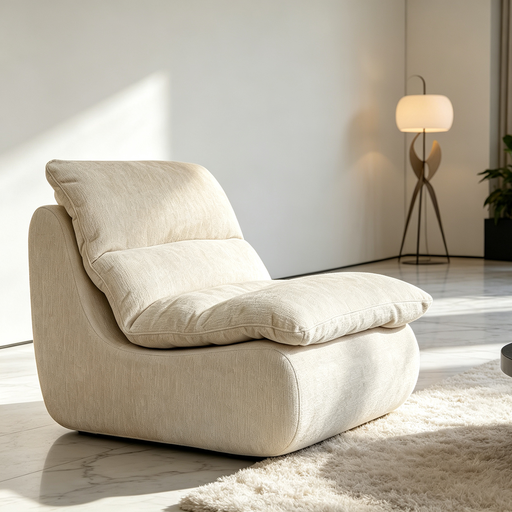
Why this product suits you: According to the product description, this bean bag chair is suitable for small living spaces, gaming areas, reading spots and occasional overnight stays.
The product details state a maximum weight capacity of 136 kg, a non-slip base and an expansion time of up to 72 hours after unpacking.
No assembly required, with chenille upholstery and high-density foam; allow the chair to expand fully before use.
We’ve put together a complete, regularly updated list of products that meet these strict selection criteria and the safety regulations in force in the EU.
As well as checking the dimensions when the chair is closed, remember to account for its full depth when extended. Leave a clear space in front of the chair, too, so you can use the footrest without it touching a table, wall or rug edge.
Its lifespan depends on factors including how often it’s used, the weight it supports, the cushioning, frame and how well it’s cared for. There’s no reliable one-size-fits-all estimate. Check the screws, swivel mechanism, rocker rails and visible seams regularly. Always use cleaning products that are suitable for the upholstery.
Assemble the chair on a level surface, following the instructions provided. Then check that it’s stable and that the screw joints and moving parts are secure. A swivel chair, recliner or rocking chair needs enough clearance from walls and other furniture.