
Lieferung heute & morgen

Qualitätsgarantie

Willkommens-Angebote freischalten: KOSTENLOSE Lieferung | Bis zu 80 % RABATT | Kostenlose 30-Tage-JoyPlus-Testphase
App herunterladen
If you want to buy Asian dim sum and bao buns online, you'll find a wide selection of Chinese steamed buns, filled baozi, xiaolongbao and Vietnamese bánh bao. However, the products differ significantly in terms of filling, portion size, storage and preparation. An attractive picture or the mention of "authentic flavour" alone doesn't tell you whether a product is right for your household.
Many bao buns and dim sum are sold frozen. This extends their shelf life, but it also means the goods must stay cold throughout delivery. Products labelled "store at −18 °C or below" should not be kept at room temperature and must not be refrozen after thawing.
However, not every bao product is frozen. Hong Kong-style buns such as some custard buns or BBQ pork buns may be available as ambient-stable products, depending on the item. Always check the storage conditions, best-before date and preparation instructions on the product page.
Names like custard buns, red bean buns or char siu bao mainly describe the flavour. For a proper comparison, it's worth looking at the ingredients list and the stated filling percentage. For example, the St.Anny Hong Kong Style BBQ Pork Bun contains 15 % pork. The Delico Chaoqun Dim Sum Vegetable Meat Bun contains 16 % pork and 5 % cabbage.
A comparison is also useful for sweet bao buns: the St.Anny Hong Kong Style Bean Paste Pineapple Bun contains 25 % bean paste, while other products may also contain egg, milk powder or coconut ingredients.
Steamed buns usually need more than just reheating. Frozen products are often steamed straight from the freezer. Depending on size and filling, the stated times are roughly between 6 and 12 minutes. Xiaolongbao with a liquid-rich filling should be carefully removed from the steamer basket, as hot broth can collect inside.
First, check whether the product is frozen, chilled or can be stored at room temperature. For frozen goods, a reliable cold chain and enough freezer space are essential. Products like the FRESHASIA Vegetable & Mushroom Buns 480 g are stored at −18 °C according to the product details, and steamed from frozen for around 8 to 10 minutes.
Different conditions apply to ambient Asian rice noodles. The Gia Bao Rice Noodle Bun Tuoi are stored dry and protected from direct moisture. Depending on thickness, the cooking time is around 4 to 10 minutes. The variants with 0.8 mm, 1.0 mm, 1.2 mm and 1.5 mm are suitable for different dishes such as bun cha, pho, soups or stir-fries.
Wheat, soya, sesame, egg and milk are common in many bao buns and dim sum. The Eastasty Frozen Pork Xiaolongbao list wheat and soya as allergens; according to the product information, traces of other allergens from shared production may also be present.
If you're looking for a savoury filling, you can choose between pork, chicken, vegetables and mushrooms. Sweet options include red beans, vanilla cream, custard or salted egg yolk. A plant-based recipe is not automatically guaranteed just because vegetables or mushrooms are included. The ingredients list and allergen information remain the deciding factors.
A pack of 270 to 360 g is often suitable for a snack, breakfast or as part of a mixed dim sum meal. Larger packs like the Delico Dim Sum Pork Dumplings Xiaolong Bao 780 g are more practical when several people are eating or when you want to prepare portions in advance. Individually portioned buns such as the St.Anny Hong Kong Style Custard Pineapple Bun at 115 g reduce the risk of thawing more than you need.
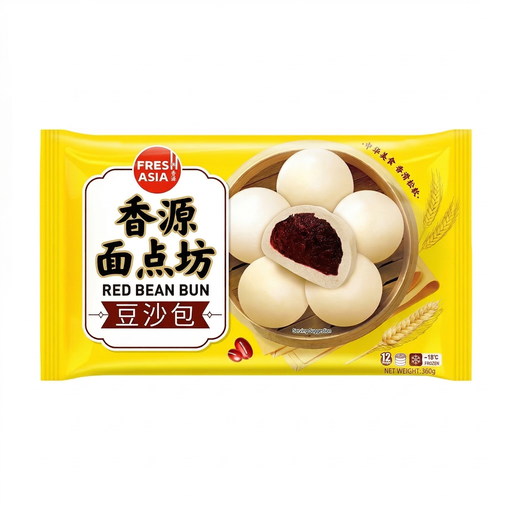
Why it fits: A sweet bao option for breakfast, snack or dessert. The pack size is ideal for households wanting to try red bean buns for the first time.
The product details state a net weight of 360 g, storage at −18 °C and a steaming time of 6 to 8 minutes. This lets you assess storage and time requirements before buying.
Smooth red bean paste, soft dough and simple preparation in a steamer. Contains wheat, soya and sesame according to the label.

Why it fits: For those who prefer custard buns with a sweet egg-and-milk filling and want a classic tea-house-inspired dim sum experience.
The preparation is clearly stated as 8 to 10 minutes steaming from frozen. The ingredients and allergen list includes wheat and egg, among others.
360 g pack, sweet custard filling and steam preparation without prior thawing.
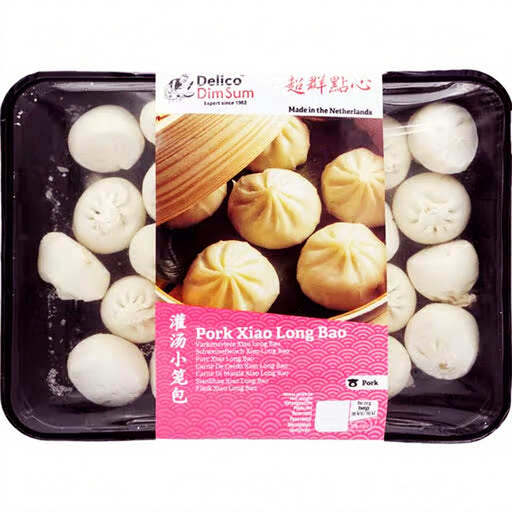
Why it fits: For families, regular dim sum evenings or anyone wanting to stock up on xiaolongbao in larger quantities.
The pack size is clearly stated. Wheat and soya are also listed as allergens, so the choice can be checked before purchase.
780 g pack, thin dough wrapper according to the product description and a stated steaming time of 8 to 10 minutes.
In the full selection, you can compare bao buns, dim sum, xiaolongbao and related products by product type, pack size and preparation method.
Most frozen bao buns go straight into the steamer basket. The exact time depends on size and filling; 8 to 10 minutes is common. The dough should be completely soft and the filling piping hot throughout. For microwaves, follow the instructions for the specific product, as results vary by appliance.
The best-before date on the packaging is the deciding factor. The goods should be stored consistently at the stated temperature, usually −18 °C or below. After thawing, many products must not be refrozen. If in doubt, follow the instructions on the packaging and product page.
Bao buns are steamed yeast dough products with a sweet or savoury filling. Asian rice noodles are made mainly from rice and are boiled or used in broth and stir-fries. They are therefore not a substitute for steamed buns, but can serve as a side dish in an Asian meal.